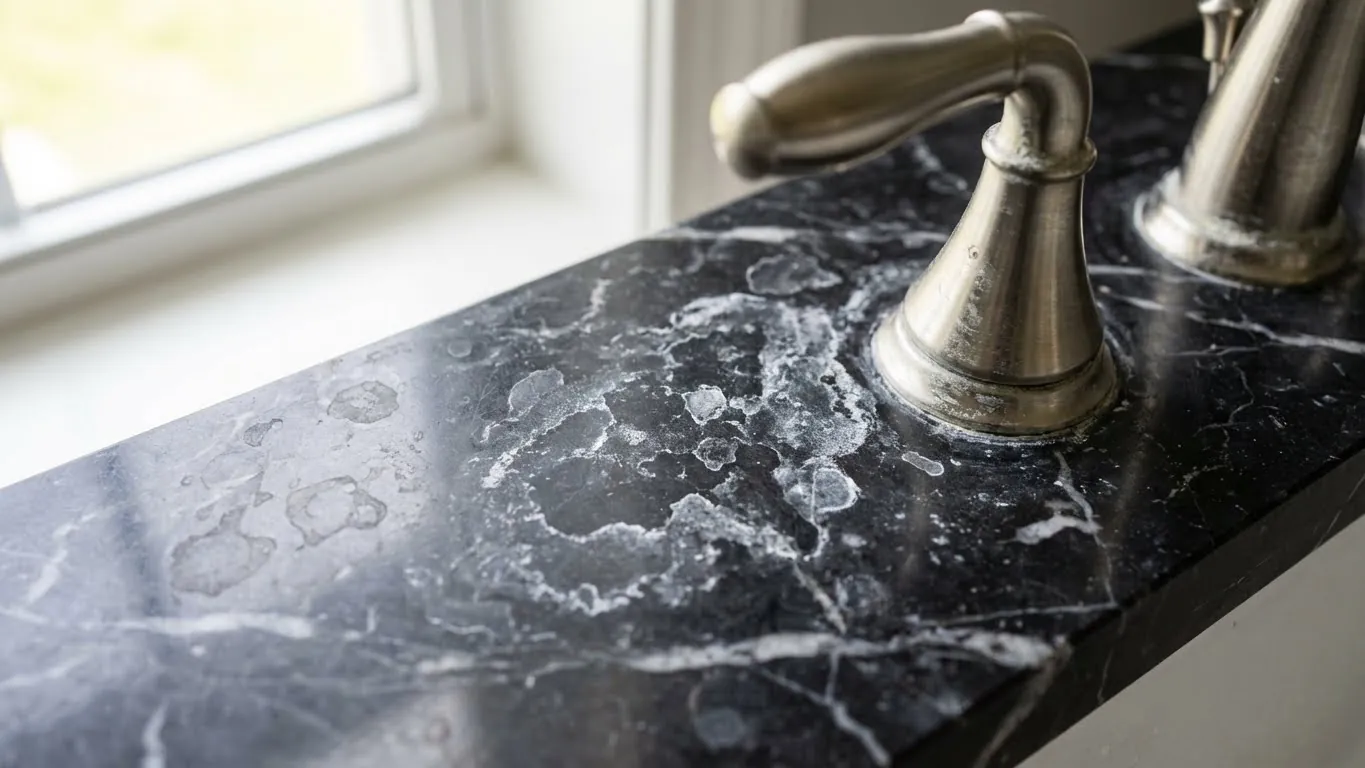
The Las Vegas problem nobody warns you about
If you live in the Las Vegas Valley, you already know the signs: crusty white buildup at faucets, cloudy shower glass, and dull rings on stone near sinks. The Southern Nevada Water Authority lists local water hardness at 280 ppm (parts per million), or 16 grains per gallon, categorized as "very hard."
But here's the critical part for homeowners: hard water damage is not just cosmetic, and on natural stone it can get confusing because multiple issues look similar.
Hard water deposits vs. etching vs. dullness (the quick decoder)
- Hard water deposits (mineral scale): usually feels slightly rough or crusty and builds up near edges, seams, faucets, shower lines.
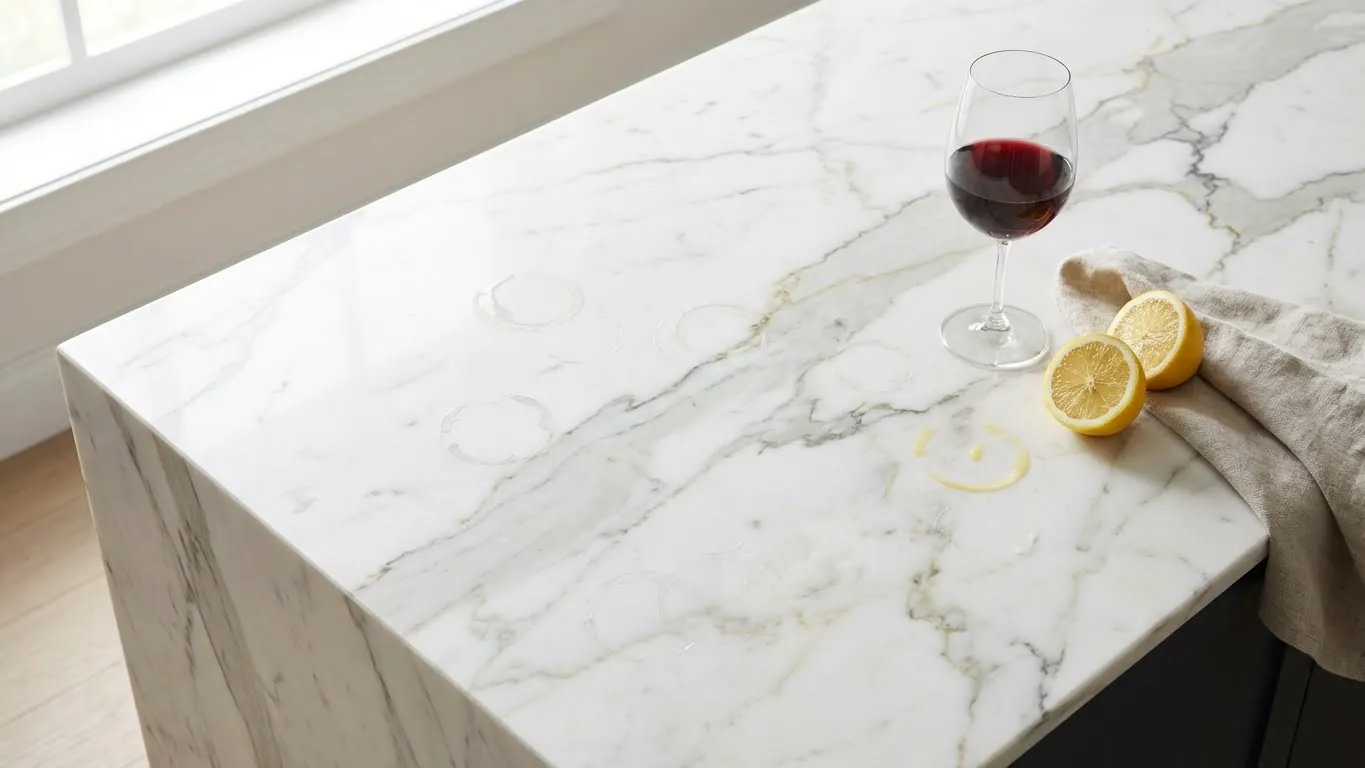
- Etching: looks like a dull "water mark," but it is actually a chemical change in calcium-based stones (marble, limestone, travertine).
- General dullness: often from residue (soap film), micro-scratches, or the wrong cleaner leaving a haze. Too much cleaner/soap concentration can leave a film and streaking.
Why hard water is extra brutal in Las Vegas bathrooms
Hard water contains dissolved minerals (mainly calcium and magnesium). When water evaporates, minerals remain behind, forming deposits. In a desert climate, evaporation happens fast, which means minerals get "left behind" fast.
Safe first steps (what you can do without risking your stone)
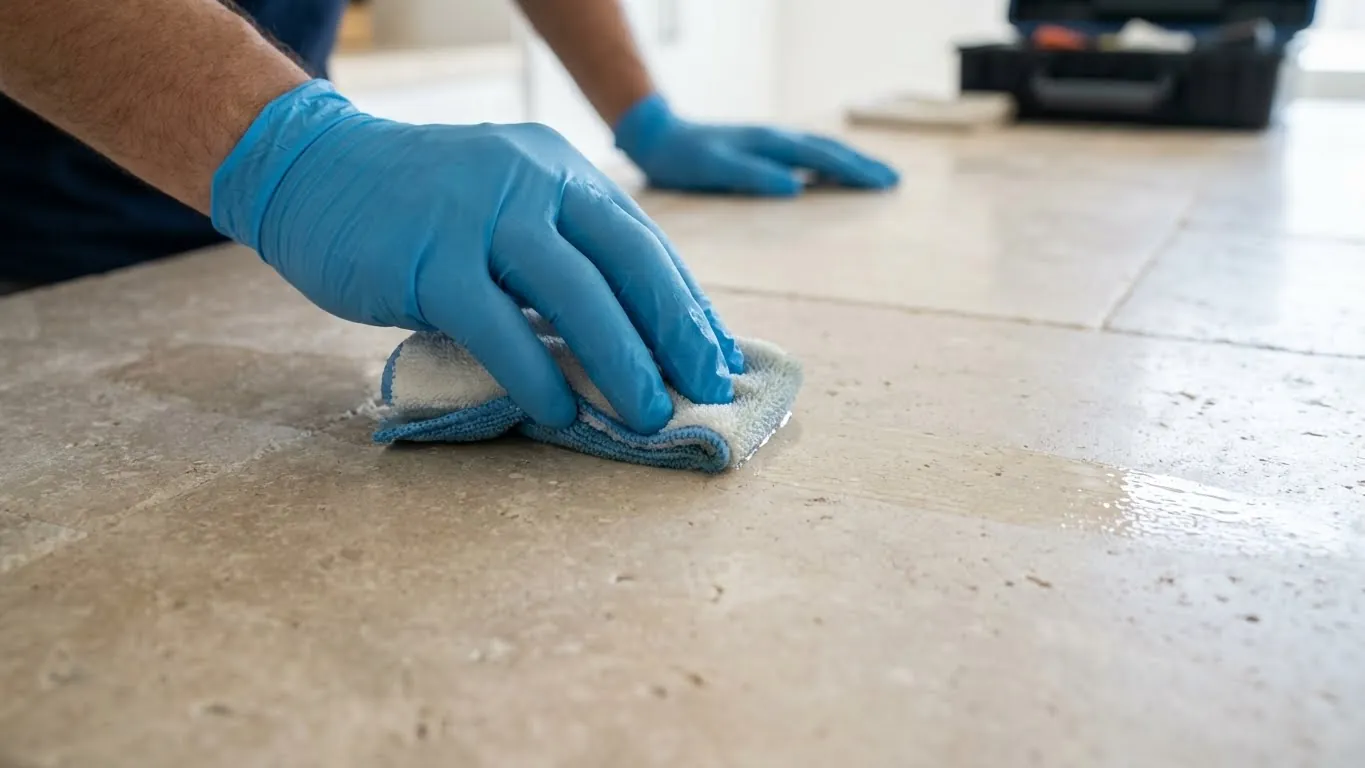
The baseline guidance for stone care is consistent: use a neutral cleaner, mild dishwashing detergent and warm water, rinse thoroughly, and dry with a soft cloth.
Try this process:
- Identify your surface (marble, granite, travertine, porcelain). If it is marble/limestone/travertine, assume it is acid-sensitive.
- Start with pH-neutral cleaning and a microfiber cloth.
- Dry completely after cleaning (drying prevents new deposits from forming).
- If the "spot" remains but feels smooth, you may be looking at etching, not mineral scale.
What not to do (common DIY mistakes)
Do not use acidic cleaners on calcium-based stones (even "natural" acids). Marble and related stones are vulnerable to mild acids.
Do not assume sealing prevents etching. It does not.
When to call a pro in Las Vegas
Call a stone pro when:
- The surface is dull but smooth (classic etching pattern).
- Deposits are heavy and you are unsure the stone can tolerate removal methods.
- The damage is in a "high-visibility" place (kitchen island, primary bath vanity, shower walls).
IICRC credibility note
If you want language that is true and verifiable: the IICRC offers a Stone, Masonry and Ceramic Tile Cleaning Technician (SMT) certification, and IICRC publishes ANSI-accredited standards that define best practices.
Tags:
Related Services
Marble Polishing & Restoration
Learn more
Travertine Repair & Restoration
Learn more
Limestone Polishing & Restoration
Learn more
Terrazzo Restoration
Learn more
Stone Sealing & Protection
Learn more
Pool Deck Stone Restoration
Learn more
Granite Polishing & Countertop Restoration
Learn more
Quartzite Countertop Restoration
Learn more
Marble Shower Restoration
Learn more
Travertine Shower Restoration
Learn more
Travertine Countertop Restoration
Learn more
Marble Countertop Restoration
Learn more
Water Stain & Etch Mark Removal
Learn more
Bathroom Tile Repair
Learn more