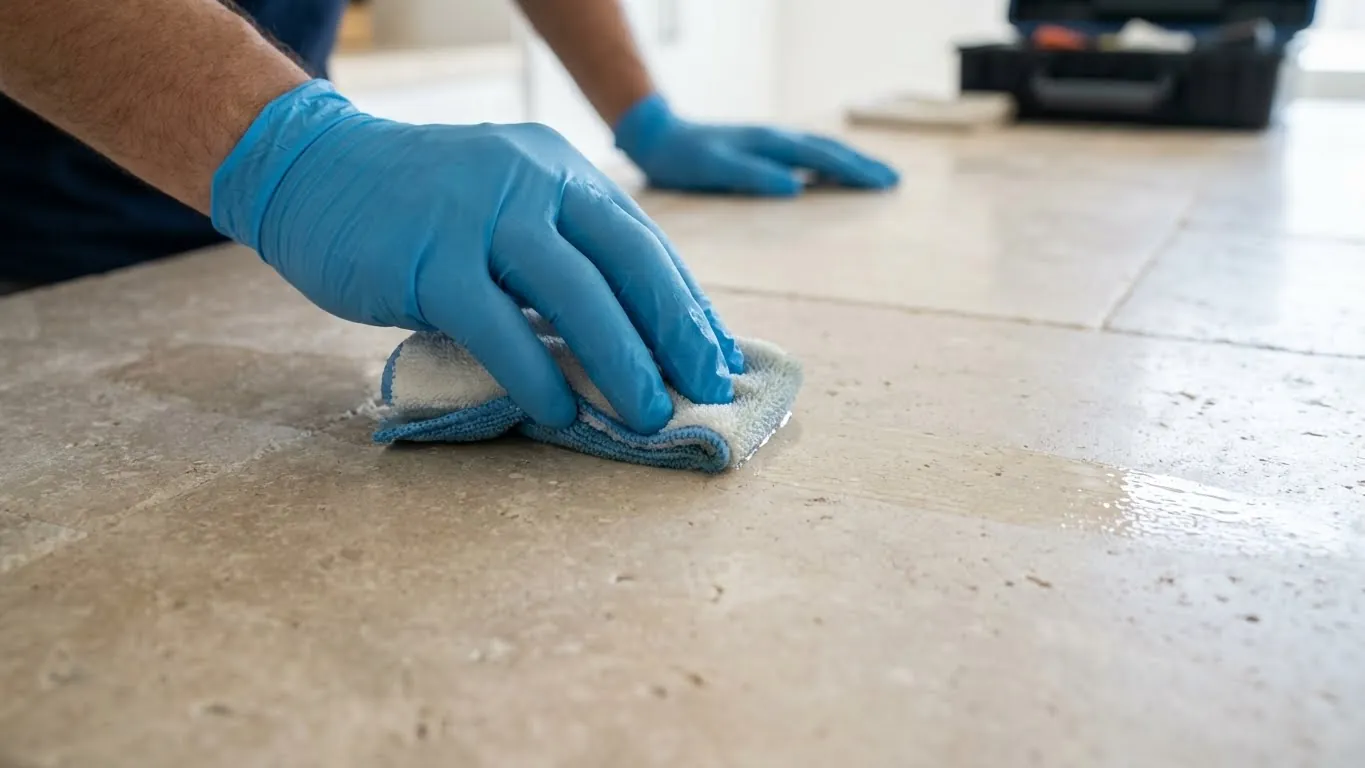
First: "Sealer" is usually an impregnator
Many sealing products are impregnators that act as repellents rather than truly sealing the stone.
Translation: it reduces absorption rate so spills are easier to clean before they set. The Natural Stone Institute gives similar consumer guidance in its natural stone countertop sealing notes: sealing can make stone more resistant to everyday dirt and spills, but it does not make it indestructible.
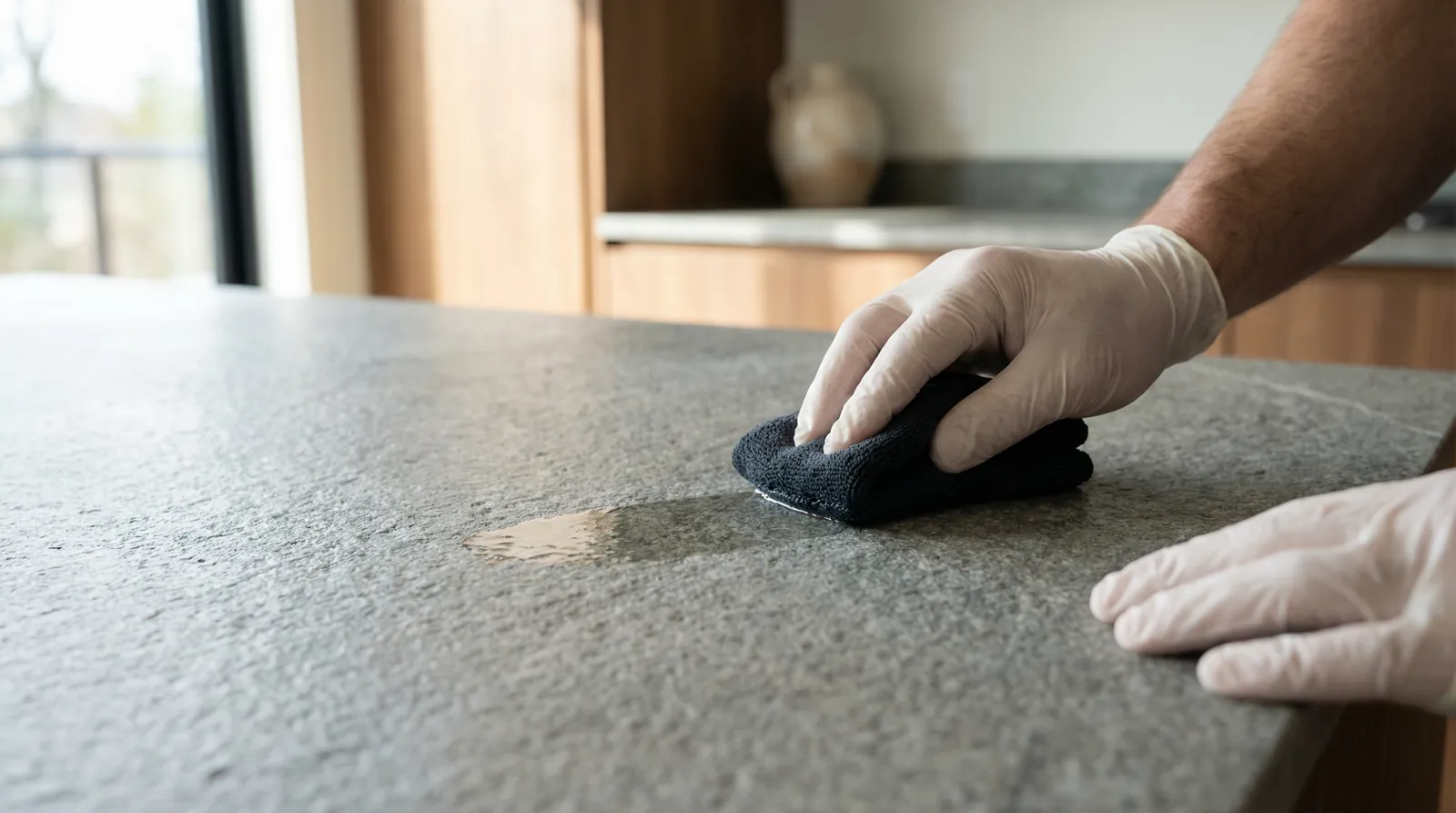
What sealing does
- Improves stain resistance, especially on more porous stones
- Gives you more reaction time for spills
What sealing does not do
- It does not make stone stain-proof
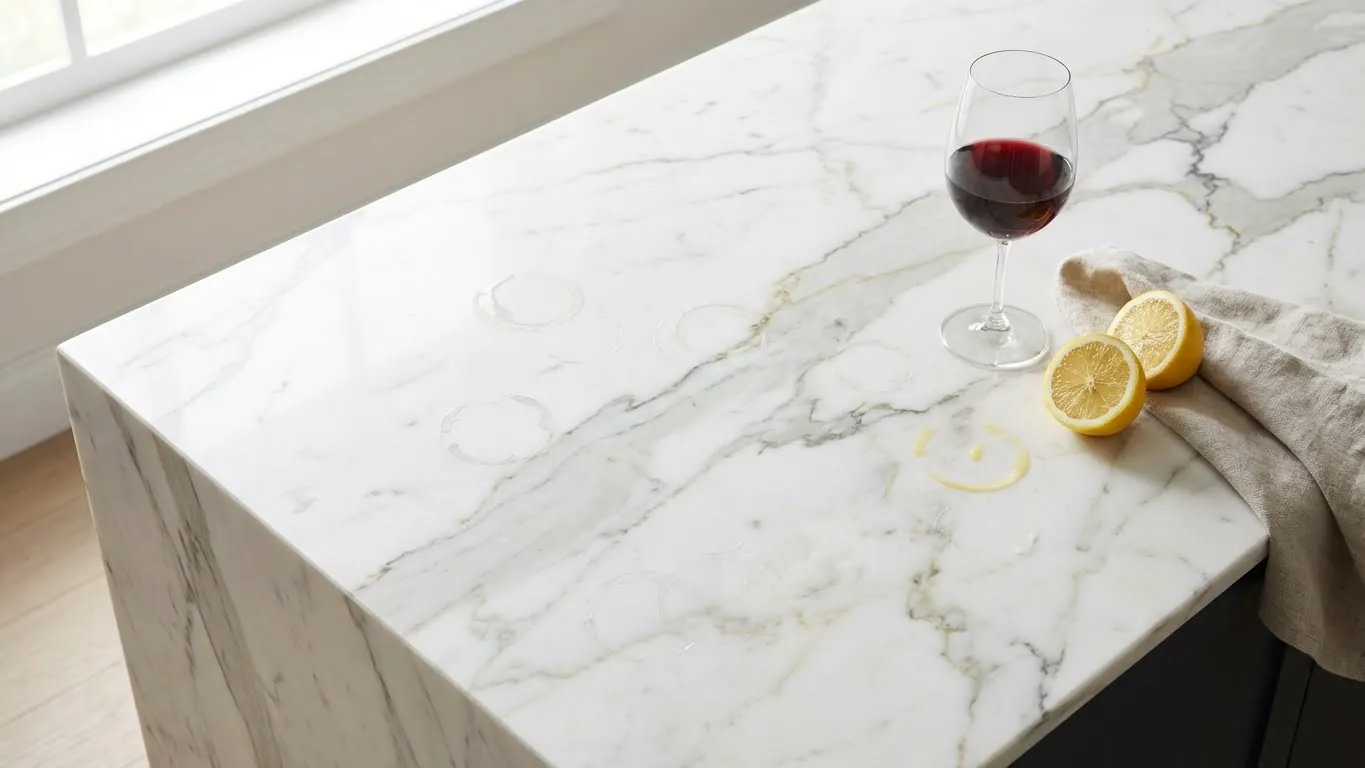
- It does not prevent etching on marble/limestone/travertine (acid sensitivity is the stone chemistry)
Why one sealer does not fit every stone
This is where a lot of bad sealing jobs start. Different stones have different pore structures. Dense stones and engineered surfaces may need products with very small particles that can actually enter the surface. More absorbent stones, including many marbles, limestones, and travertines, often need a different chemistry.
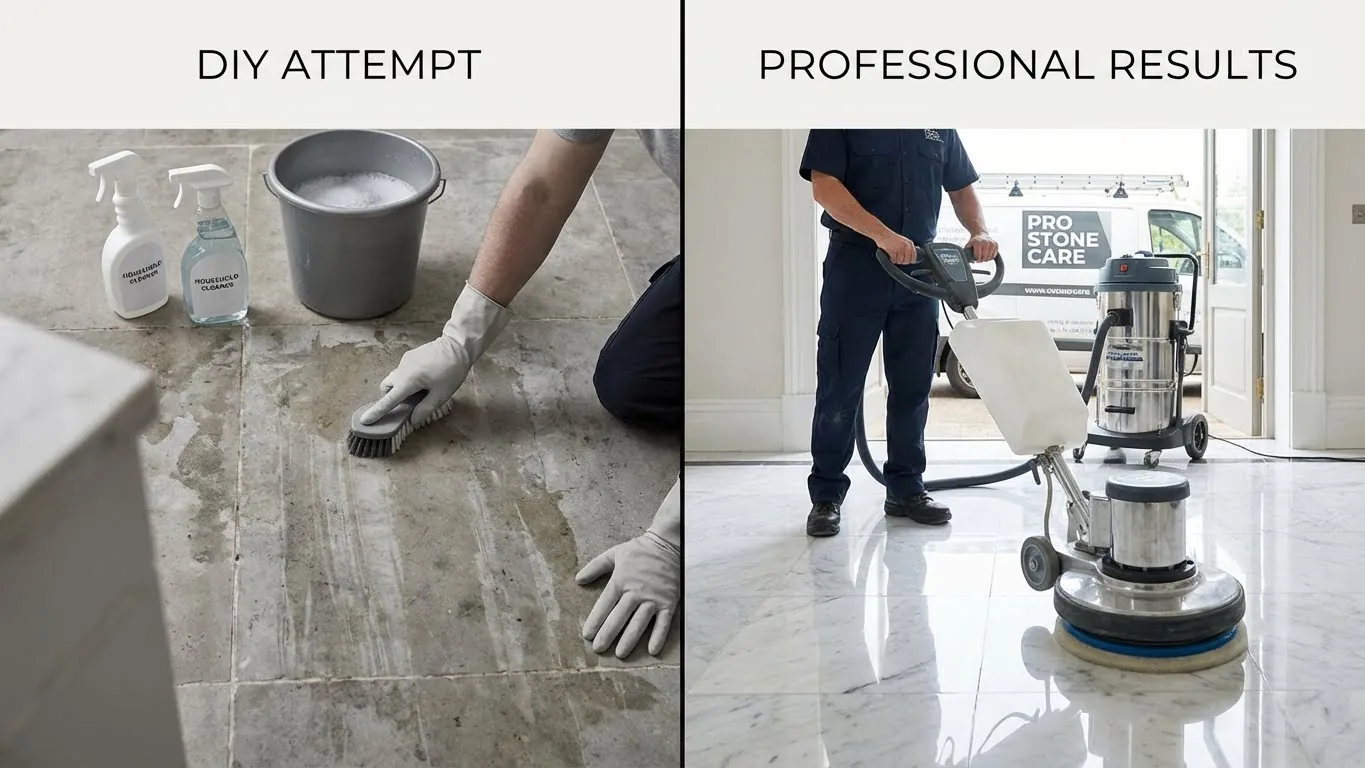
Using the expensive sealer from one stone on another stone is not automatically better. If the sealer cannot bond where it needs to bond, it can leave the surface under-protected or create residue that has to be removed before the stone can be polished correctly.
When topical coatings make sense
Most natural stone countertops and floors are better served by penetrating products that do not change the look of the stone. Topical coatings are different: they sit on top or bond to the surface. They can change appearance, affect vapor transmission, and create maintenance issues if the wrong product is used in the wrong room.
That is why our stone sealing service starts with the stone type, finish, location, and use pattern instead of one product for every home.
How to tell if your stone needs maintenance attention
A practical, homeowner-safe approach:
- Clean, rinse, dry (neutral cleaner approach)
- Watch how water behaves over time (absorption vs beading is one signal, but not the only one)
Because stone types and sealers vary widely, avoid fixed promises like "seal every 12 months." A better promise is inspection-based guidance, which aligns with professional standards culture.
Las Vegas-specific sealing realities
Hard water mineral residue is common here.
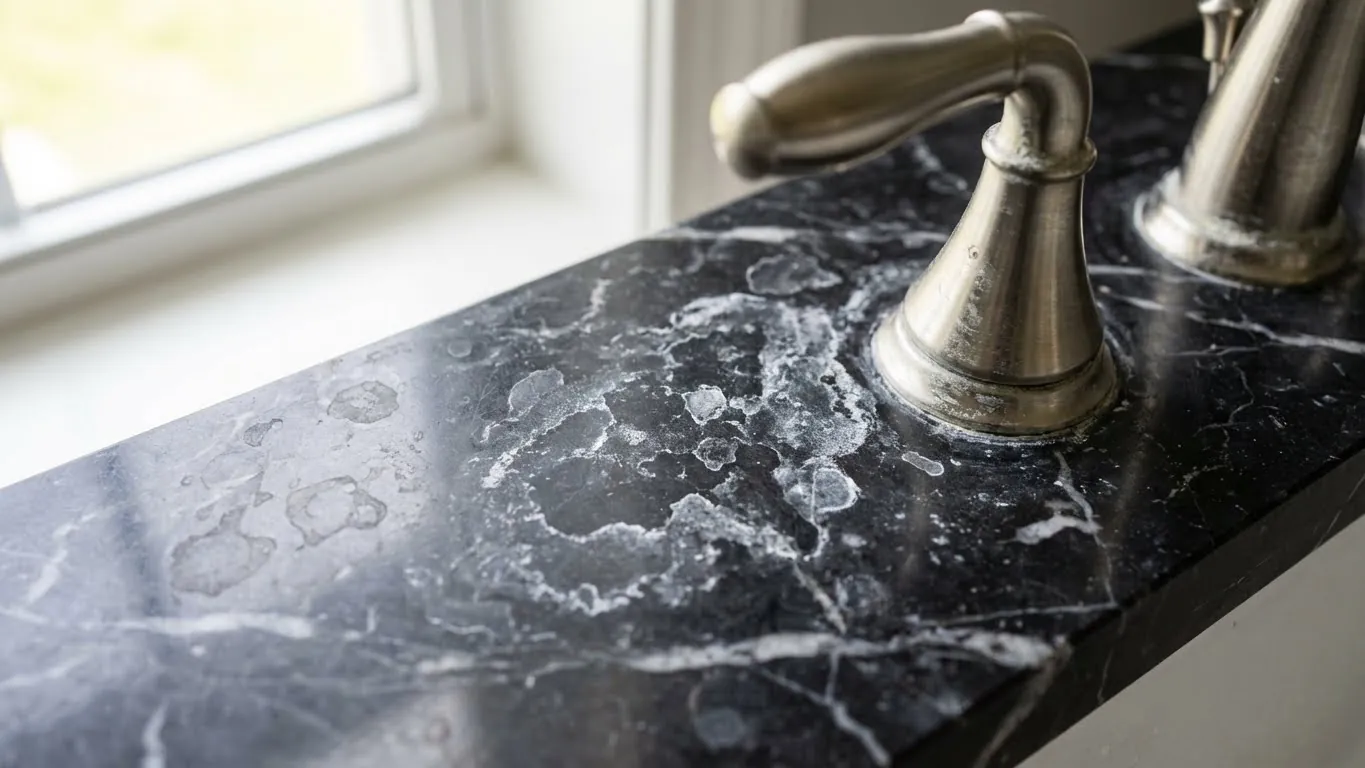
Sealing does not stop deposits from forming, but it can help reduce absorption of certain staining agents so cleanup is easier. If the stone is already etched, scratched, or hazy, sealing should usually happen after countertop polishing and restoration, not before it.
Tags:
Related Services
Marble Polishing & Restoration
Learn more
Travertine Repair & Restoration
Learn more
Limestone Polishing & Restoration
Learn more
Terrazzo Restoration
Learn more
Stone Sealing & Protection
Learn more
Grout Repair, Cleaning & Recoloring
Learn more
Pool Deck Stone Restoration
Learn more
Granite Polishing & Countertop Restoration
Learn more
Quartzite Countertop Restoration
Learn more
Marble Shower Restoration
Learn more
Travertine Floor Restoration
Learn more
Travertine Shower Restoration
Learn more
Travertine Countertop Restoration
Learn more
Marble Countertop Restoration
Learn more