Dull Limestone Floor Restored in a Las Vegas Laundry Room
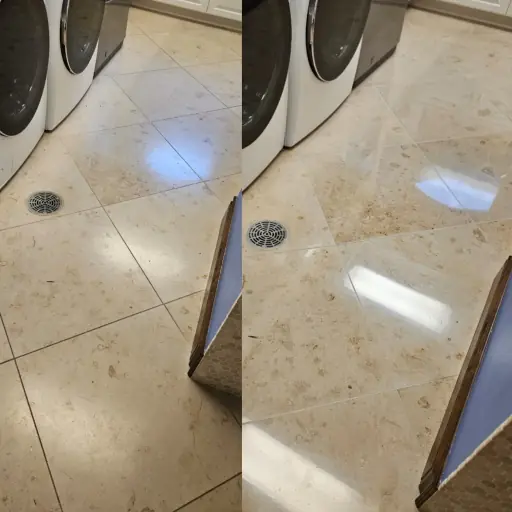
Dull limestone tile restored to a clean, consistent finish with visible clarity.
Limestone Restoration in Las Vegas
Limestone is soft, porous, and easy to damage with acidic cleaners or Las Vegas hard water. We restore it with gentle cleaning, diamond honing, controlled polishing, and breathable sealing.

Jamie Agresti
28 weeks ago
"Robert and Josh were so professional and skilled. I am 100% satisfied with my countertop, it looks perfect."
Gib Dawson
30 weeks ago
"Robert and Josh are knowledgeable, reliable, and fixed the problem I had with our quartz countertop. Thank you, gentlemen!"
Brian Rose
30 weeks ago
"Robert will not only restore your counters and surfaces he will also teach you how to care for them so well that his services will no longer be needed. If you need help but also want someone to teach you how to maintain your property he's the best contractor around."
stephen wallis
34 weeks ago
"Their knowledge, professionalism, and customer service are outstanding - second to none!"
Real Limestone Work
See the finish correction, surface protection, and careful prep that matter on soft limestone surfaces.
Dull limestone tile restored to a clean, consistent finish with visible clarity.
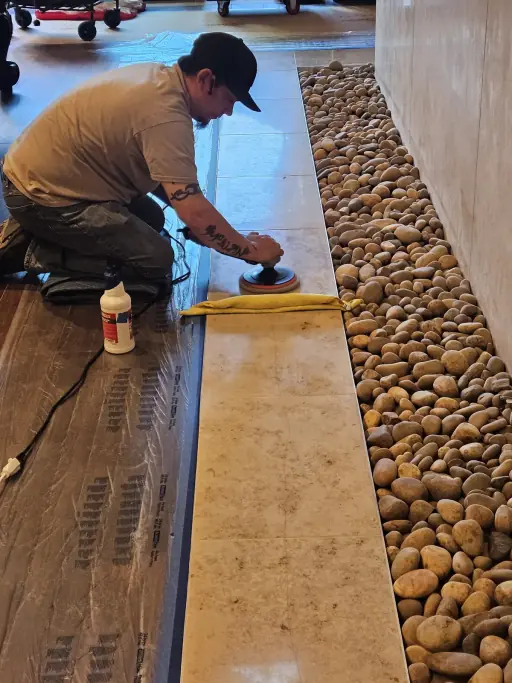
Floors, walls, and adjacent finishes are protected before honing and polishing begins.
Restore Before Replacing
Chalky, spotty, or uneven limestone usually has surface damage. Honing, polishing, and sealing correct the finish without jumping straight to replacement.
About This Service
Limestone is softer, more porous, and easier to etch than granite. The process has to be gentler, slower, and more controlled.
We use pH-safe cleaning, low-pressure honing, finish-specific polishing, and breathable sealers that protect the stone without changing its character.


Where We Restore Limestone
Traffic paths, scratches, mop residue, and uneven shine corrected with controlled honing and polishing.
Hard water haze, soap residue, grout buildup, and mineral deposits cleaned without harsh acidic products.
Etch marks, dull spots, staining risk, and finish inconsistency restored with limestone-safe methods.
What We Restore
Worn sealers, residue, and surface abrasion can leave limestone looking gray, cloudy, or flat even after mopping.
Acidic cleaners, citrus, wine, coffee, and hard-water products can chemically dull calcium-based limestone.
Limestone showers collect hard water minerals and soap residue that require stone-safe removal methods.
Porous grout holds soil and minerals, making the whole floor look dirty even when the limestone has been cleaned.
Sand, furniture movement, and daily traffic leave visible dull paths that need controlled honing and polishing.

What You Notice
These are the signs that cleaning alone is no longer solving the problem.
If the surface stays dull after cleaning, the issue is usually finish damage, residue, or worn sealer.
Texture changes are a sign that the surface has been etched, abraded, or affected by mineral deposits.
Fast absorption usually means the sealer is worn and the limestone is open to staining and soil.
Persistent shower staining can come from mineral buildup, soap residue, etching, or moisture absorption.
Simple, Professional Service
The process is controlled and surface-specific. Limestone does not respond well to aggressive grinding or harsh chemistry.
We identify your specific limestone type. Each has unique properties affecting the restoration approach and finish options.
pH-neutral cleaners remove residue, grime, and buildup without damaging limestone's soft surface.
Low-pressure diamond honing removes etching, scratches, and uneven wear while preserving stone character.
We polish to your preferred finish (matte, satin, or low sheen) based on the limestone type and location.
Breathable sealers slow staining and reduce maintenance while maintaining natural appearance.
Protection After Polishing
Polishing restores the finish. Sealing helps protect the restored stone from the next round of moisture, soil, and staining.
Limestone is porous, so sealing helps slow moisture, oil, soil, and stain absorption after the surface is restored.
A breathable impregnating sealer protects below the surface without forming a heavy coating or changing the stone's character.
High-traffic floors, showers, kitchens, and vanities need more frequent testing and resealing than low-use vertical stone.
Las Vegas Conditions
Limestone is calcium-based stone, so local water, dust, and common cleaning products can age it faster than homeowners expect.
Tile and Grout
Grout often holds the dirt and minerals that make limestone floors look permanently dirty. We clean the stone and grout together so the finished surface looks even.
After cleaning, we can seal the limestone and grout to slow future staining and reduce maintenance.
Service Areas
Pricing
Every job starts with a free estimate. Our minimum visit is $700, and most jobs come in around $1,200.
A visit usually covers the whole floor or surface, the grout, and a breathable sealer, not just the worst tile. That includes outdoor limestone and cantera.
What changes the price is the square footage, how deep the etching goes, and whether old sealer or residue has to come off first. Text us a photo or give us a call and we'll come out and take a look.
Questions
Most dull limestone can be restored with professional cleaning, honing, polishing, and sealing. The exact finish depends on the limestone type and whether a matte, satin, low-sheen, or higher-polish look is appropriate.
Limestone is a calcium-based stone, so acidic cleaners, lemon juice, wine, coffee, and some hard-water products can chemically dull the surface. Etch marks usually need honing or polishing because they are damage in the stone, not dirt on top.
Yes. We restore limestone showers, tub decks, and wet areas by removing soap residue, mineral buildup, haze, and surface wear with limestone-safe cleaners and controlled polishing methods.
Cleaning removes soil and residue, while honing removes etching, dullness, and light surface damage. Polishing refines the sheen, and sealing helps slow moisture, staining, and soil absorption after restoration.
In many cases, yes. Restoration avoids demolition, preserves the installed stone, and usually costs far less than replacement.
Most residential limestone polishing projects take one day, but timing depends on square footage, damage level, grout condition, and whether sealing is included. Large floors, showers, or heavy etching can take longer.
Sealing frequency depends on the location and how the limestone is used. Kitchens, showers, and high-traffic floors typically need more frequent sealing than low-use vertical surfaces.
Yes, but limestone needs a careful approach. Many acidic hard-water removers can etch limestone, so we use stone-safe cleaning, controlled abrasion, and polishing where needed to remove buildup without creating more damage.
Our minimum visit is $700, and most jobs come in around $1,200. The price depends on the square footage, how deep the etching goes, and whether old sealer or residue has to come off first. A visit usually covers the whole floor or surface, the grout, and a breathable sealer. The estimate is free.
Yes. We restore exterior limestone and cantera, including columns, fireplace surrounds, and patios, as well as interior floors, showers, and counters.
It really depends on what we're working with: the size of the floor, how worn or etched it is, and what has to come off first. We'll give you the timeline with your free estimate.
Yes. All of our work is backed by a one-year warranty.
Get an Expert Opinion
Send photos or request an in-home assessment. We will tell you whether your limestone needs cleaning, honing, polishing, sealing, or a more targeted repair.
Same-week appointments · Licensed and insured · Las Vegas Valley
Every job is backed by our one-year warranty.
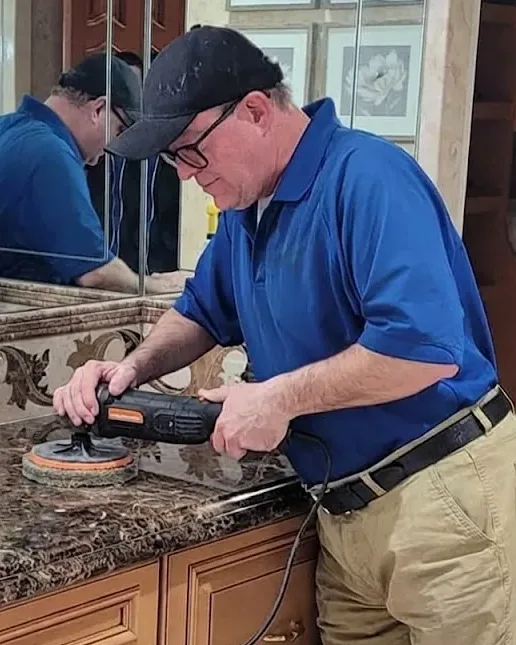
Owned by Robert Falzone, an IICRC-approved instructor who trains other stone restoration professionals. Robert and our lead technician, Josh, do the work themselves.