
Expert Stone Repair • Las Vegas, NV
Pool Tile Cleaning & Calcium Removal in Las Vegas
Las Vegas hard water leaves calcium scale at the waterline, stains on pool coping, and mineral buildup on travertine decks. We remove it without the acid cleaners that destroy natural stone. IICRC-certified technicians serving Henderson, Summerlin, and all of Las Vegas Valley.
What our customers say
5 stars on Google Reviews
Regis Jackson
3 days ago
"Great company! Came out initially to provide a quote for 4 kitchen countertops, 5 bathroom countertops, and 2 laundry countertops. We were thinking of replacing all the countertops, however we were looking at 50K to 60K and weeks in disarray during construction. Expert Stone Repair made all of them look like new. My wife and I are extremely happy with the work that was done as well as the finishes. Highly recommended."
Gib Dawson
5 weeks ago
"Robert and Josh are knowledgeable, reliable, and fixed the problem I had with our quartz countertop. Thank you, gentlemen!"
Phillip Fehr
8 weeks ago
"Can't say enough good things. Never thought I would see stains get pulled out of Granite like I did. Well done Rob, I'll keep you on speed dial and wont wait so long next time!"
Our process
How pool tile calcium removal works
From scale assessment to sealed stone.
Assess Scale Type & Stone
We identify whether the scale is calcium carbonate or the harder calcium silicate, and confirm the stone type — travertine, limestone, ceramic, or other. That tells us what approach is safe and effective.
Gentle Media or Hand Removal
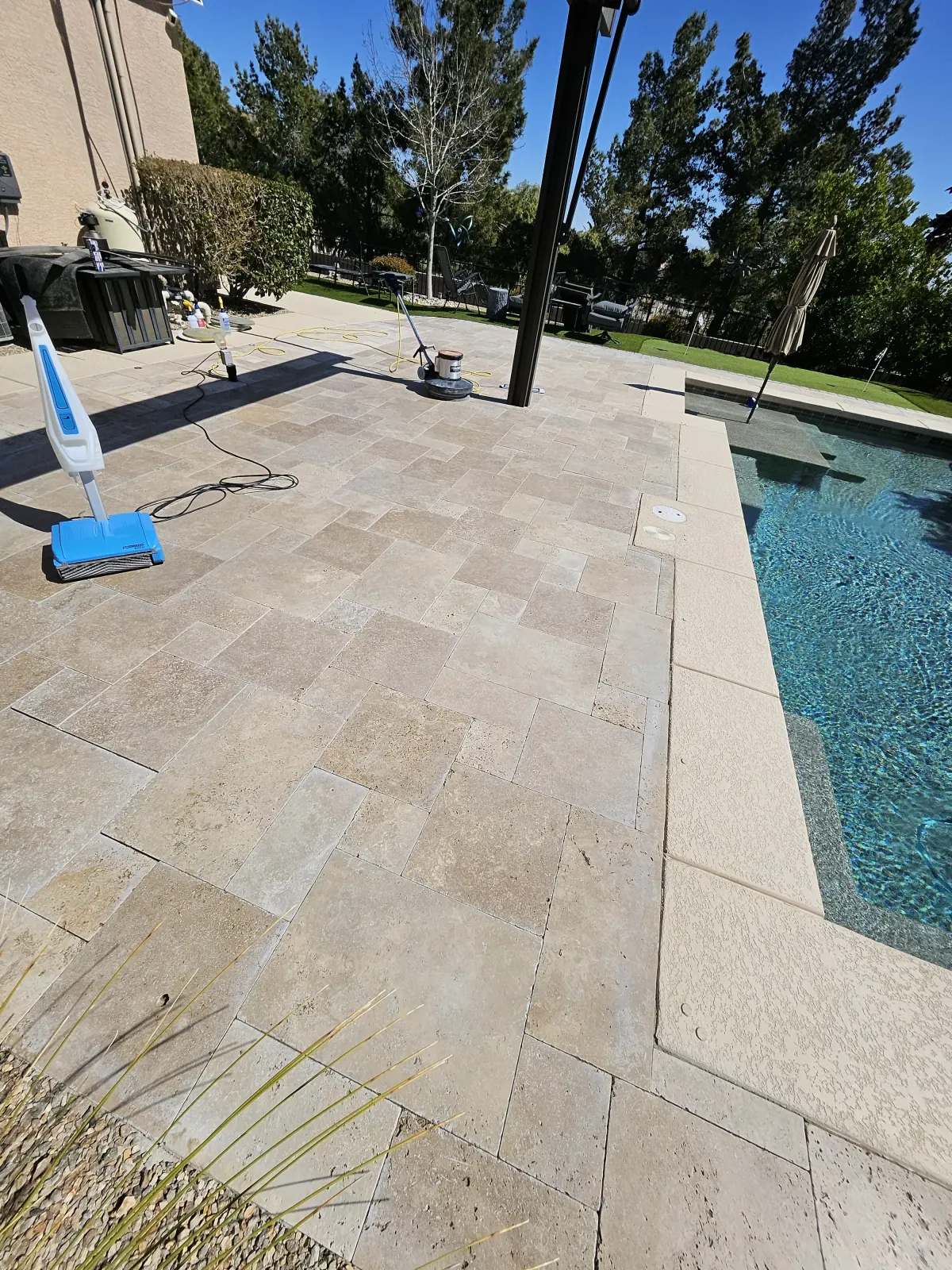
We remove scale using methods matched to the stone. Natural stone like travertine and limestone gets hand treatment and appropriate media — never bead blasting or pressure washing, which damage porous stone surfaces.
Polish & Detail Coping
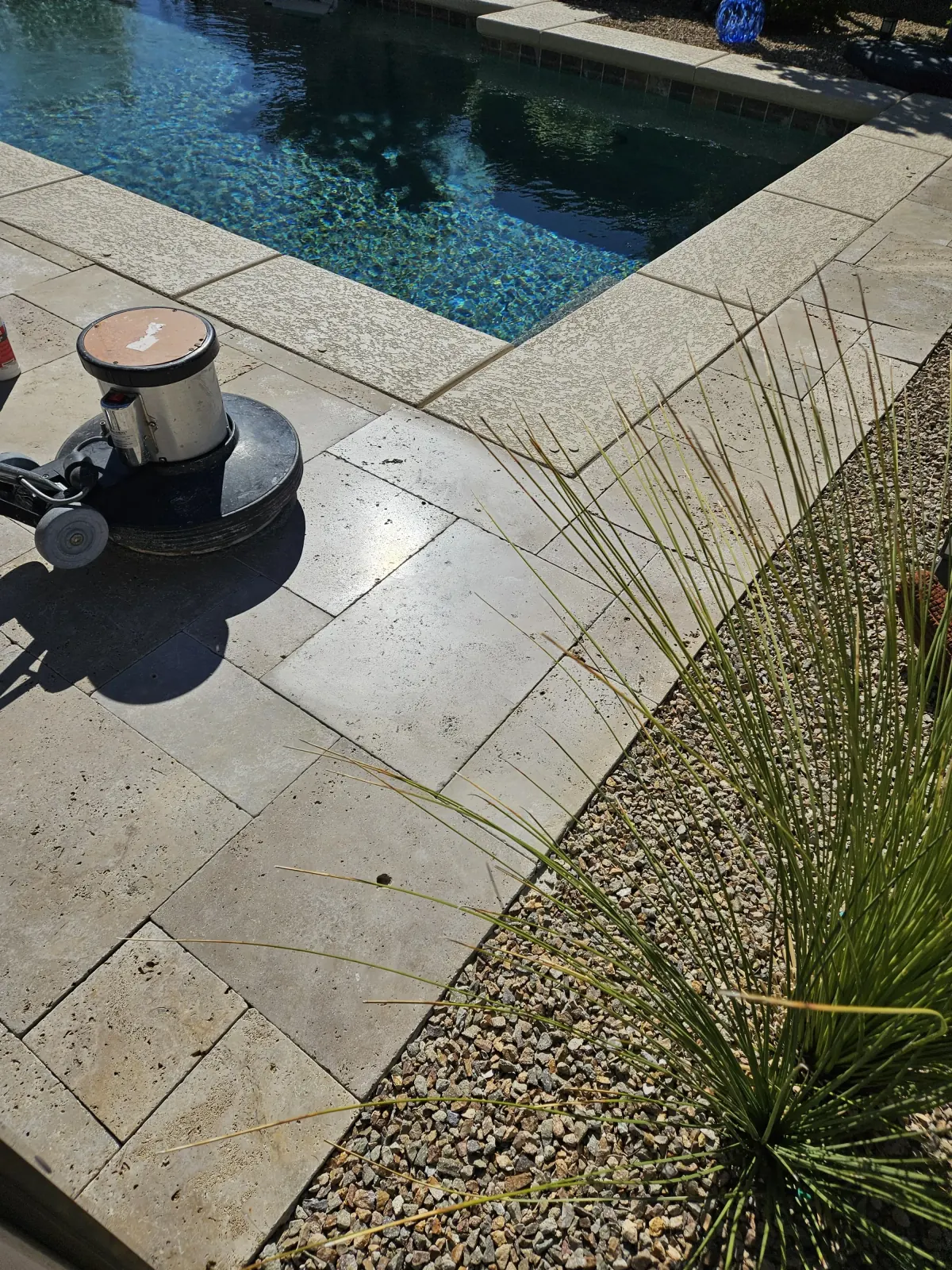
Once the scale is off, we hone and polish the coping and deck stone as needed to restore a clean, consistent surface. Pool deck tile cleaning may involve additional detail work in grout lines and corners.
Seal to Slow Rebuild
We apply a penetrating sealer appropriate for wet outdoor stone. Sealing won't stop scale in Las Vegas water, but it significantly slows how fast calcium rebuilds and makes the next cleaning easier.
See it in action
Watch: Pool Tile Cleaning in Las Vegas
Calcium scale buildup on pool tile is one of the most common issues we see in the Las Vegas Valley. Here's what the cleaning process looks like.
Pool tile cleaning and calcium removal. Las Vegas Valley.
Pool tile calcium removal and pool deck restoration
What we fix
Each type of pool scale and staining needs a different approach. Here's what we see most often and how we handle it.
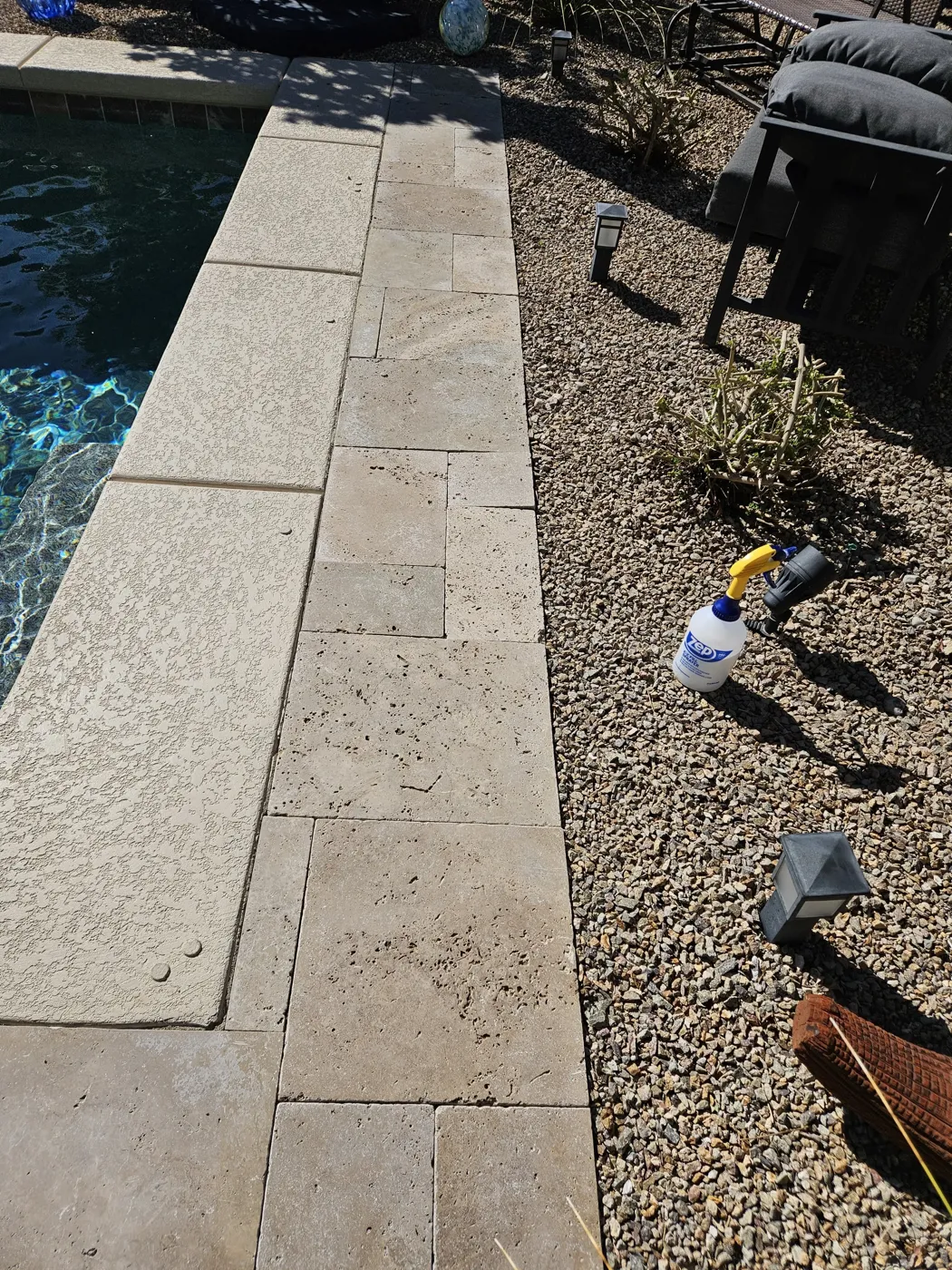
Calcium Scale at the Waterline
That white or gray crust at the waterline is calcium carbonate or calcium silicate deposited as pool water evaporates. Las Vegas municipal water is among the hardest in the US, so pools here scale much faster than most cities. The longer scale sits, the harder it bonds to the tile or stone surface.
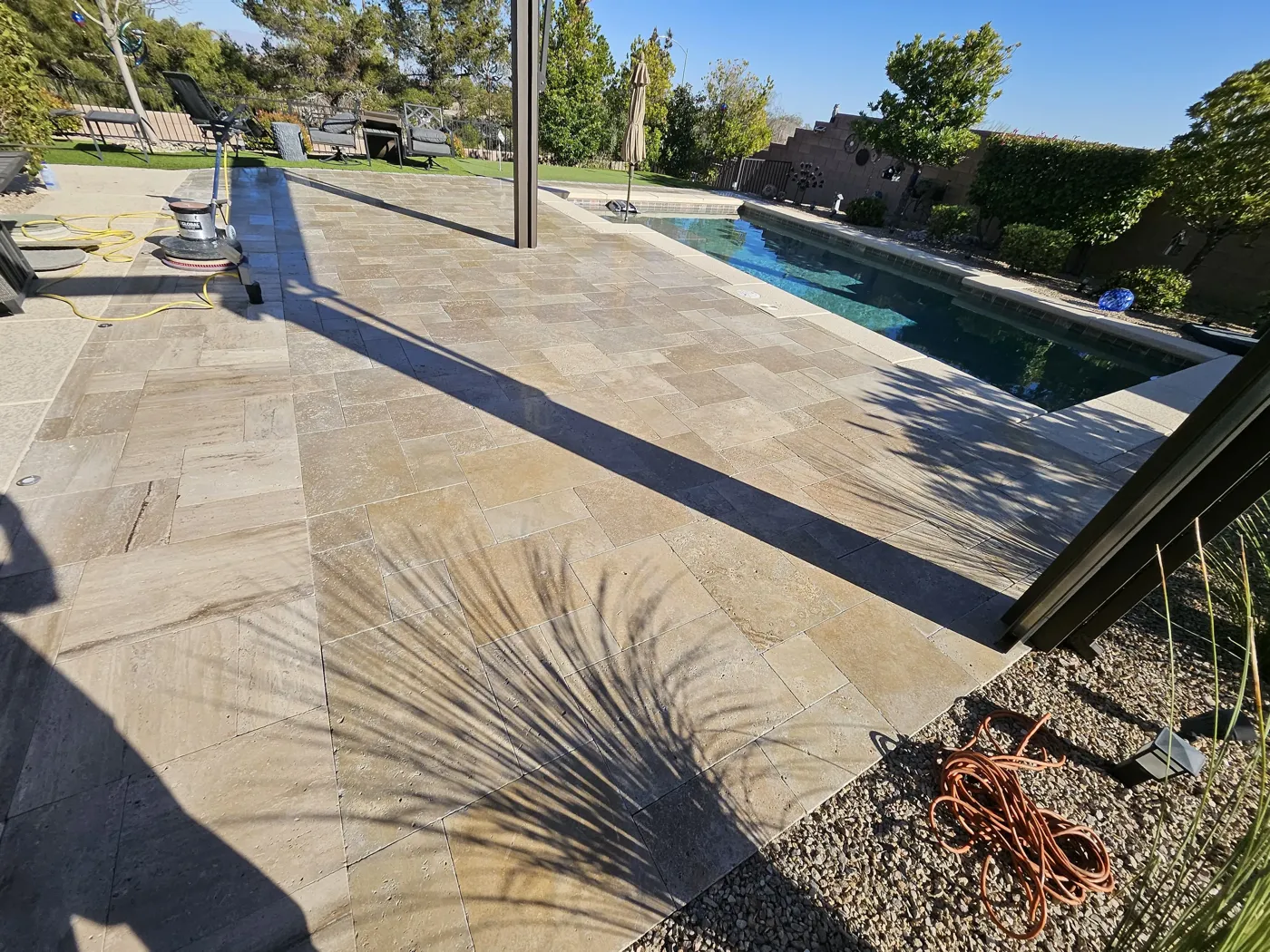
Hard Water Staining on Coping
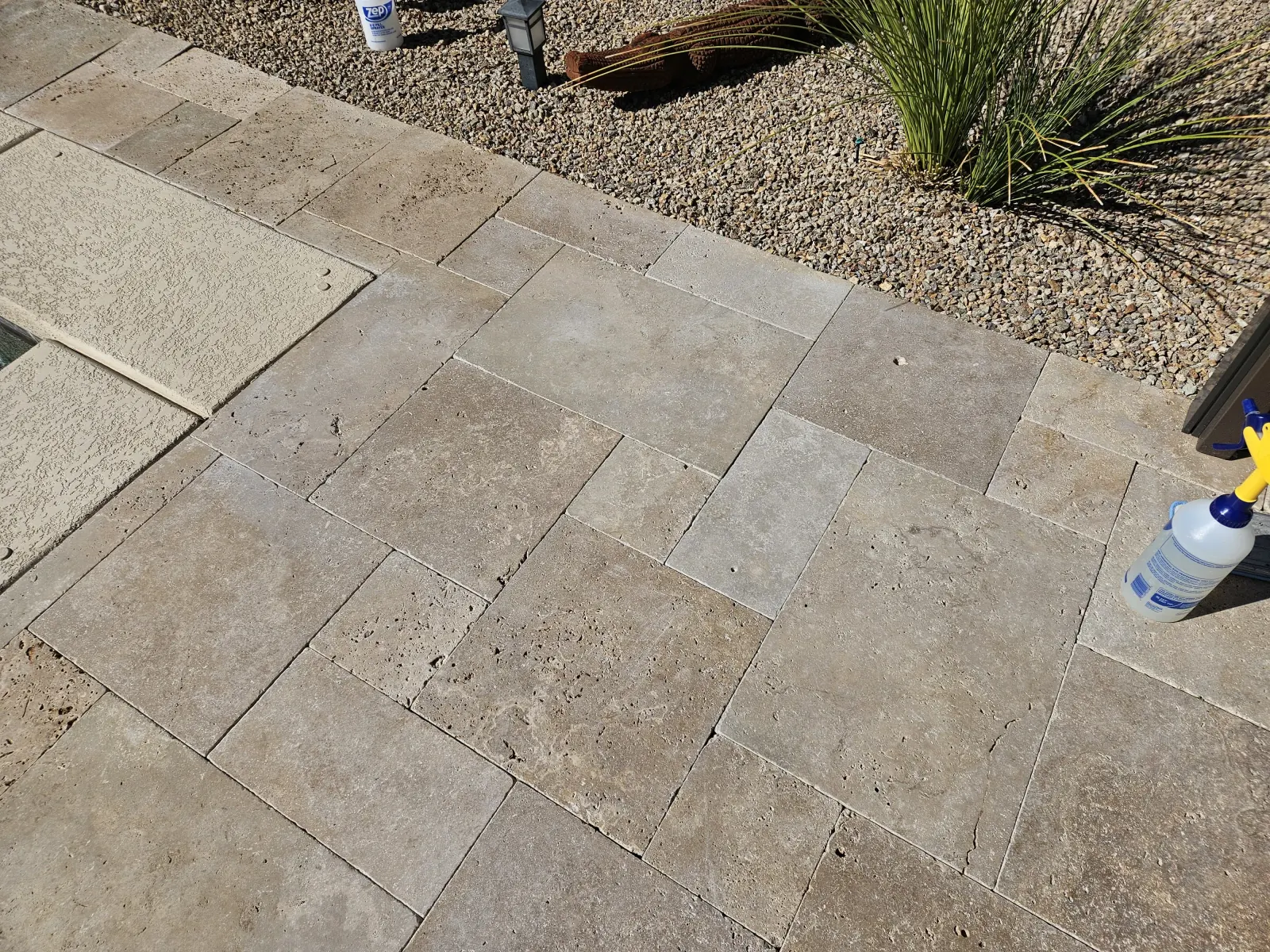
Pool coping — the stone that caps the pool edge — takes a constant beating from splashing water, sunscreen, and mineral deposits. Travertine and limestone coping is porous and absorbs staining quickly. We clean the stone without acid treatments that would damage it.
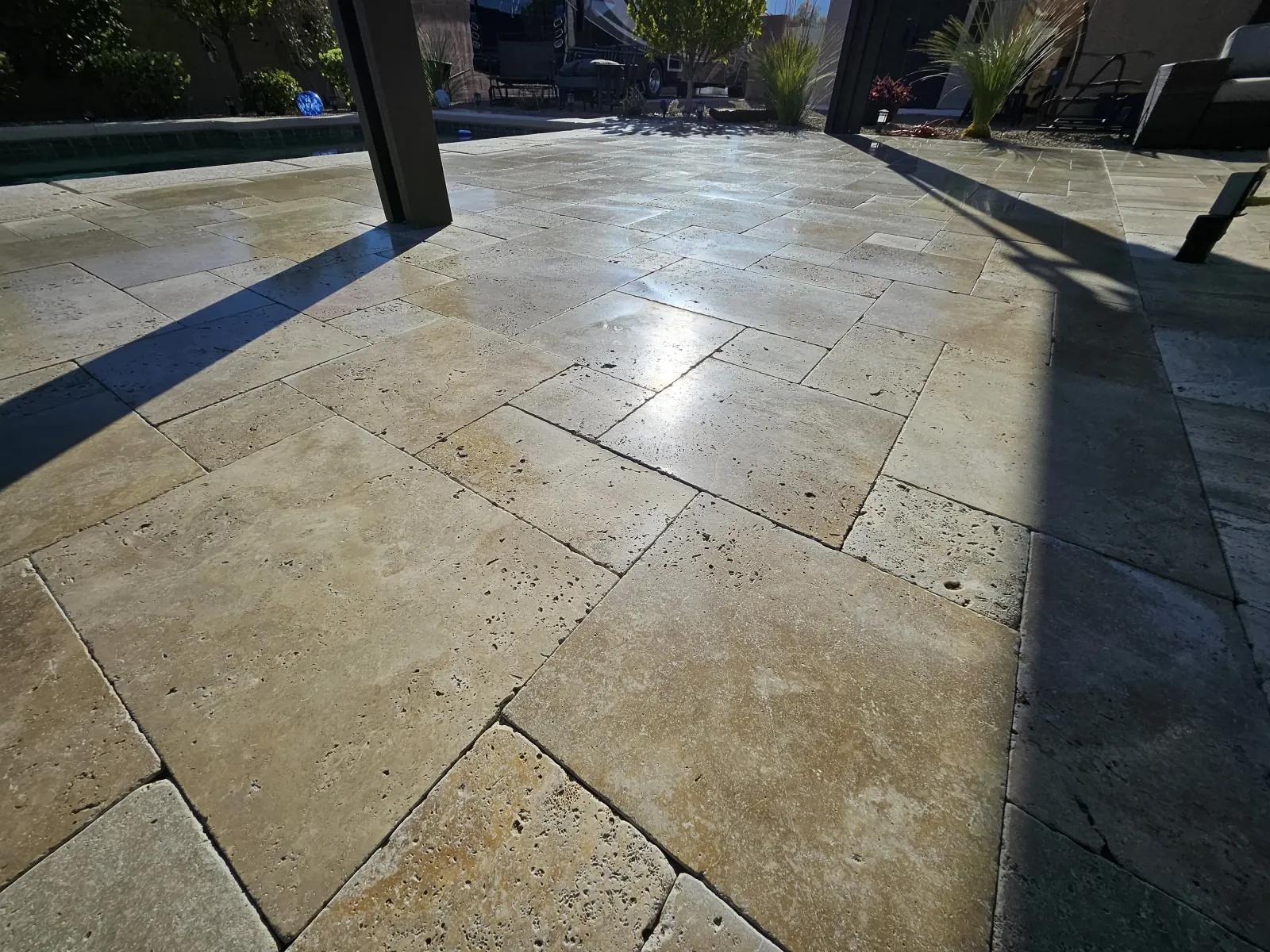
Etched or Dull Travertine Deck
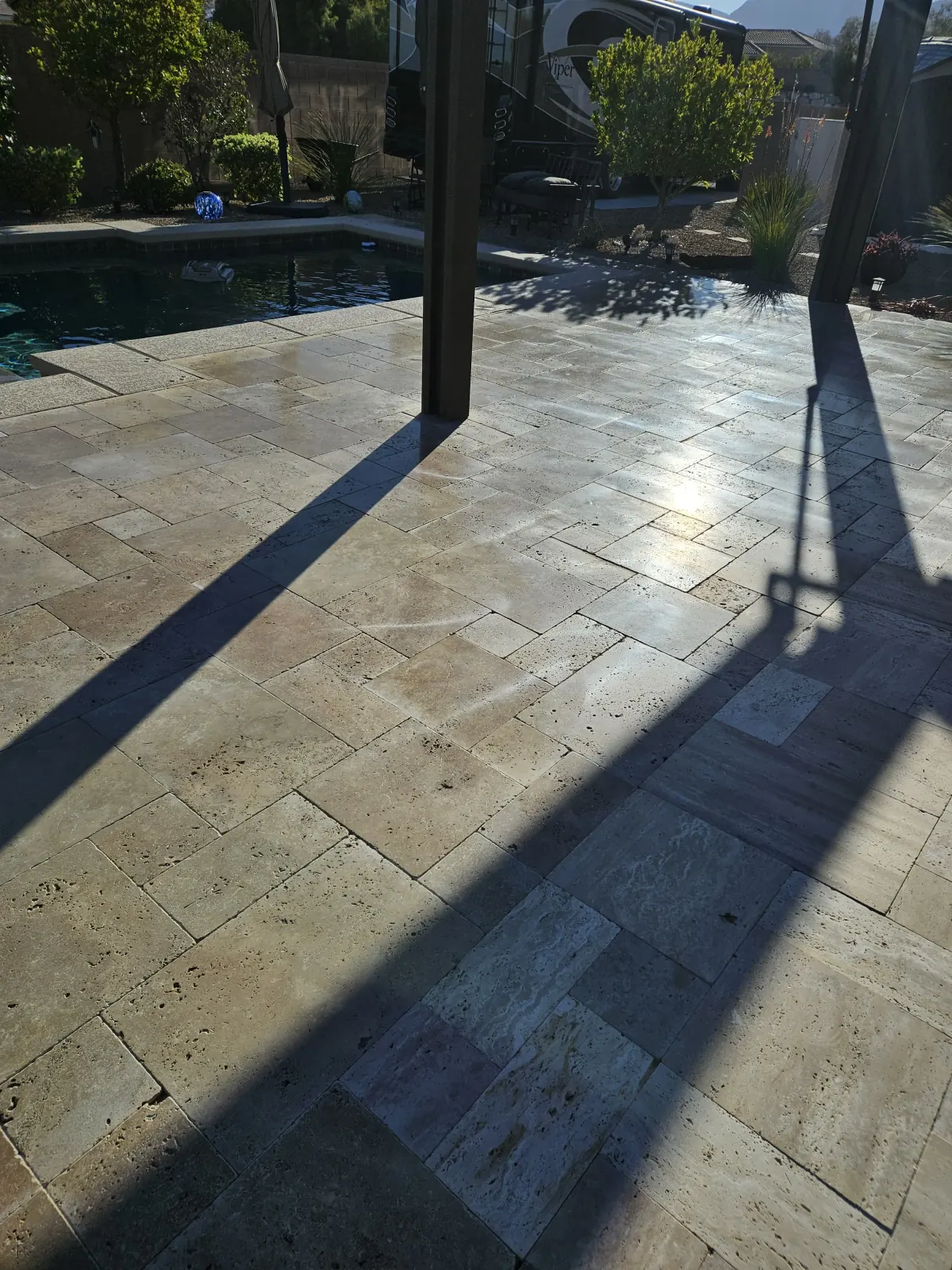
Travertine pool decks get etched from acidic pool chemicals, sunscreen residue, and acid-based cleaners that well-meaning homeowners have tried. The surface turns dull and rough in spots. We hone out mild etching and restore the travertine to a consistent finish. Pool deck tile cleaning includes attention to the stone surface, not just the grout.
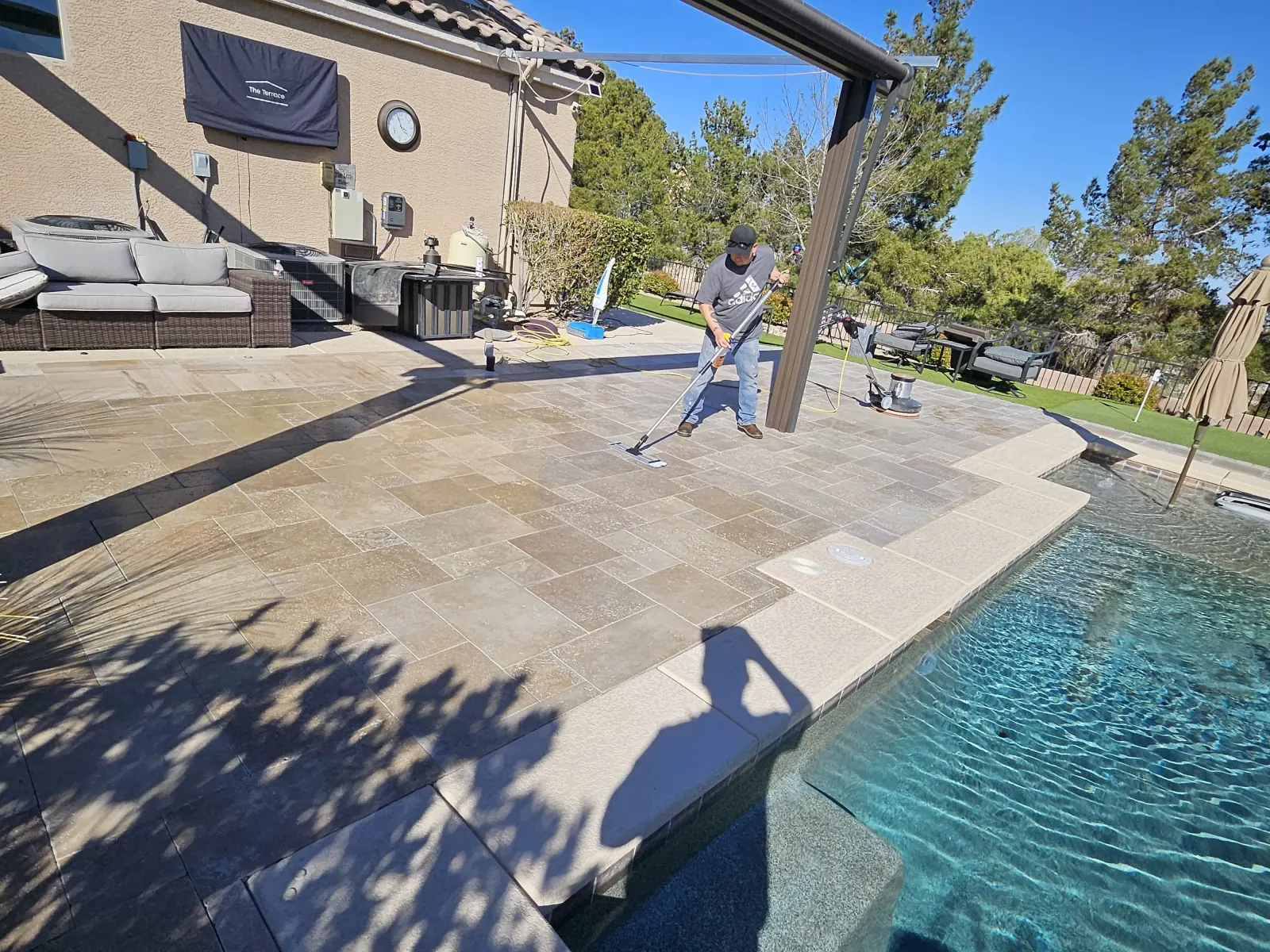
Efflorescence on Stone & Grout
Efflorescence is the white powdery or crusty deposit that forms when water carries soluble salts through stone or grout and deposits them on the surface as water evaporates. Common in pool decks and stone surrounds. It looks like scale but requires different treatment. We identify it correctly and treat it without damaging the stone underneath.
Local conditions
Why pool stone scales faster in Las Vegas
Among the hardest municipal water in the US
Las Vegas water consistently ranks among the hardest in the country — typically 250–400 mg/L of dissolved calcium and magnesium. Every gallon that splashes onto your pool coping or evaporates from the waterline leaves minerals behind. In most cities this is slow. Here it's fast, and scale you ignore today will be significantly harder to remove in six months.
Intense desert heat accelerates evaporation
Pool water evaporates fast in Vegas summers. More evaporation means more mineral concentration and faster scale deposit at the waterline. The sun also degrades pool tile grout and sealers quicker than in cooler climates, opening up more porous surface area for scale to grip.
Desert dust and UV degrade stone sealers
Travertine pool deck sealing is not a one-time job in this climate. UV radiation and fine desert particulate break down sealers faster outdoors here than anywhere in the country. An unsealed or under-sealed travertine pool deck absorbs water, scale, and sunscreen quickly — and becomes much harder to clean.
Pool chemicals damage natural stone when misapplied
Muriatic acid is a common DIY pool tile cleaning recommendation and it works on glazed ceramic tile. But muriatic acid and other acidic cleaners etch and dissolve travertine, limestone, and marble — the exact stones most Las Vegas pool decks are built from. We get calls from homeowners who've tried acid cleaners and made the surface worse. Our pool tile cleaning service uses stone-safe methods from the start.
Before your appointment
What to expect
Timeline
Most pool tile cleaning jobs take one day. If deck and coping restoration is included, we may schedule a second day. We'll estimate your specific job when we see it.
Prep
Waterline tile work usually requires lowering the water 6–12 inches. Deck and coping work requires no water level change. We'll tell you exactly what's needed when we schedule.
Mess
We work outdoors with water present, so cleanup is straightforward. Removed scale and debris are contained. We leave the area clean before we go.
Pricing
We quote per job based on pool size, scale severity, and stone type. No hourly surprises. Send us photos for a ballpark estimate before we visit.
Timeline
Most pool tile cleaning jobs take one day. If deck and coping restoration is included, we may schedule a second day. We'll estimate your specific job when we see it.
Prep
Waterline tile work usually requires lowering the water 6–12 inches. Deck and coping work requires no water level change. We'll tell you exactly what's needed when we schedule.
Mess
We work outdoors with water present, so cleanup is straightforward. Removed scale and debris are contained. We leave the area clean before we go.
Pricing
We quote per job based on pool size, scale severity, and stone type. No hourly surprises. Send us photos for a ballpark estimate before we visit.
Honest assessment
What's realistic
Most pool tile calcium removal jobs get the tile and coping back to looking clean and bright. Fresh calcium carbonate scale — the softer kind — comes off readily. Older calcium carbonate that's been baking in Vegas sun for years takes more work but still responds well to treatment.
Calcium silicate is different. It's much harder and bonds more tightly to the surface. Heavy silicate deposits take longer and may not come off completely in one visit. We'll tell you what we're dealing with when we assess the job and set honest expectations upfront.
Etching in travertine pool deck stone can often be honed out, restoring a consistent surface. Deep pitting — voids that have opened up in the travertine — can be filled and color-matched, but may not be completely invisible up close. We'll show you what's achievable before we start.
One thing to understand about Las Vegas pool stone: sealing is maintenance, not a permanent fix. Travertine pool deck sealing slows scale and stain buildup significantly, but this water will always push minerals through. Plan on cleaning and resealing every 2–3 years to keep the stone looking good long-term.
Text Us a PhotoDIY check
What to try before calling a pool tile cleaning service
If you have ceramic or glass pool tile, a pumice stone designed for pool use can scrub mild calcium scale off the waterline without damaging glazed tile surfaces. This works for light deposits and is a reasonable DIY option for ceramic tile.
If your pool is surrounded by travertine, limestone, or marble — stop. Do not use pumice on natural stone. Pumice is abrasive and will scratch the surface. Do not use muriatic acid or acidic cleaners on travertine or limestone pool coping or deck. These stones are calcium-based and acid dissolves them. We see damaged pool coping regularly from well-intentioned homeowners who tried the same products that work on ceramic tile.
The vinegar test helps identify scale type: drop a small amount of white vinegar on the scale deposit. Fizzing means calcium carbonate — the more manageable form. No reaction means calcium silicate — harder to remove and definitely not a DIY job.
Pool deck tile cleaning that involves natural stone around a pool should be left to professionals who understand stone chemistry. The wrong approach costs more to fix than calling us from the start.
Common questions
Pool tile cleaning and calcium removal FAQ
Do you need to drain the pool to clean pool tile?
For waterline tile cleaning, we typically lower the water level 6–12 inches to expose the scale line — you don't need a full drain. For travertine pool deck cleaning, pool coping, and stone restoration work around the deck, no water level change is needed at all. We'll tell you exactly what prep is required when we schedule.
How long does pool tile cleaning take?
Most pool tile cleaning and calcium removal jobs take one day. A straightforward waterline cleaning on a standard pool runs 4–6 hours. If the deck or coping stone also needs honing and sealing, we may schedule a second day for that work. We'll give you a timeline estimate when we see the job.
Is bead blasting safe for travertine and natural stone?
No — and this is one of the most important things to know. Bead blasting and pressure washing can damage travertine, limestone, and marble by blasting open the pores and micro-pitting the surface. We use gentler media and hand techniques matched to the stone type. Ceramic pool tile can handle more aggressive cleaning than natural stone ever should.
How do I know if it's calcium carbonate or calcium silicate?
The quick test: put a few drops of white vinegar on the scale. If it bubbles or fizzes, it's calcium carbonate — the softer form that responds to chemical treatment and careful mechanical removal. If nothing happens, it's likely calcium silicate, which is much harder and takes longer to remove. We assess scale type on-site before recommending an approach.
How often should stone pool coping be cleaned and sealed?
In Las Vegas, we generally recommend cleaning and inspecting travertine pool coping every 1–2 years and resealing every 2–3 years depending on water chemistry, sun exposure, and how quickly scale rebuilds. Vegas water is among the hardest in the country, so scale builds faster here than in most other cities. A good seal slows the process but doesn't stop it.
What does pool tile cleaning cost in Las Vegas?
We quote each job after seeing the pool in person or reviewing photos you send us. Cost depends on pool size, how thick the calcium scale is, what type of scale it is, and whether the surrounding deck or coping stone also needs work. We don't publish prices because two pools of the same size can have very different scale severity. Send us photos and we'll give you a ballpark.
Keep Reading on Our Stone Care Blog
- Travertine Pool Deck Care in Las Vegas: Protect Against Sun, Chlorine and Heat
- Hard Water & Stone Damage: The Complete Las Vegas Homeowner's Guide
Part of our Stone Floor Refinishing services.
Where We Work
Pool Tile Cleaning Across the Las Vegas Valley
Same stone-safe process, same results, wherever your pool is in the valley.
- Pool Tile Cleaning in Henderson MacDonald Highlands, Anthem, Lake Las Vegas
- Pool Tile Cleaning in Summerlin The Ridges, Red Rock CC
- Pool Tile Cleaning in Las Vegas Rancho Circle, The Lakes
- Pool Tile Cleaning in Southwest Las Vegas Southern Highlands, Rhodes Ranch
We also serve Boulder City, Mesquite, and surrounding areas. View all service areas
Related stone care
Related services
That calcium scale isn't permanent. Let's remove it.
Professional pool tile cleaning and pool coping restoration in Henderson, Summerlin, and all of Las Vegas Valley.
Same-week appointments usually available. Free assessment, no obligation.