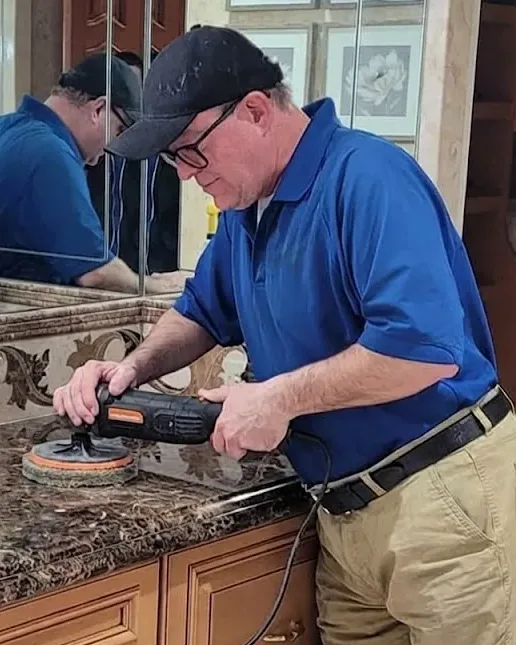

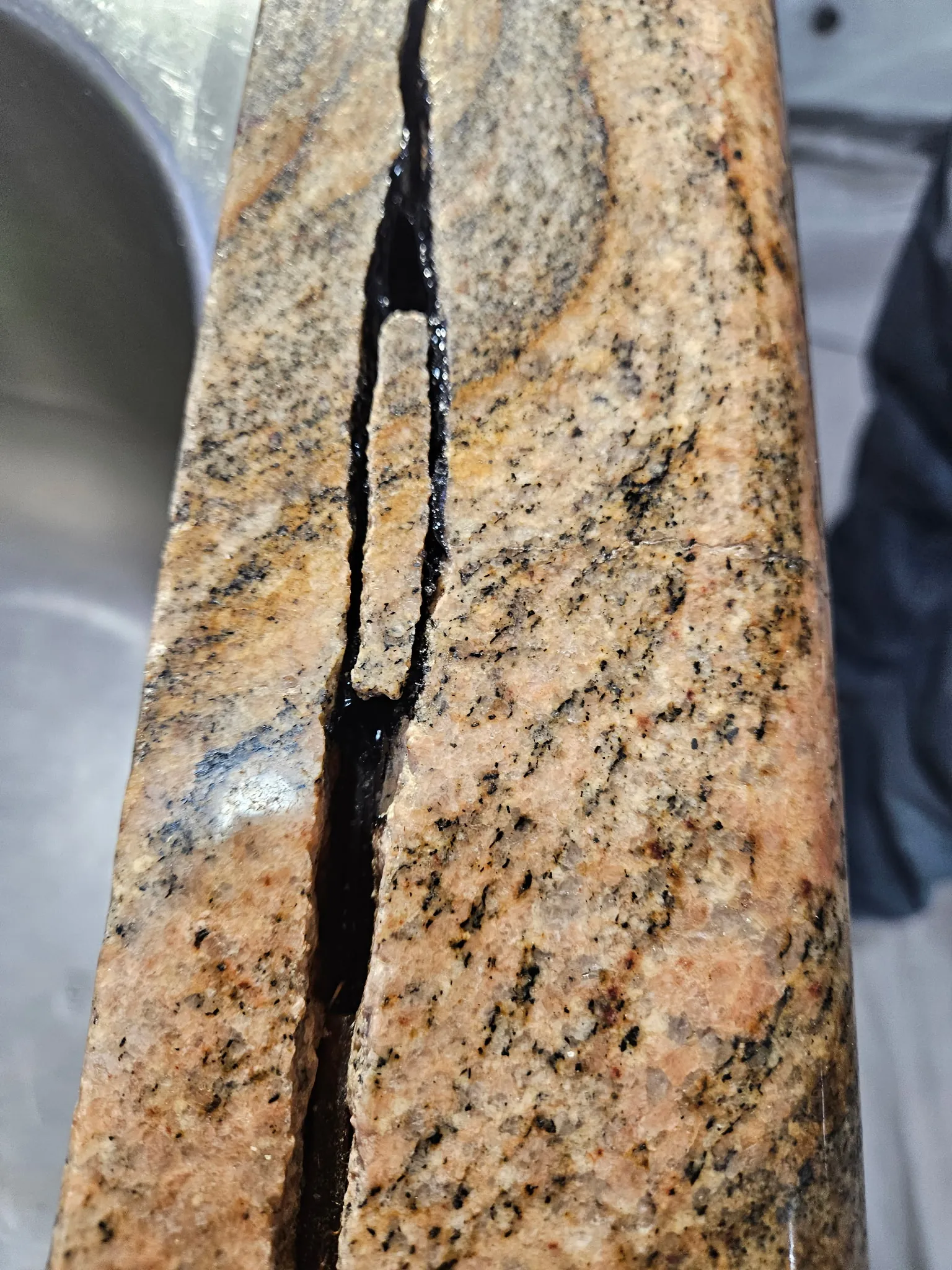
We got a call from a homeowner near Craig Ranch in North Las Vegas. Their granite kitchen countertop had cracked along the entire front edge of the sink cutout. Not a hairline crack. A structural one, with pieces of stone missing.
Most homeowners in this situation get told the same thing: rip it out and replace it. That is a $4,000 to $8,000 job depending on the stone and the layout. And it takes weeks.
We told them we could fix it.
What we found when we got there
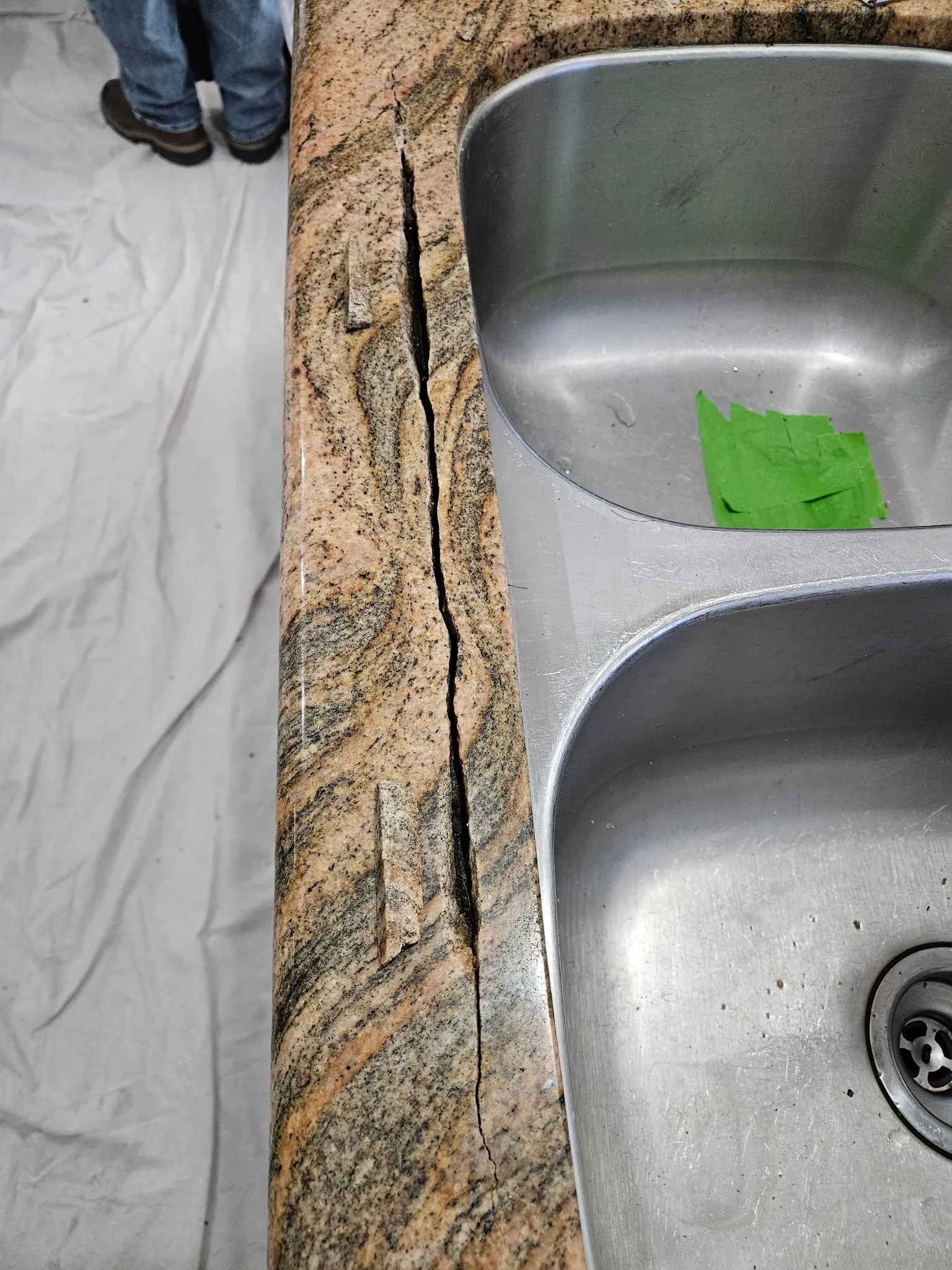
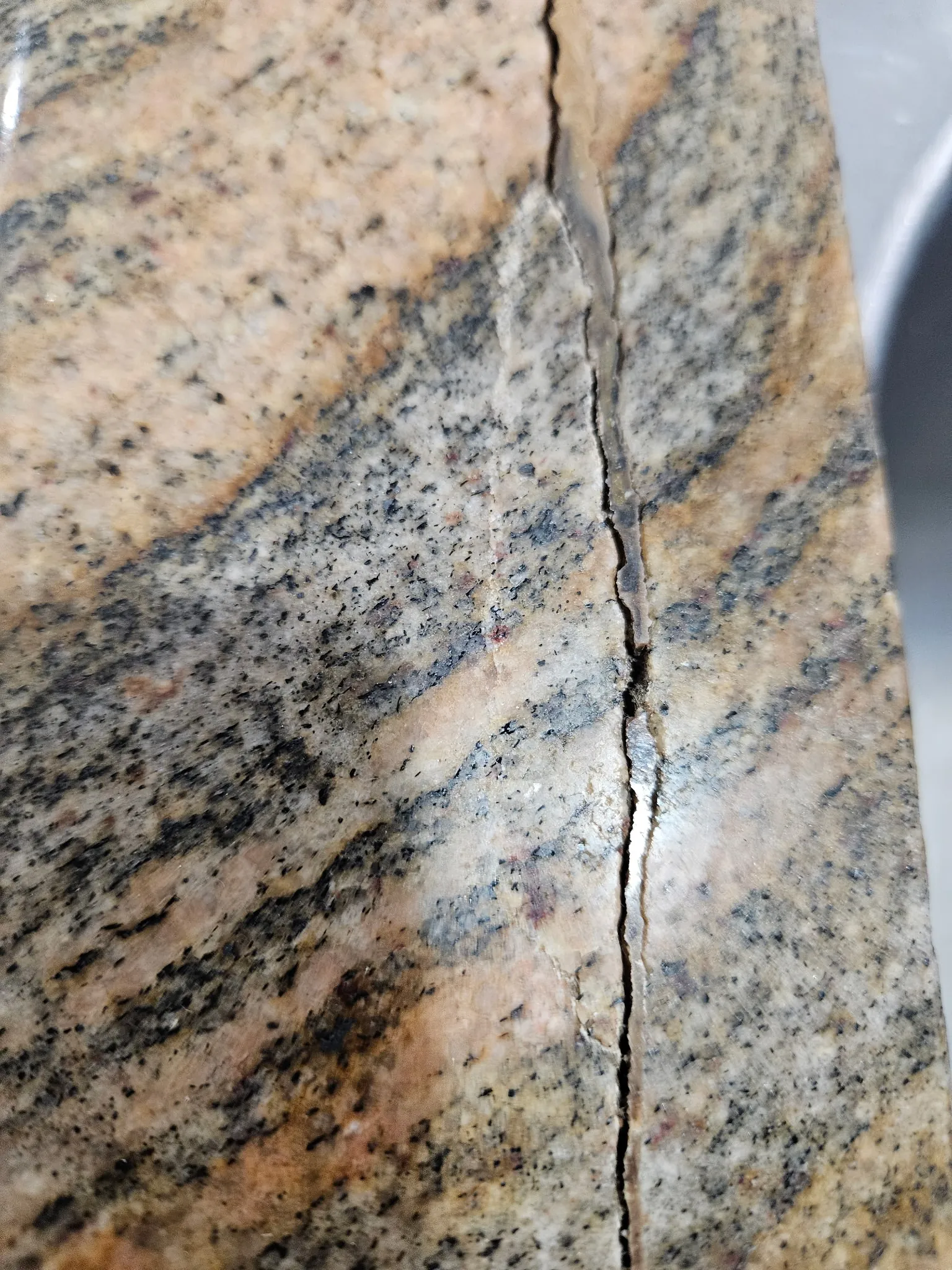
The crack ran from one side of the undermount sink to the other, right along the front edge where the countertop is thinnest. The granite here had separated completely in spots. You could fit your finger into parts of it. A few chips had broken off entirely, leaving gaps in the stone.
This kind of damage usually happens over time. The undermount sink creates a natural stress point. Las Vegas heat cycles expand and contract the stone. One day the crack finally opens up. Sometimes it happens slowly. Sometimes the homeowner hears it one morning and finds a gap where there was not one before.
Why this is not a quick fix
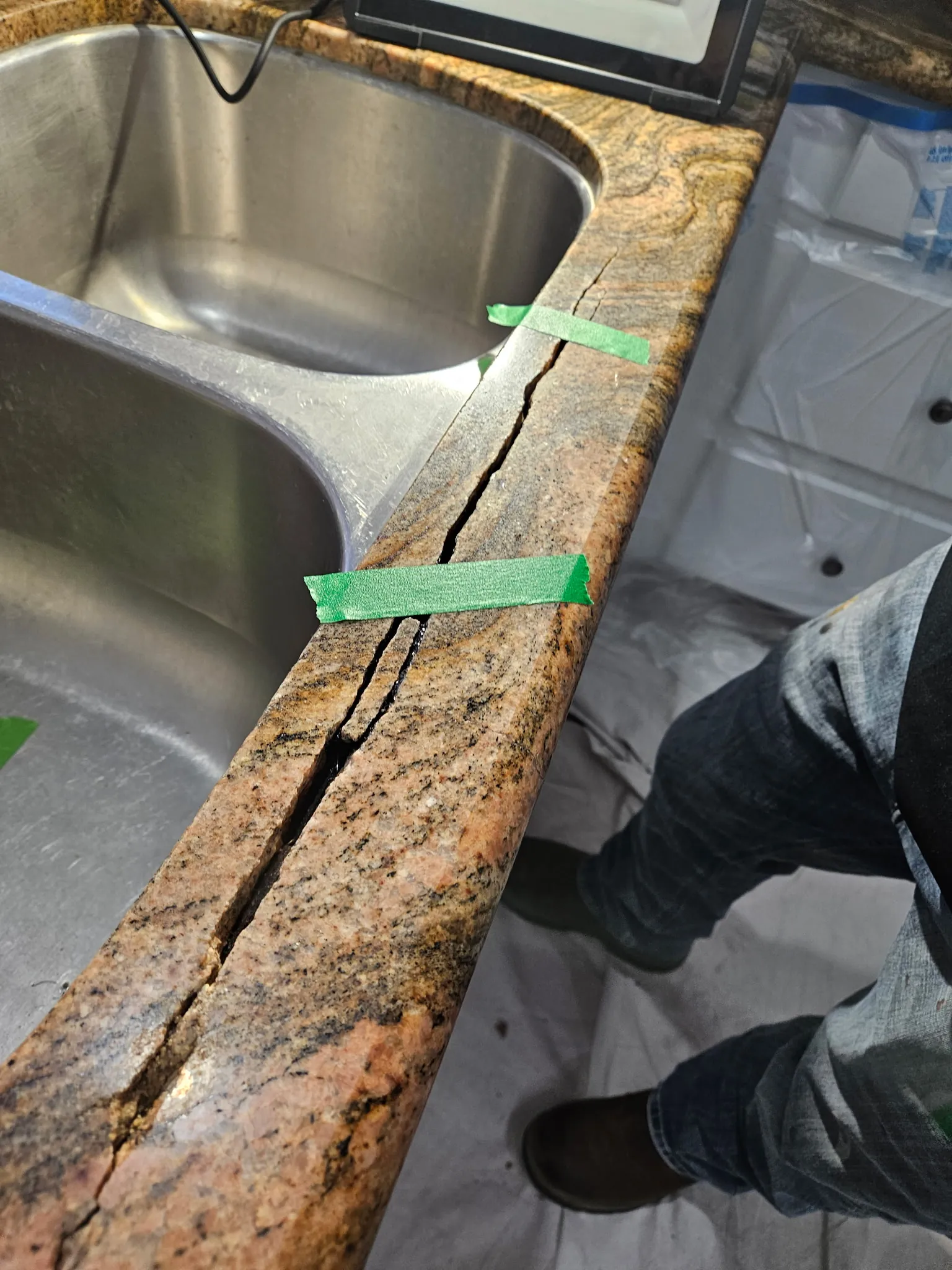
A surface scratch on granite can be polished out in an hour. This was a different situation. The stone had separated structurally and material was missing. You cannot just glue it back together because there is nothing to glue. The missing section has to be rebuilt by hand to match the existing granite pattern, color, and texture.
We taped the pieces in position and assessed the full scope. The crack extended about 18 inches, with two sections where stone was completely gone. The edge profile had to be rebuilt and shaped to match the existing bullnose edge. Getting the color right on a multi-toned granite like this one is the hardest part. This stone had golds, blacks, pinks, and grey running through it in a swirling pattern. No two spots looked the same.
The repair process
Step 1: Stabilize the crack
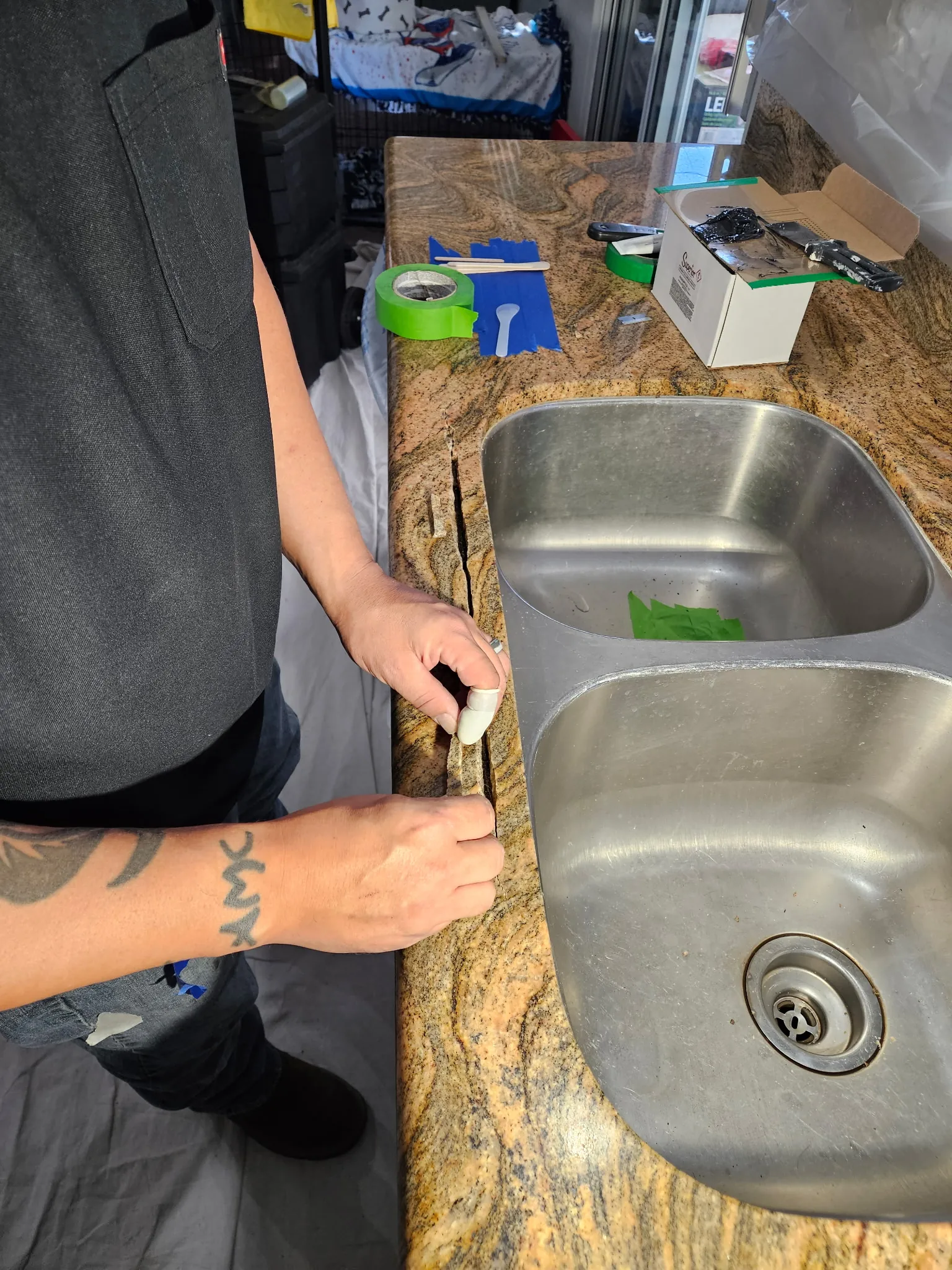
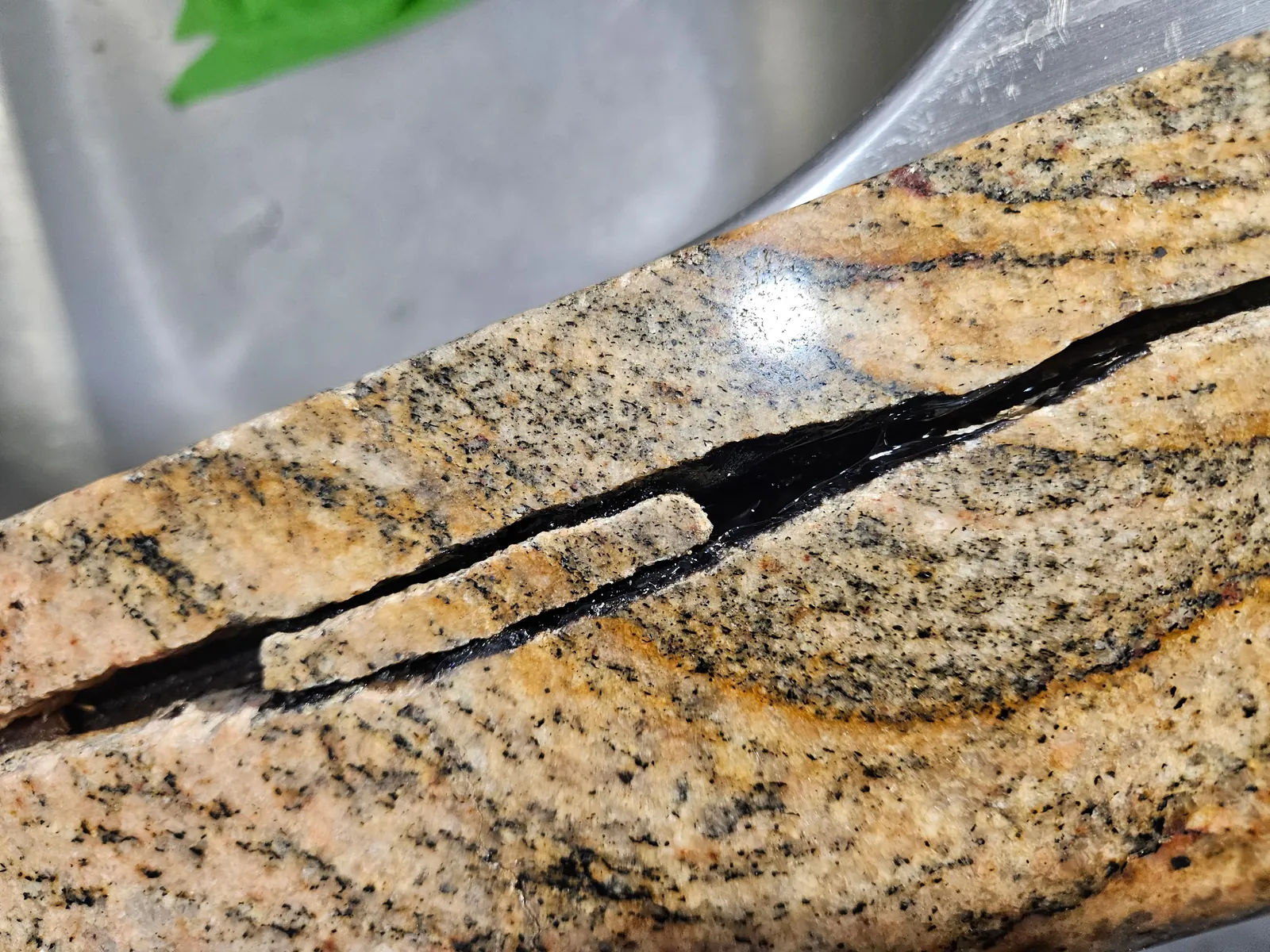
We cleaned out the crack completely and used a structural epoxy to bond the separated sections back together. This is not hardware-store superglue. It is a two-part epoxy rated for stone that cures to a strength similar to the granite itself. We worked it into the full depth of the crack under pressure so there would be no air pockets.
Step 2: Rebuild the missing sections
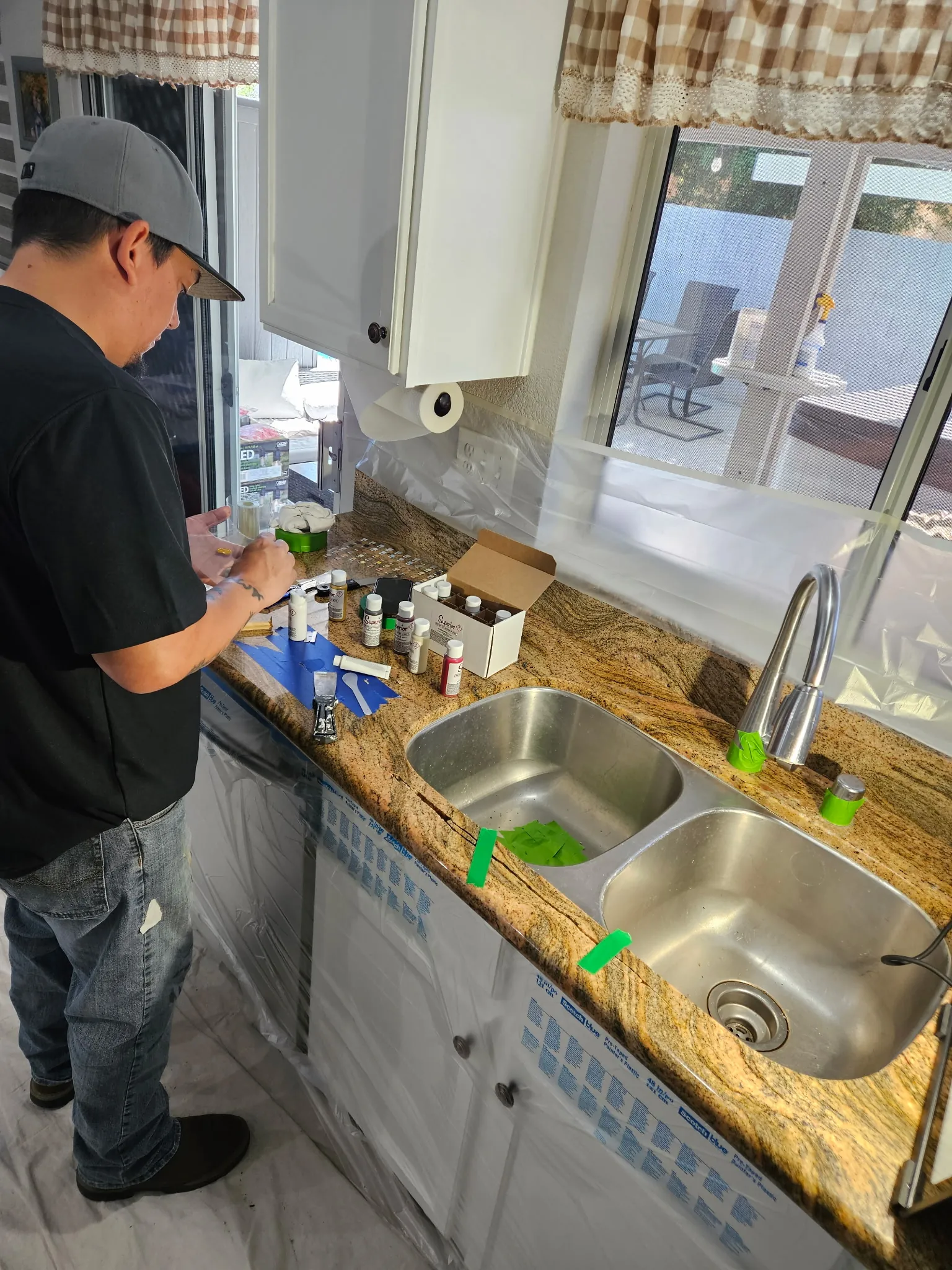
This is where the real expertise comes in. We mixed custom-tinted epoxy compounds to match the stone's color and veining. This is not a single color. We layered multiple pigments to recreate the depth of the granite pattern, matching the gold, black, and pink tones running through the original stone.
For the missing edge sections, we built forms to hold the compound in place while it cured. The edge profile had to match exactly. Too flat and it looks patched. Too rounded and it does not match the original bullnose. We shaped it by hand.
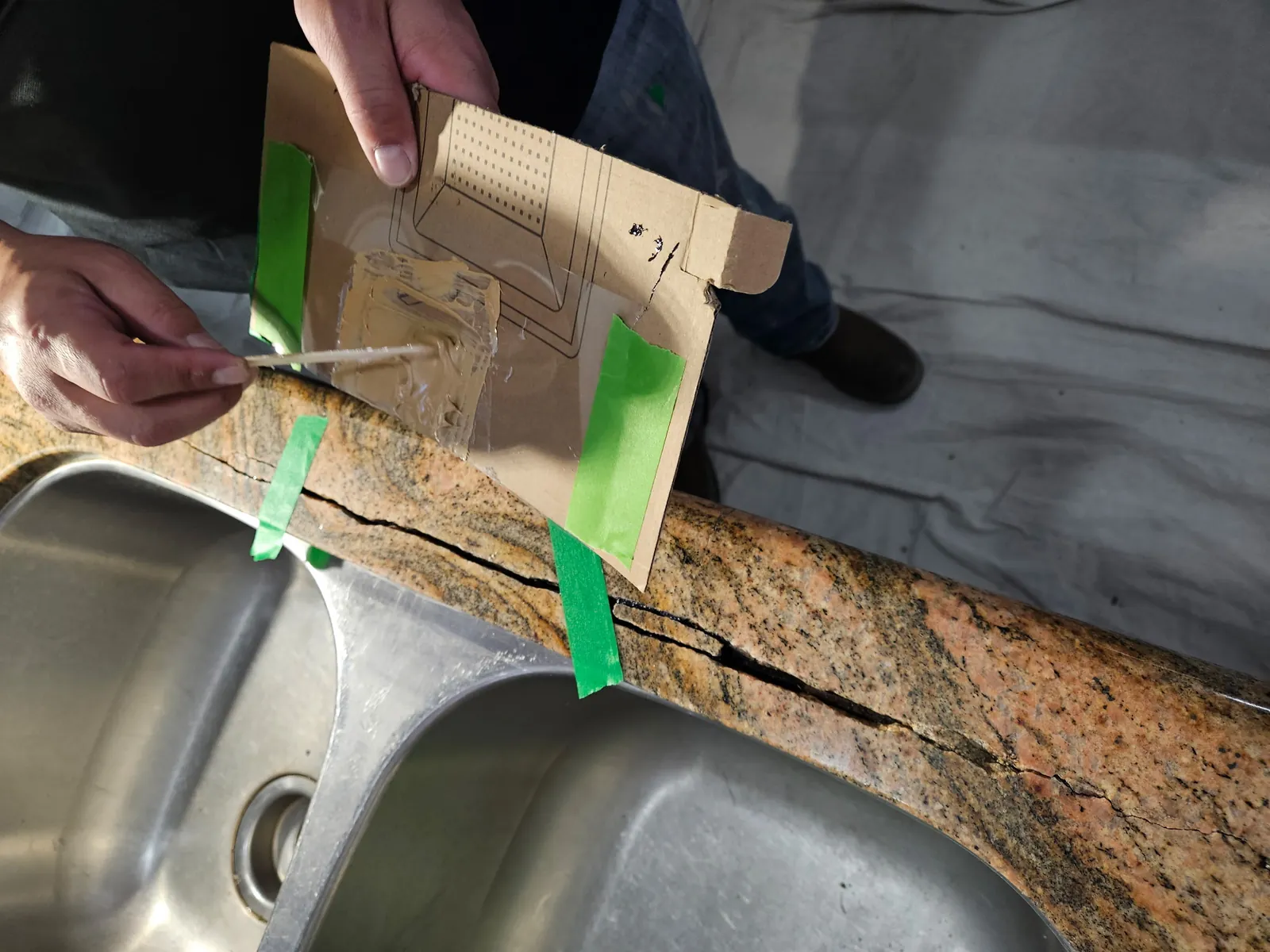
Step 3: Finish and polish
After the compound cured, we ground the repaired section flush with the surrounding granite, then polished it through progressively finer grits until the sheen matched the rest of the countertop. The final step was sealing the entire area to protect the repair and blend it with the original stone.
Why this matters
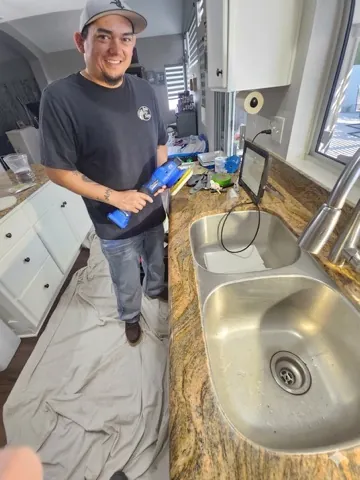
The homeowner kept their countertop. The repair cost a fraction of replacement. And it was done in one visit.
But here is the honest part: not every company can do this. Structural crack repair with missing material is one of the hardest things in stone restoration. You need to understand how epoxies behave, how to color-match against natural stone patterns, and how to rebuild edge profiles that feel invisible to the touch. We train other restoration professionals on these techniques. It is what we do.
Cracks are the extreme case. Most of our work is everyday countertop refinishing: restoring the polish on stone that has gone dull, etched, or scratched, again without replacing it.
If your granite countertop has a crack, a chip, or a section that has broken away, do not assume it needs replacement. See how our granite countertop repair process works, then Send us a photo or call us at (702) 605-6528. We will tell you honestly whether it can be saved.