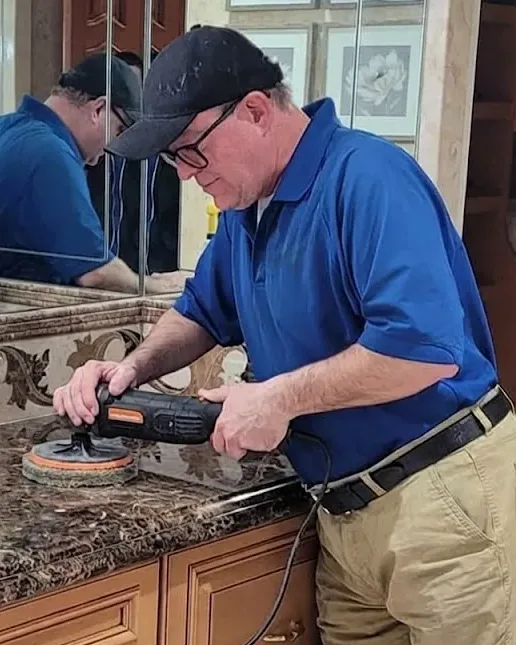


A good stone restoration quote should start with diagnosis, not pressure. When a homeowner sends photos, we first try to understand what kind of job it is: a repair, a maintenance polish, a full restoration, or a simple cleaning and sealing visit.
That matters because two surfaces can look similar in a photo but need completely different work. A dull marble counter might need marble countertop restoration. A chipped quartz edge needs quartz countertop repair. A scratched Corian counter may call for a solid-surface countertop assessment.
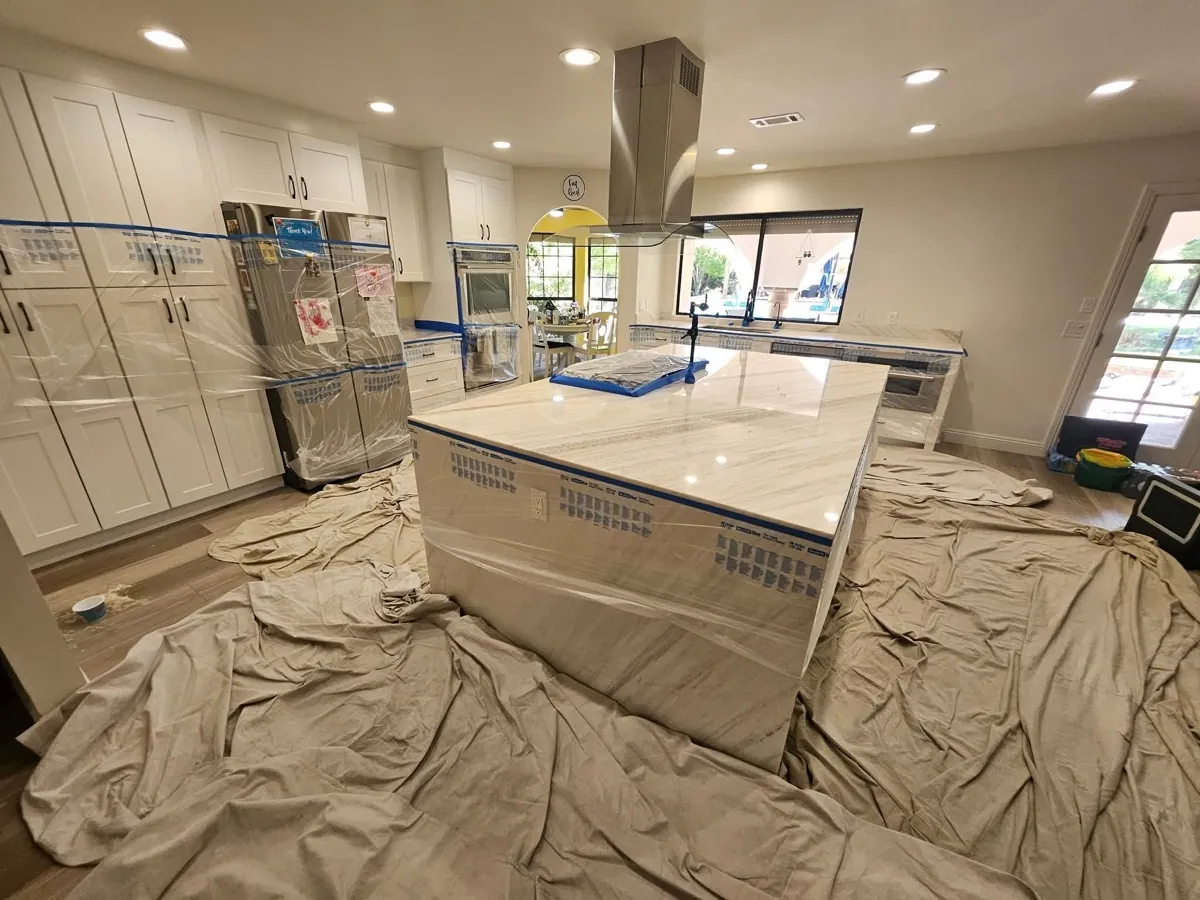
Step 1: Send photos for a first read
Start with a wide photo of the whole surface and a close-up of the worst spot. If light reflection is part of the problem, take one photo with light grazing across the stone so dullness, scratches, or etching show clearly.
Photos are useful for a ballpark, but they are not always enough for final pricing. Stone type, finish, depth of damage, and previous coatings can change the scope.
Step 2: We classify the job
Most calls fall into one of four buckets:
- Minor repair: chips, small cracks, missing edge pieces, or isolated damage.
- Maintenance polish: light dullness, early haze, or mild traffic wear.
- Full restoration: deeper etching, scratches, finish failure, or widespread wear.
- Protection work: cleaning, stone sealing, or maintenance after the finish is corrected.
The IICRC's Stone, Masonry and Ceramic Tile Cleaning Technician certification is built around maintenance-related tasks for stone, tile, masonry, and grout surfaces. That diagnostic mindset is important because the wrong process can overwork the stone or fail to fix the real problem.
Step 3: Free in-home inspection
For exact pricing, we come to the home and inspect the surface in person. We look at the stone type, whether the surface is honed or polished, how deep the damage is, and whether there are topical coatings, old sealers, or residue that need to be removed first.
This is where we separate a simple countertop polishing job from a repair or full restoration. It also keeps the quote honest: no overquoting restoration when maintenance will work, and no underquoting a surface that needs real refinishing.
Step 4: Clear scope before work starts
Before we start, you should know what is being done and why. If a test spot makes sense, we do it. If a chip can blend but not disappear perfectly, we say that. If sealing will help with staining but will not stop marble etching, we explain that too.
The goal is a quote that matches the surface. If you are not sure what your stone needs, send photos through the contact page and we will start with an honest read.