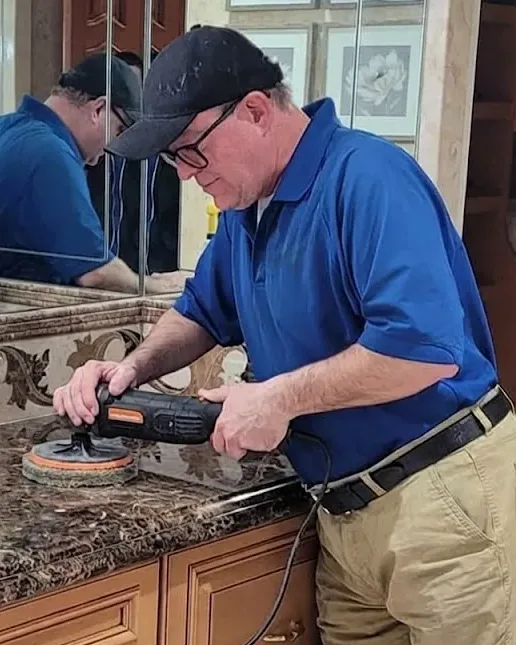

Yes, stone sealer type matters. A lot. One gallon of sealer for every stone surface is not a professional sealing plan. Marble, granite, travertine, limestone, quartzite, porcelain, and engineered surfaces all absorb and react differently.
The job of stone sealing is not to make stone bulletproof. It is to slow absorption, improve stain resistance, and make cleanup easier. The right product depends on the surface.
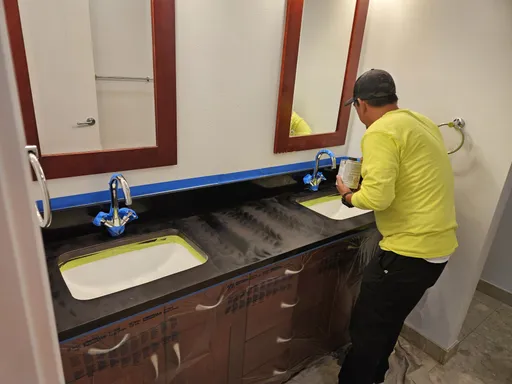
Pore size changes the product
Dense stones and surfaces with very small pores need products that can actually penetrate the surface. More porous stones, including many marbles, limestones, and travertines, may need a different chemistry with a different carrier and particle size.
Using a high-end sealer on the wrong stone does not automatically make the job better. If it cannot enter or bond correctly, it can leave residue, fail early, or make the next countertop restoration harder.
Penetrating sealers vs topical coatings
Most natural stone care uses penetrating products, often called impregnating sealers. They work below the surface and usually do not change the look of the stone.
Topical coatings are different. They sit on top or bond to the surface. They may change the appearance, affect vapor transmission, and create buildup if they are used where a penetrating product would be better.
Sealer does not stop marble etching
This is the most important expectation to set. Sealer helps with absorption and staining. It does not make marble immune to acids. Lemon juice, wine, vinegar, tomato, and many cleaners can still etch marble and limestone.
The Natural Stone Institute's countertop sealing guidance explains that sealing can improve resistance to everyday dirt and spills. It is protection, not a force field.
When sealing should happen
If the stone is already dull, scratched, etched, or hazy, sealing is usually the last step, not the first. The surface should be cleaned, repaired, honed, or polished before the sealer is applied.
For marble, that may mean marble polishing first. For granite, it may mean deep cleaning and granite polishing. For hard water around sinks, it may mean mineral removal before sealing.
How we choose a sealer
- Stone type and pore structure
- Current finish: honed, satin, or polished
- Room conditions: kitchen, bath, shower, floor, or outdoor area
- Use pattern: cooking, entertaining, hard water exposure, pets, and foot traffic
- Existing coating or sealer residue
If a company treats sealer as an afterthought, the result will show. Proper sealing is its own skill, and it should be matched to the stone instead of guessed.