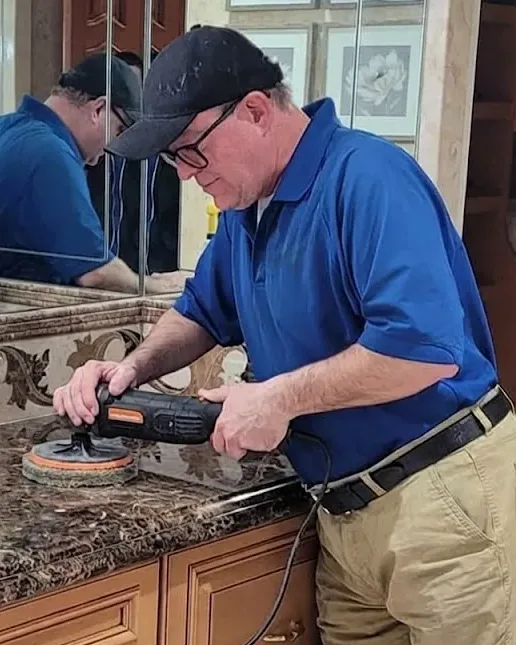

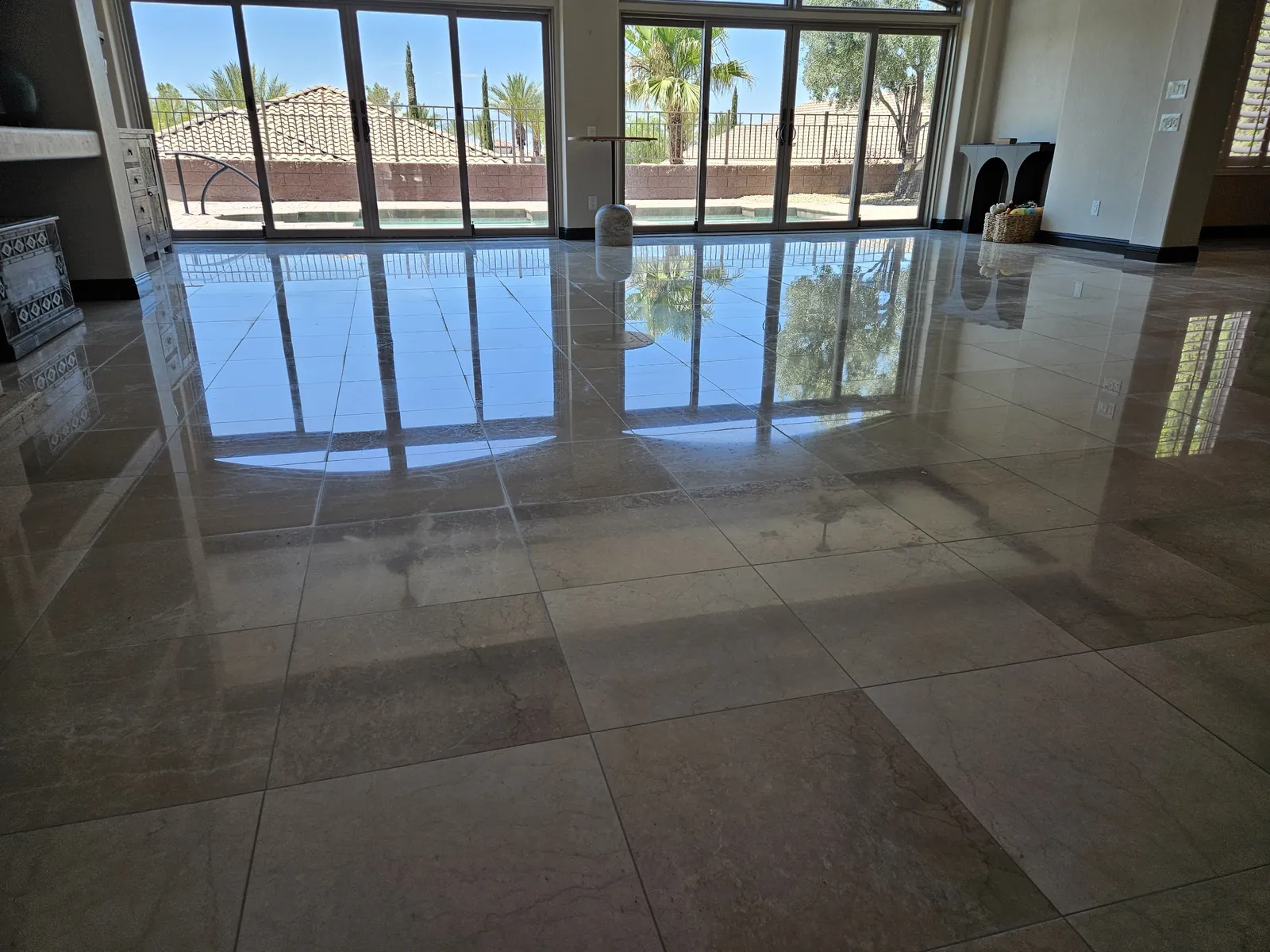
Most marble does not need polishing on a rigid calendar. It needs polishing when the finish starts telling you it is worn: dull traffic lanes, cloudy patches under the light, etch marks from spills, or a rough feel where the stone used to be smooth.
For many Las Vegas homes, marble floors need professional polishing every 1 to 3 years depending on foot traffic. Kitchen counters often stretch longer, sometimes 2 to 4 years, unless acidic spills, hard water, or daily prep work dull the surface faster. Watching the stone is more reliable than guessing by the date.
Cleaning, sealing, and polishing are three different jobs
This is the mix-up we run into most. Homeowners call and say they have been polishing their marble for years. When we see the products, they have usually been cleaning it, sealing it, or using a shine product that sits on top. That is not the same as professional marble polishing.
Cleaning marble
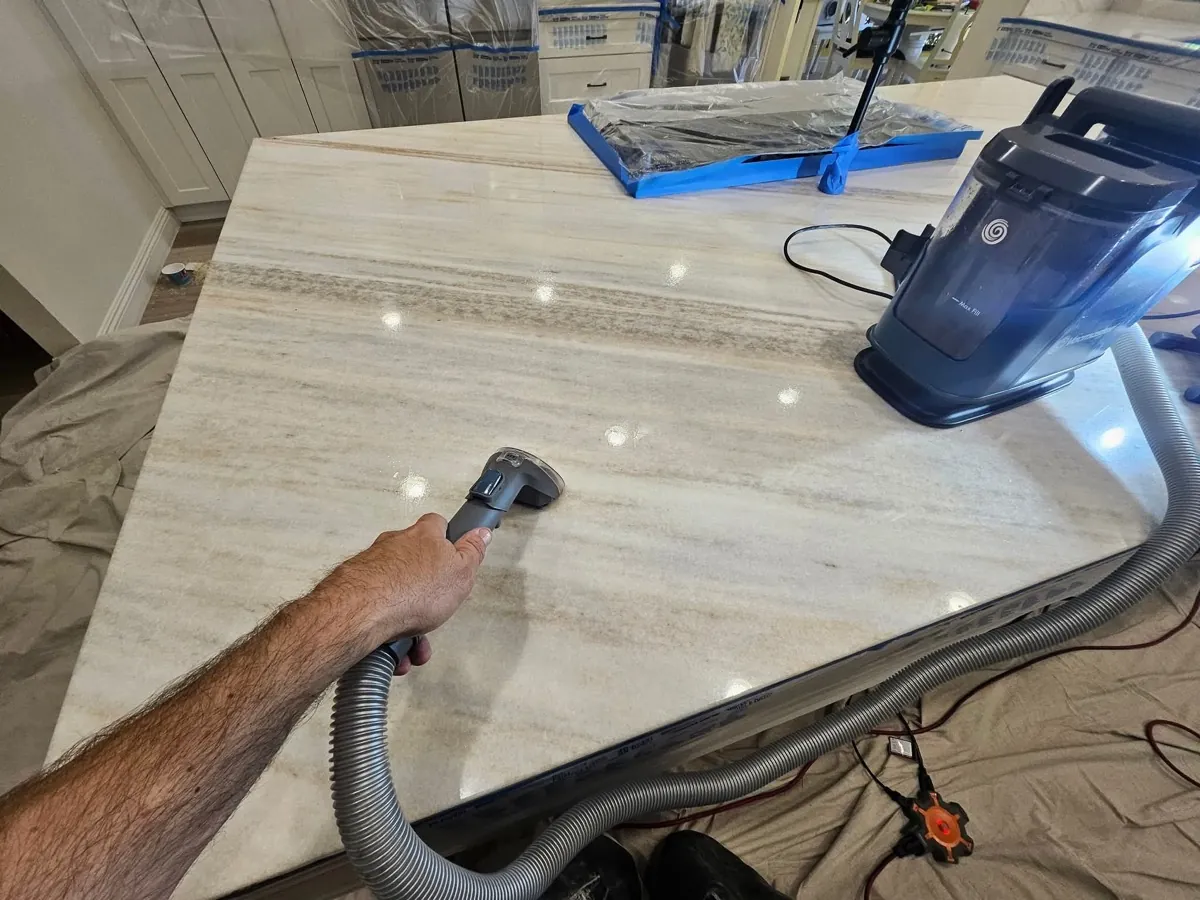
Cleaning removes dirt, dust, and surface grime. A pH-neutral cleaner and a soft cloth handle routine maintenance. Cleaning should happen often, especially in kitchens, bathrooms, and high-traffic floors.
But cleaning will not remove dull spots, acid etching, scratches, or traffic wear. If the damage is in the finish, a cleaner cannot rebuild the reflection.
Sealing marble
Sealing is a protective step, not a cosmetic repair. A good penetrating sealer slows absorption and gives you more time to wipe up spills before they become stains. It does not bring back shine, and it does not stop acids from etching marble.
The Natural Stone Institute warns that products containing lemon, vinegar, or other acids may dull or etch calcareous stones in its natural stone care guidance. That is why sealing and polishing should be treated as separate services.
Polishing marble
Polishing restores the surface finish itself. Diamond abrasives and polishing compounds smooth the stone at a microscopic level, which is what brings back the clear reflection. This is also how light scratches and many etch marks are corrected.
Every stone needs its own process. Carrara, Calacatta, Emperador, and darker marbles do not all respond the same way. Floors also need a different approach than counters because foot traffic, sand, furniture, and surface area change the wear pattern.
Signs your marble needs polishing now
Most people wait too long because marble fades gradually. The stone usually gives warning signs before the job turns into heavier restoration.
- Loss of shine: the surface looks flat or hazy instead of reflective.
- Etch marks: dull rings or spots from citrus, wine, vinegar, coffee, or the wrong cleaner.
- Light scratches: fine lines that show under direct light.
- Water spots that will not wipe away: often a sign the mineral buildup or etching has affected the finish.
- Uneven sheen: high-use areas look dull while corners and edges still look polished.
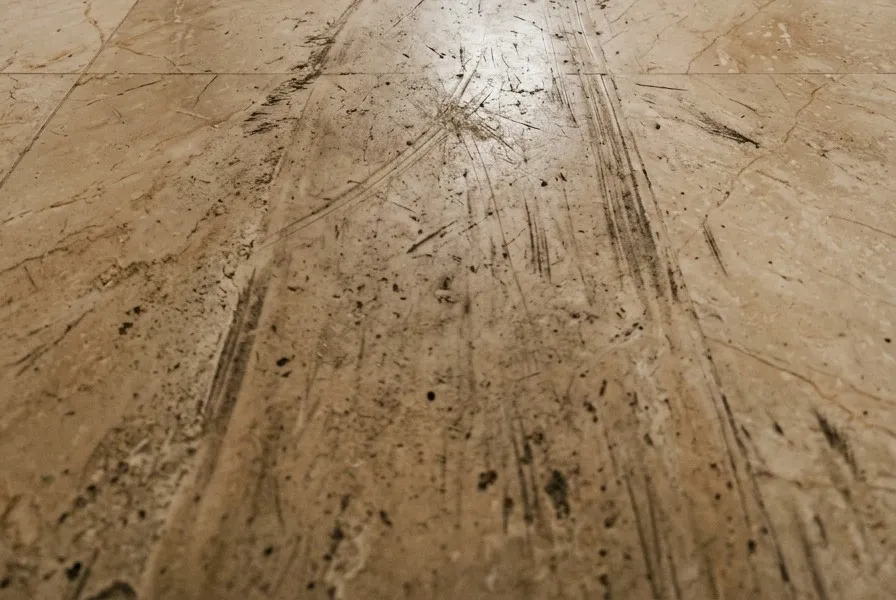
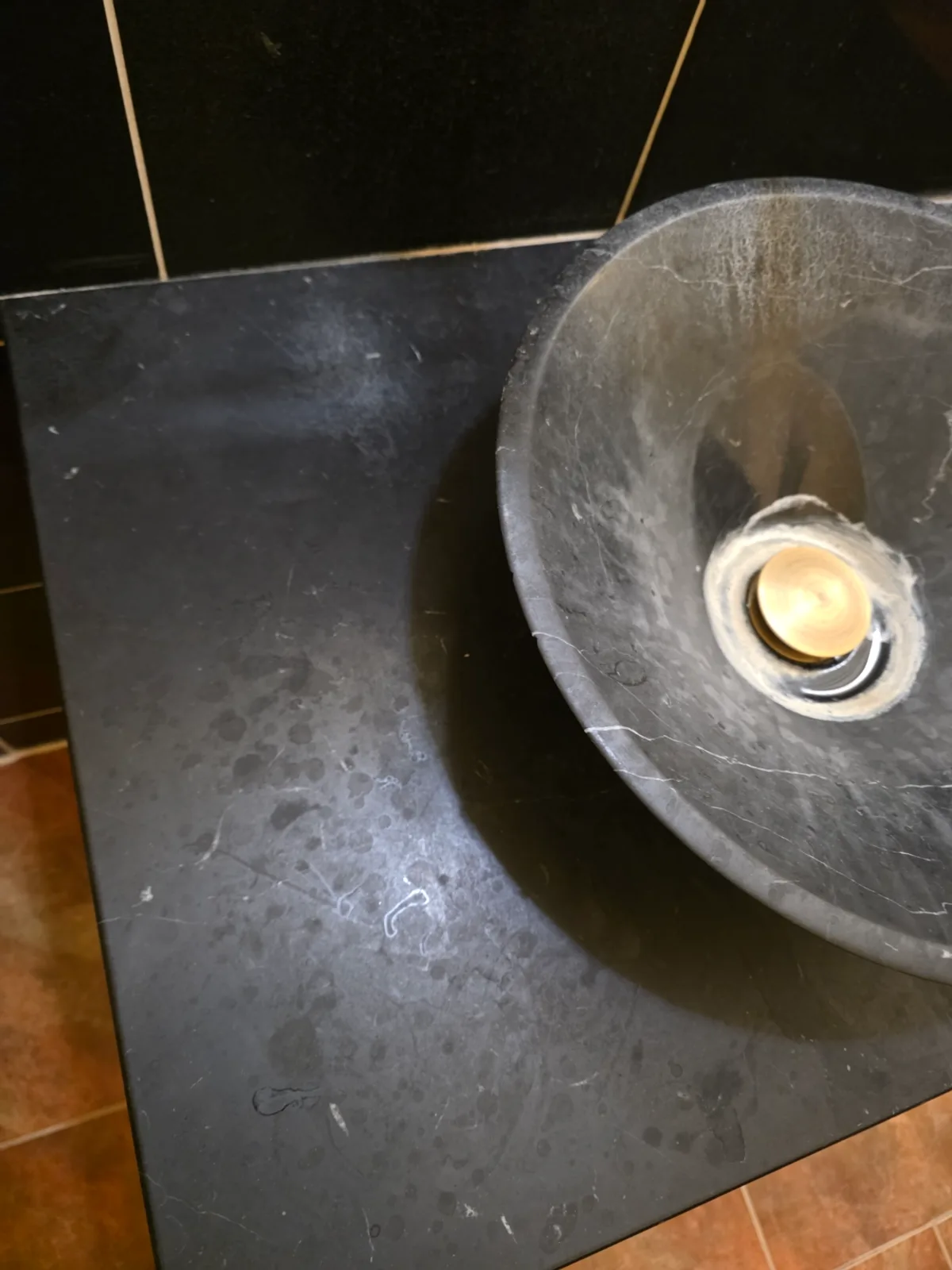
If you see one of these signs, the surface may still be a straightforward polish. If you see several at once, especially across a full floor or around sinks, it may need deeper marble floor polishing or marble countertop restoration.
What wears down polished marble in Las Vegas
Marble looks tough, but it is one of the softer natural stones commonly installed in homes. It is mostly calcite, so it reacts quickly to acids and scratches more easily than granite or quartzite.
- Acidic liquids: citrus, wine, vinegar, tomato, coffee, and many cleaning products can etch the surface.
- Foot traffic and grit: desert dust and sand act like fine sandpaper under shoes.
- Hard water: the Las Vegas Valley Water District says local water hardness is about 280 ppm, or 16 grains per gallon, categorized as very hard in its water quality FAQs.
- Improper cleaners: acidic, abrasive, or bleach-based products can make marble dull faster.
Countertops and floors wear differently
Marble countertops usually suffer from acidic spills, cleaning products, hard water around sinks, and daily kitchen use. That means the dullness often shows as rings, spots, or sink-area haze. If chips or edge damage are also present, polishing may need to be paired with countertop repair.
Marble floors wear from traffic. Entryways, hallways, kitchens, and bathroom paths lose their finish first because grit gets carried under shoes and furniture. The stone is not always dirty. The reflective layer has simply been worn down.
Can you polish marble yourself?
You can clean marble yourself. Polishing is different. A home buffer, wax, or store-bought shine product can leave a coating that traps dirt or makes the finish uneven. Professional polishing uses controlled abrasives to restore the stone itself instead of covering the problem.
If the surface has widespread etching, deep scratches, or patchy shine, it is worth getting a professional assessment before experimenting. The wrong product can turn a small polishing job into a larger restoration.
How to tell polishing from sealing
If the problem is dullness, scratches, etching, or uneven reflection, the marble likely needs polishing. If the concern is future staining or absorption after the surface already looks good, it may need stone sealing.
The best sequence is usually clean, restore the finish, then seal when appropriate. Sealing etched marble first does not fix the dullness. It can make the real repair more complicated later.
Frequently asked questions
How often should you polish marble floors and countertops?
Most marble floors need professional polishing every 1 to 3 years, depending on foot traffic. Kitchen countertops often need it less often, around 2 to 4 years, unless spills and acidic foods etch the surface faster.
What is the biggest marble care mistake?
The biggest mistake is thinking cleaning, sealing, and polishing are the same job. Cleaning removes surface dirt. Sealing slows absorption. Polishing restores the actual finish.
Does Las Vegas water make marble care harder?
Yes. Very hard water leaves mineral deposits around sinks, showers, and wet areas. Those deposits can create haze and make marble look dull sooner, especially when combined with soap residue or etching.
What happens if you wait too long?
Small etch marks and scratches become deeper and more widespread. What could have been a maintenance polish may turn into honing and full restoration. Catching dullness early keeps the job smaller and protects more of the original stone surface.
If your marble is starting to look flat, hazy, or scratched, send us photos for a free assessment. We will tell you whether the surface needs cleaning, polishing, restoration, sealing, or a combination of services.