
Marble Countertops
Vanity tops, tub decks, and bathroom marble need a finish that holds up around water, cosmetics, and daily wiping.
- Etch mark removal
- Hard water haze
- Bellinzoni wax finish
- Sealer application
Expert Stone Repair • Henderson, NV
Etch marks, scratches, and hard water haze removed. IICRC-certified technicians restoring marble countertops, floors, and showers in MacDonald Highlands, Anthem, Green Valley, and all Henderson communities.
Justin VerMeer
8 months ago
"Robert really knows his stuff! If you are looking at any stone work this is the right business! Great communication and fair prices!"
Leela Gillins
8 months ago
"I wish I had called Expert Stone Repair the day we moved in. Our granite countertops were constantly getting rings and water spots. Now they look brand new."
Milan Lewis
8 months ago
"Robert did an outstanding job repairing my shower floor! He took time out to explain all work that would be performed."
Our Process
From first photo to polished marble.

Text or email us close-up photos of the problem areas. We can usually tell you what's going on and give you a ballpark before scheduling.
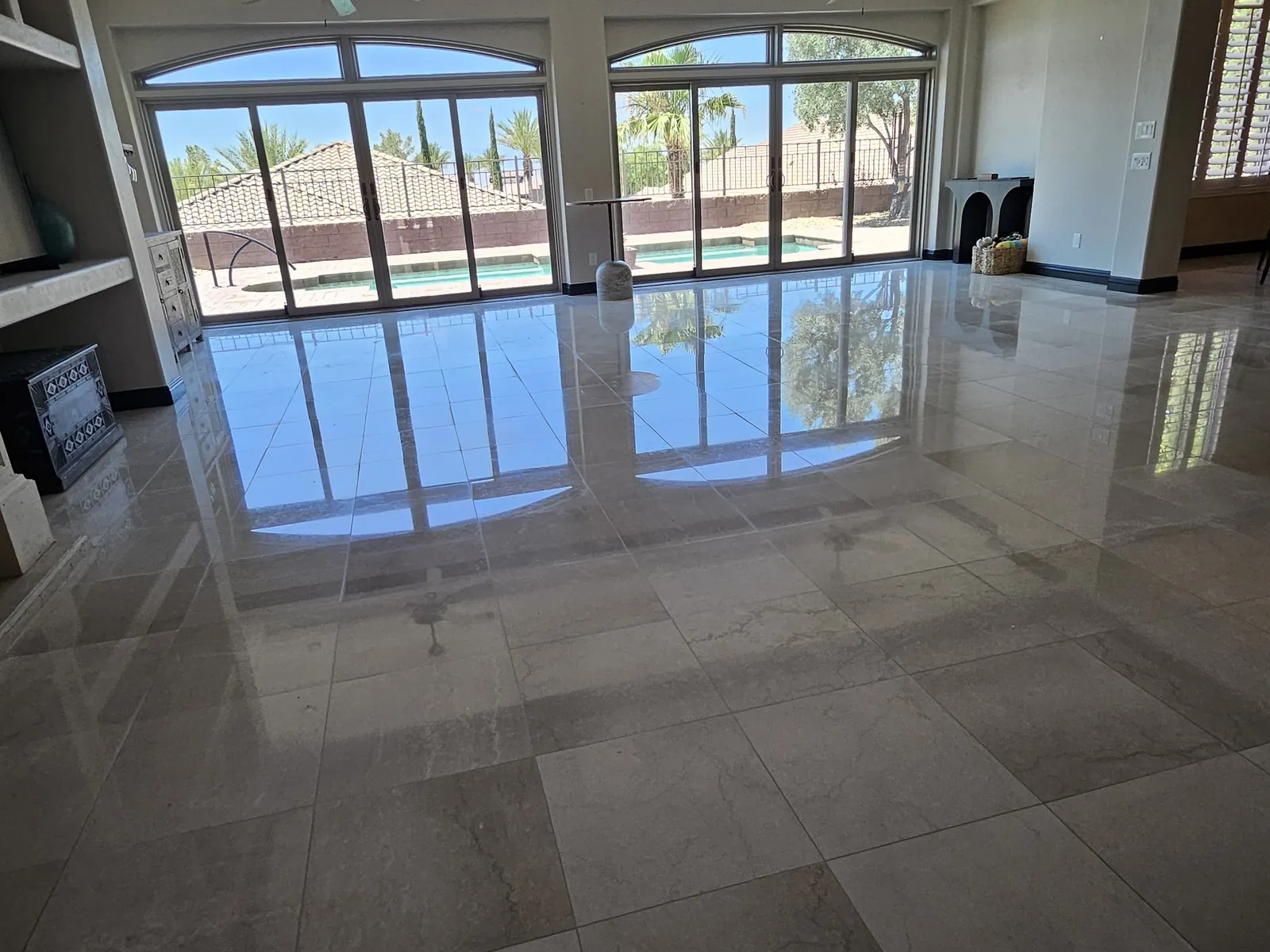
We inspect the marble and do a small test area so you can see the results before we commit to the full surface.
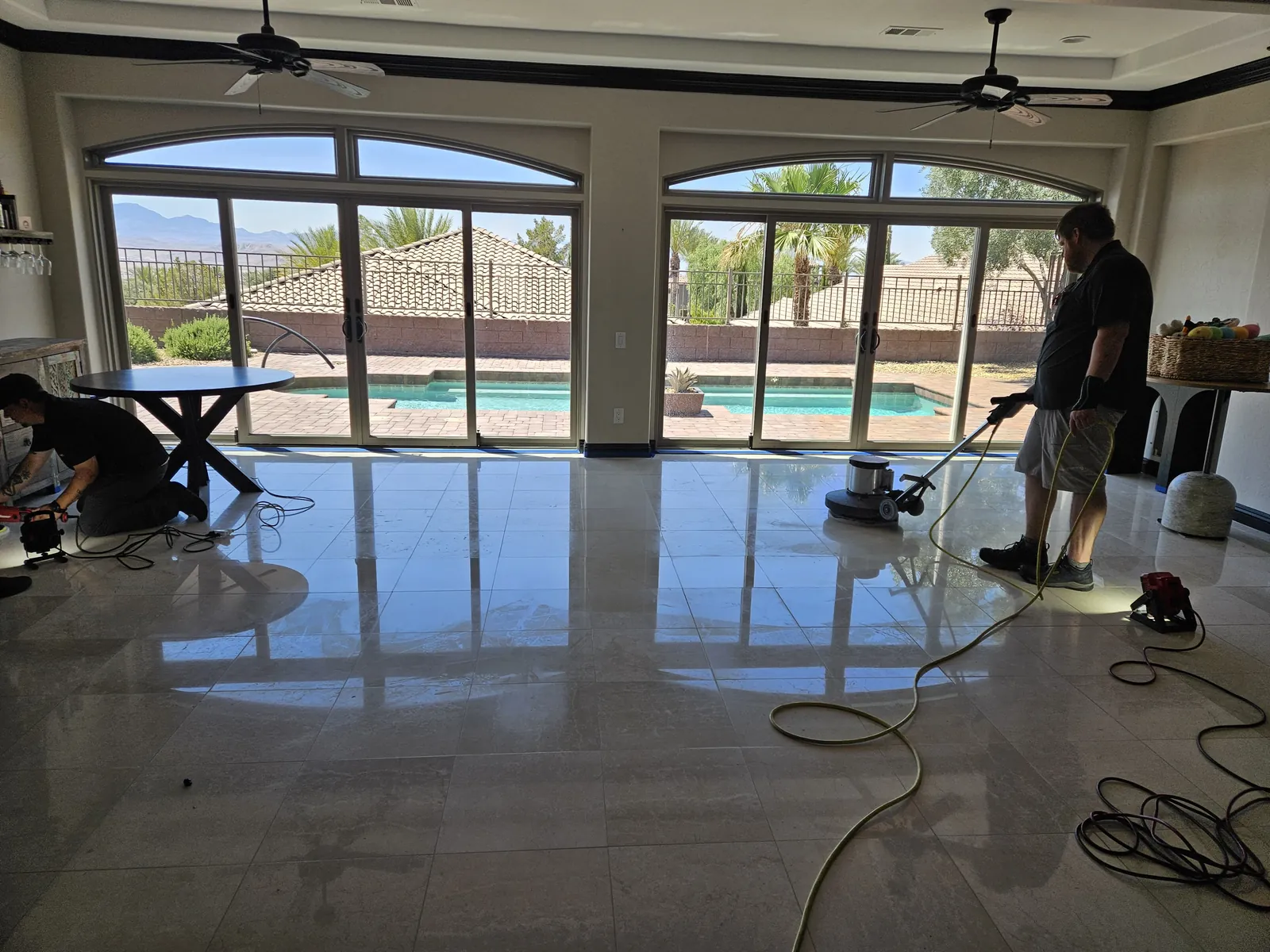
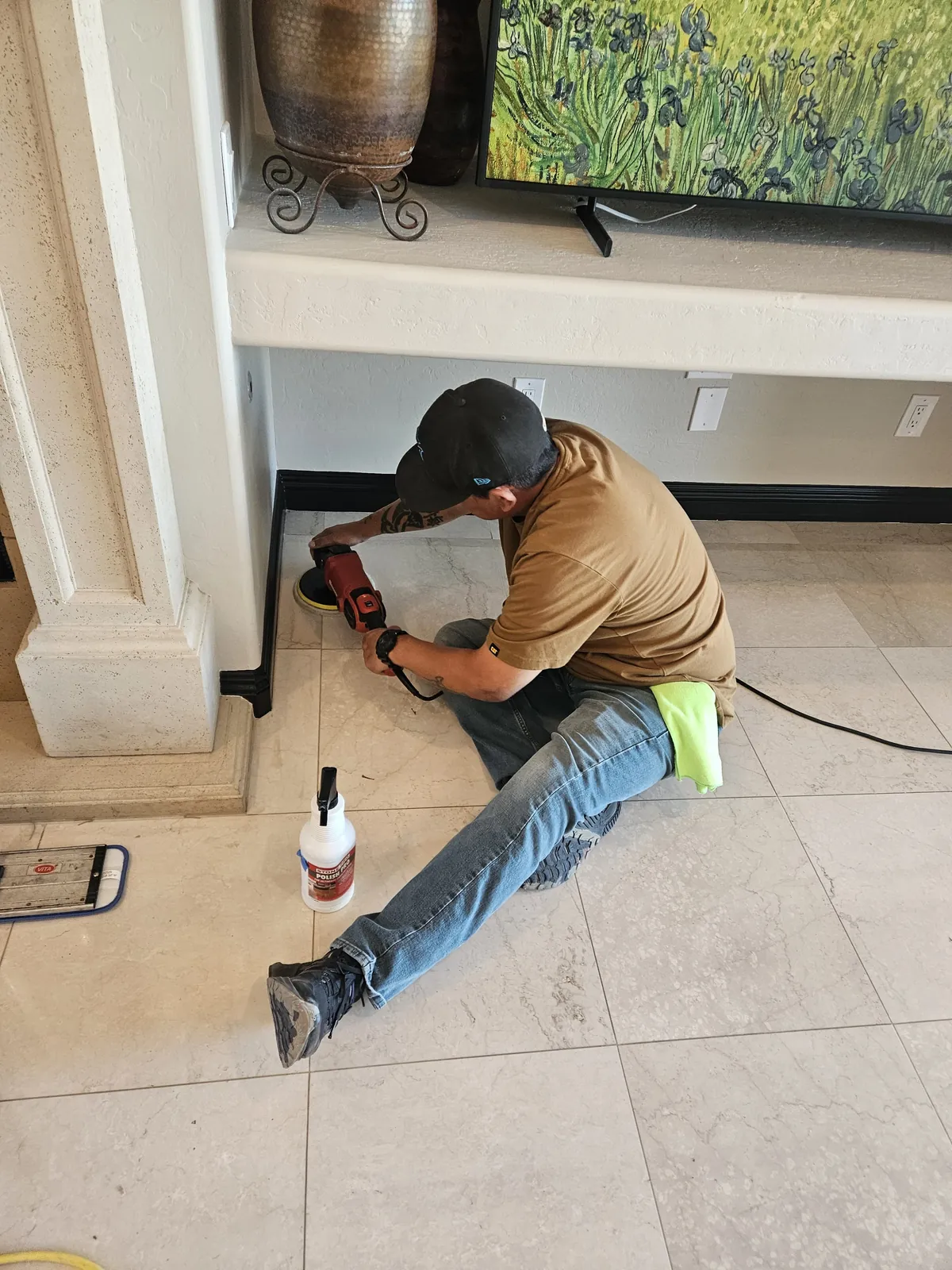
We work through diamond abrasives to remove etching and scratches, then polish to your preferred finish level. Dust is contained and extracted as we go.
We apply a penetrating sealer that soaks into the stone, helping prevent future staining without changing the look.
Where We Polish Marble
Countertops, floors, and showers each have different exposure and wear patterns. Here is how we handle the most common marble surfaces in Henderson homes.
Vanity tops, tub decks, and bathroom marble need a finish that holds up around water, cosmetics, and daily wiping.
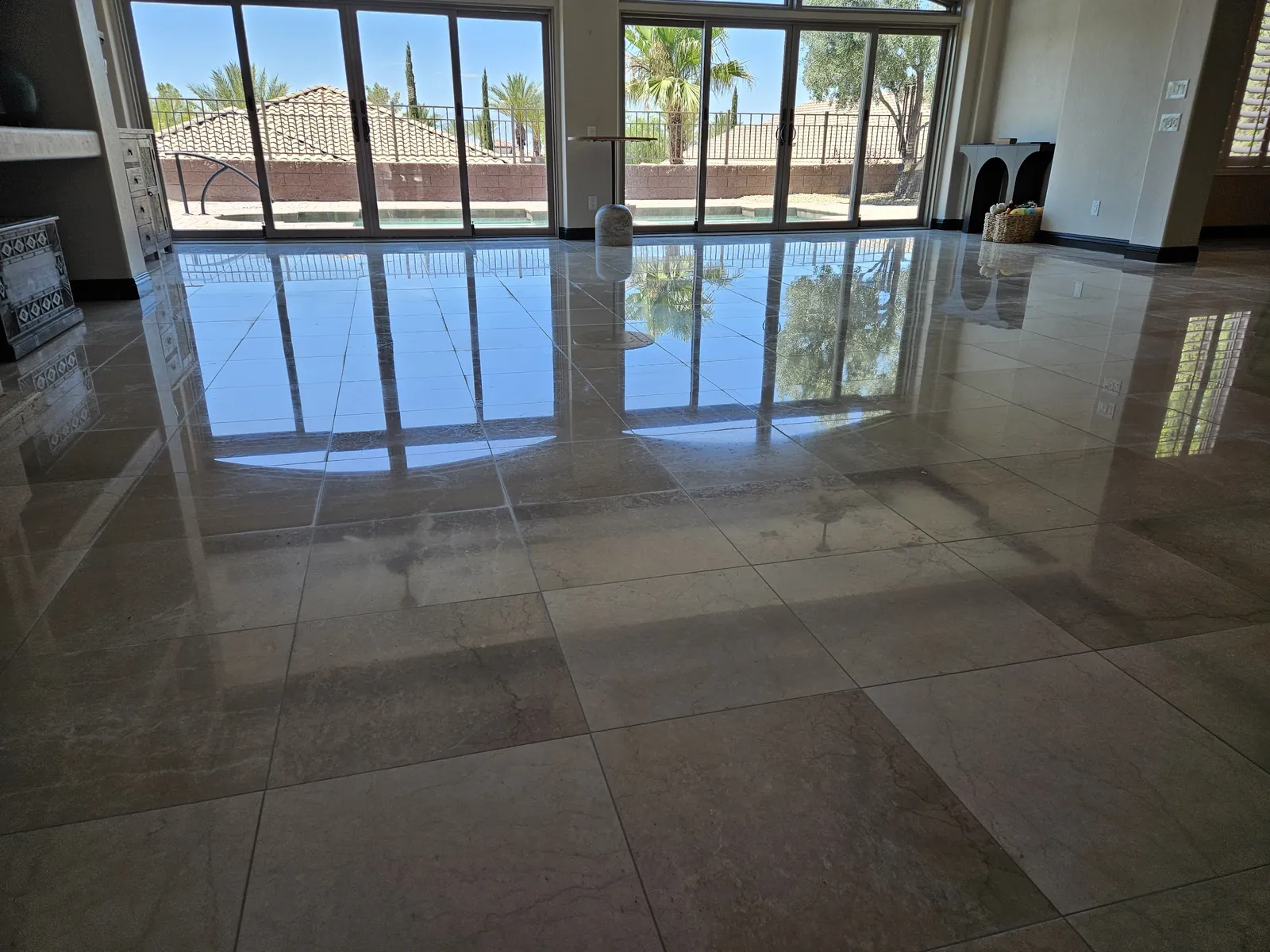
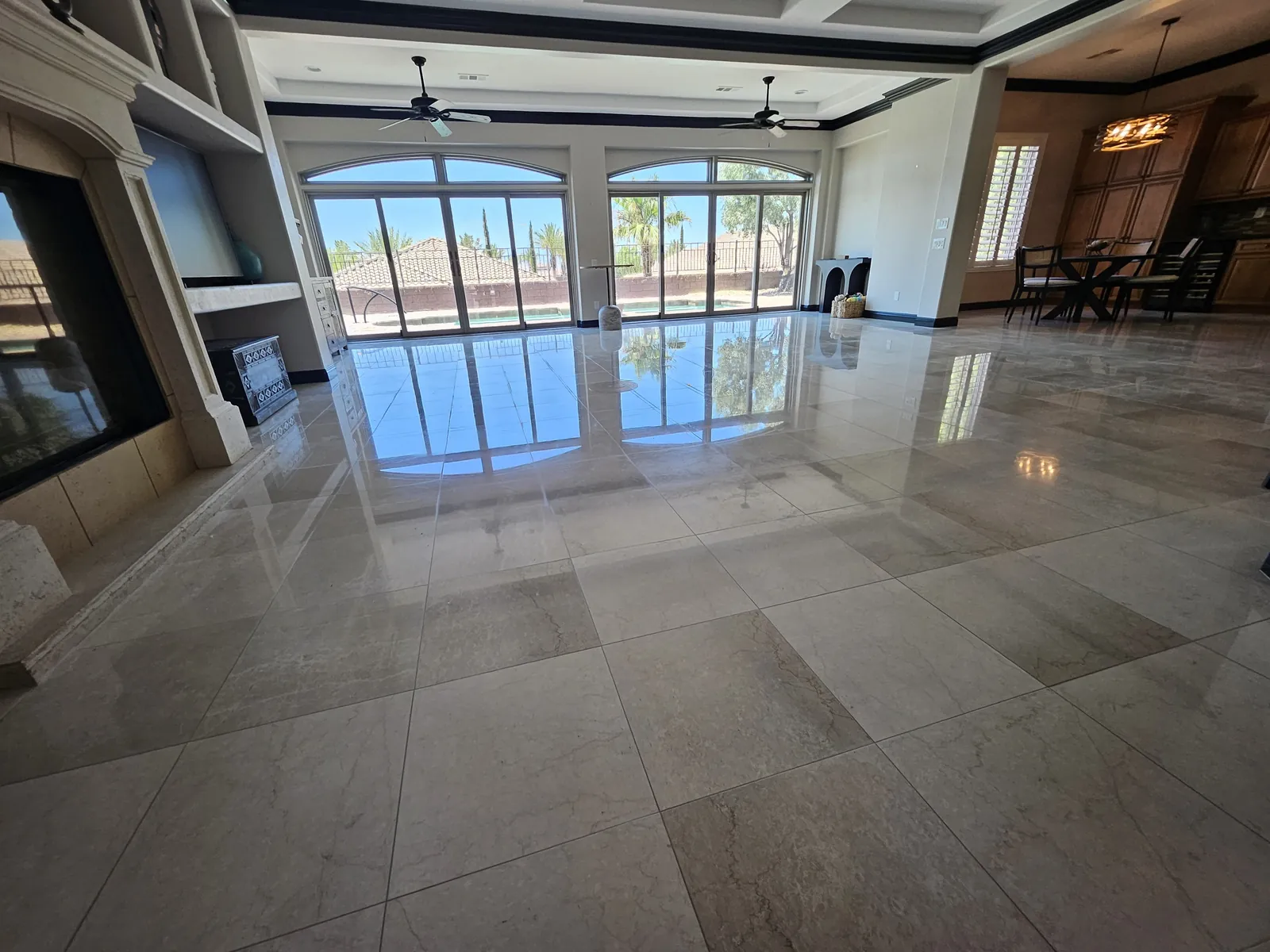
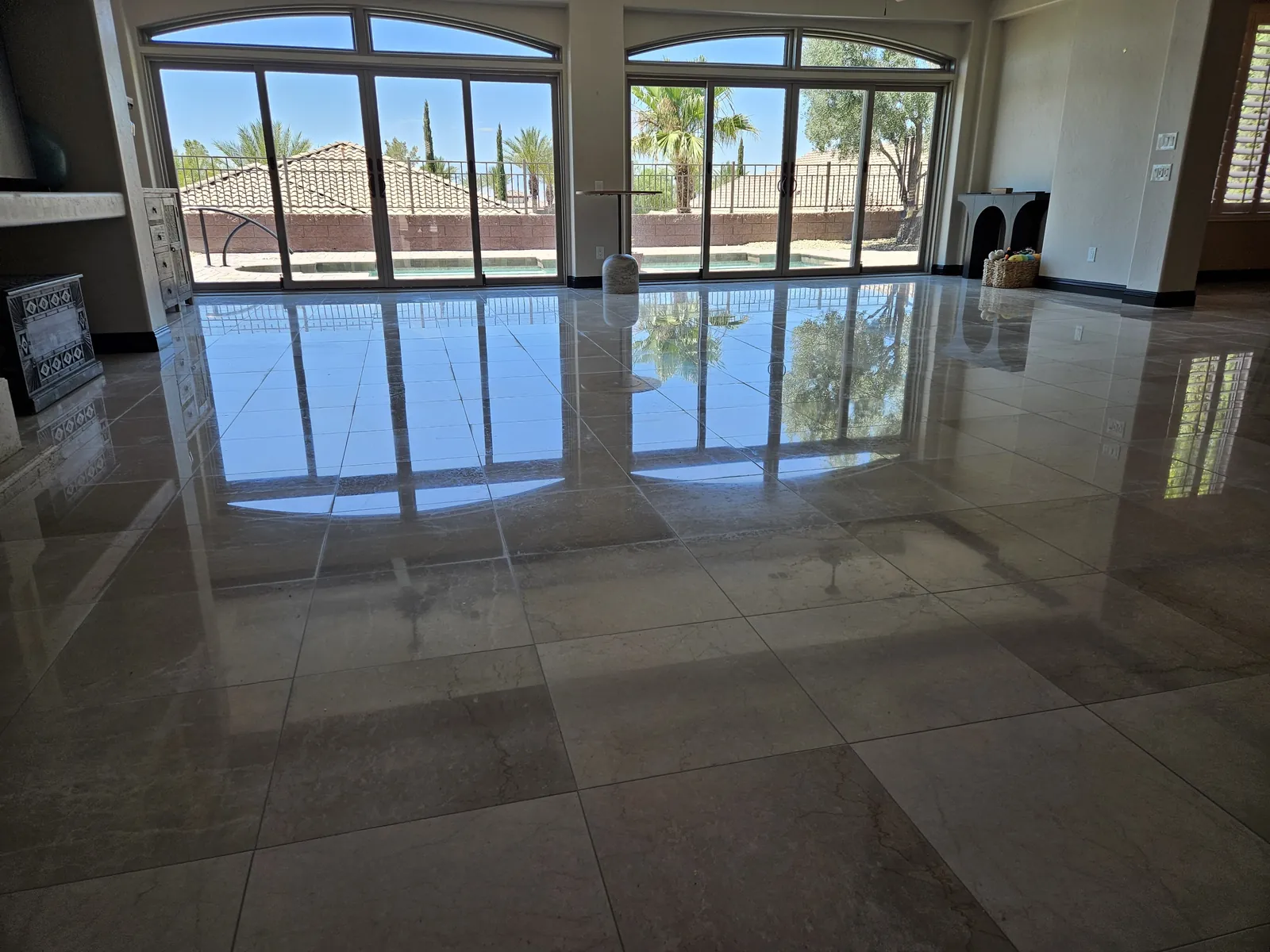
Dull traffic lanes, chair scratches, and uneven shine across large rooms. We hone and polish until the floor reflects cleanly again.
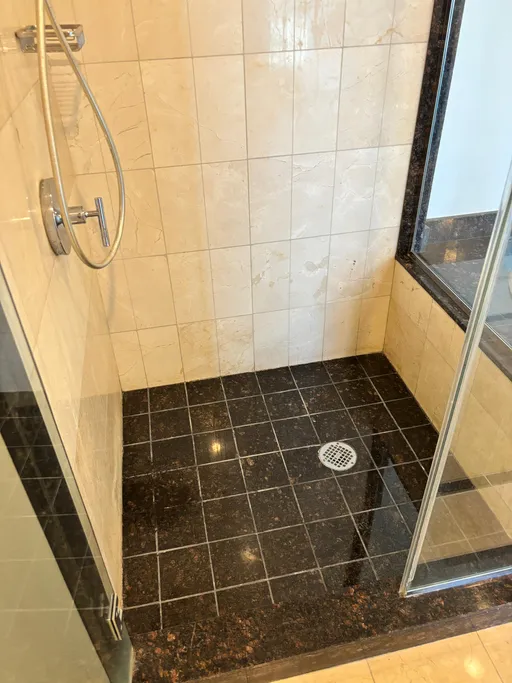
Cloudy marble, dull corners, and bathroom floors that won't shine evenly after normal cleaning. Henderson's hard water makes this a common marble call.
Choose the Right Treatment
Henderson homeowners often search for cleaning, polishing, refinishing, or repair when they are describing the same dull or hazy surface. The right process depends on whether the problem is residue on top of the stone, damage in the finish, a chip, or a different natural stone altogether.
Neutral cleaning can remove soil, soap film, mineral scale, and bonded residue. A smooth white or dull mark that remains after cleaning may be etching or finish wear that needs honing and polishing.
Marble cleaning and polishing serviceFloor polishing addresses traffic lanes, scratches, dull entryways, and uneven reflection. The finish may be honed, satin, or polished depending on the room and how you want daily wear to look.
Marble floor polishing in Las VegasTabletops and vanities need careful edge and finish matching. Onyx requires its own inspection because translucence, resin, lighting, and delicate veining can change the restoration plan.
Henderson onyx and stone restorationBefore Your Appointment
Most marble jobs take 3-6 hours depending on the surface area and level of damage. Floors take longer than countertops.
Clear items off surfaces. For floors, move lightweight furniture or let us know if you need help. We lay down protection for surrounding areas.
We contain and extract dust as we work, so there's less mess than you'd expect. We clean up at the end.
You can use countertops and walk on floors the same day. Sealer cure time is typically a few hours.
Local Expertise
The Southern Nevada Water Authority lists local water hardness at 280 ppm, or 16 grains per gallon, categorized as very hard. That helps explain the mineral deposits we see around faucets, showers, and vanity edges in Henderson, but not every white mark is an etch. Homes in MacDonald Highlands, Anthem, and Lake Las Vegas often feature Calacatta and Carrara marble that shows water residue clearly.
Our technicians are IICRC-certified and trained specifically in marble restoration. We don't just buff the surface. We diagnose whether you're dealing with etching, staining, or both, then use the right process for each. We train other professionals in these techniques.
Henderson Marble Resources
Safe cleaning, hard-water deposits, sealing limits, and when polishing is needed.
Compare reflection, etch visibility, floors, countertops, and shower finishes.
Learn why the commercial name alone does not determine the care plan.
See how marble floors, granite counters, and entry tile were handled in one Henderson home.
Pricing
Every job starts with a free estimate. Our minimum visit is $700, and most jobs come in around $1,200.
A visit usually covers more than the one spot that made you call. If we're polishing out an etch ring on the counter, we can take care of the dull spots around the sink and the vanity tops, and seal everything while we're there. What moves the price is how much marble there is and how deep the damage goes.
Common Questions
If it won't wipe away or looks like it's in the stone rather than on top, it's usually etching. Etching happens when acidic liquids like wine, citrus, or some cleaners eat into the surface. A stain sits in the pores. Etching is actual surface damage. We can tell the difference on-site and explain what we're seeing.
That can be mineral scale or soap residue, and it can also include etching. Southern Nevada water is very hard, so deposits are common, but a raised crust is different from a smooth dull etch. Cleaning removes residue; honing and polishing address damage in the finish.
Countertops are usually one of the most expensive purchases in a home, and they're the centerpiece of your kitchen. Some things are just not worth the risk of DIYing. Our technicians are IICRC-certified stone restoration specialists who train other professionals in these techniques. We're fully insured and follow the latest industry best practices. Store-bought 'marble polish' sprays are coatings that build up and cause problems later. Professional honing with diamond abrasives actually removes the damage rather than covering it up.
Avoid vinegar, lemon juice, abrasive powders, and unverified bathroom cleaners. Use a pH-neutral stone cleaner or plain water with a clean microfiber cloth for daily wiping, then dry the surface.
Cleaning removes soil, soap film, mineral scale, and residue sitting on the surface. Polishing addresses a smooth dull area, fine scratches, or etching in the finish. We clean first so we do not polish over buildup, then use a test spot to confirm whether the surface needs honing, polishing, or only maintenance cleaning.
Yes. Marble table repair often means removing etch marks, blending scratches, repairing small edge chips, and matching the surrounding honed or polished finish. We inspect the slab, edge profile, structural condition, and any existing coating before recommending surface restoration or explaining when a deeper repair is needed.
Yes, but onyx needs a separate assessment because it is translucent and can be more delicate than typical marble. We check the finish, thickness, lighting or backlighting, cracks, resin, and water marks before using controlled polishing or restoration methods. We do not treat every onyx surface like a standard marble countertop.
Serving Henderson, MacDonald Highlands, Anthem, Green Valley, and all of Las Vegas Valley.
Same-week appointments usually available. Free assessment, no obligation.
Every job is backed by our one-year warranty.
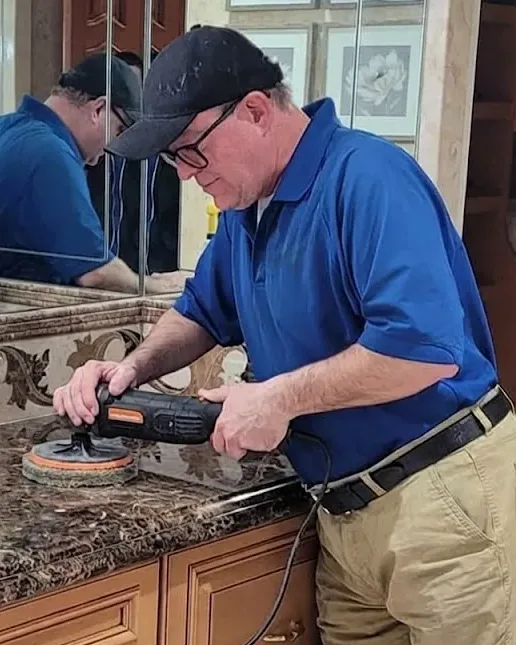
Owned by Robert Falzone, an IICRC-approved instructor who trains other stone restoration professionals. Robert and our lead technician, Josh, do the work themselves.