Choosing between honed and polished marble is really a choice about finish, light, and how you want everyday wear to look. The stone underneath can be the same. What changes is the amount of reflection on the surface and how clearly etches, scratches, and water marks show.
For Las Vegas homeowners, that decision also intersects with hard water, tracked-in grit, kitchens, showers, and the amount of patina you are comfortable seeing. This guide breaks down the difference without pretending either finish is maintenance-free.
Honed and polished are not marble types
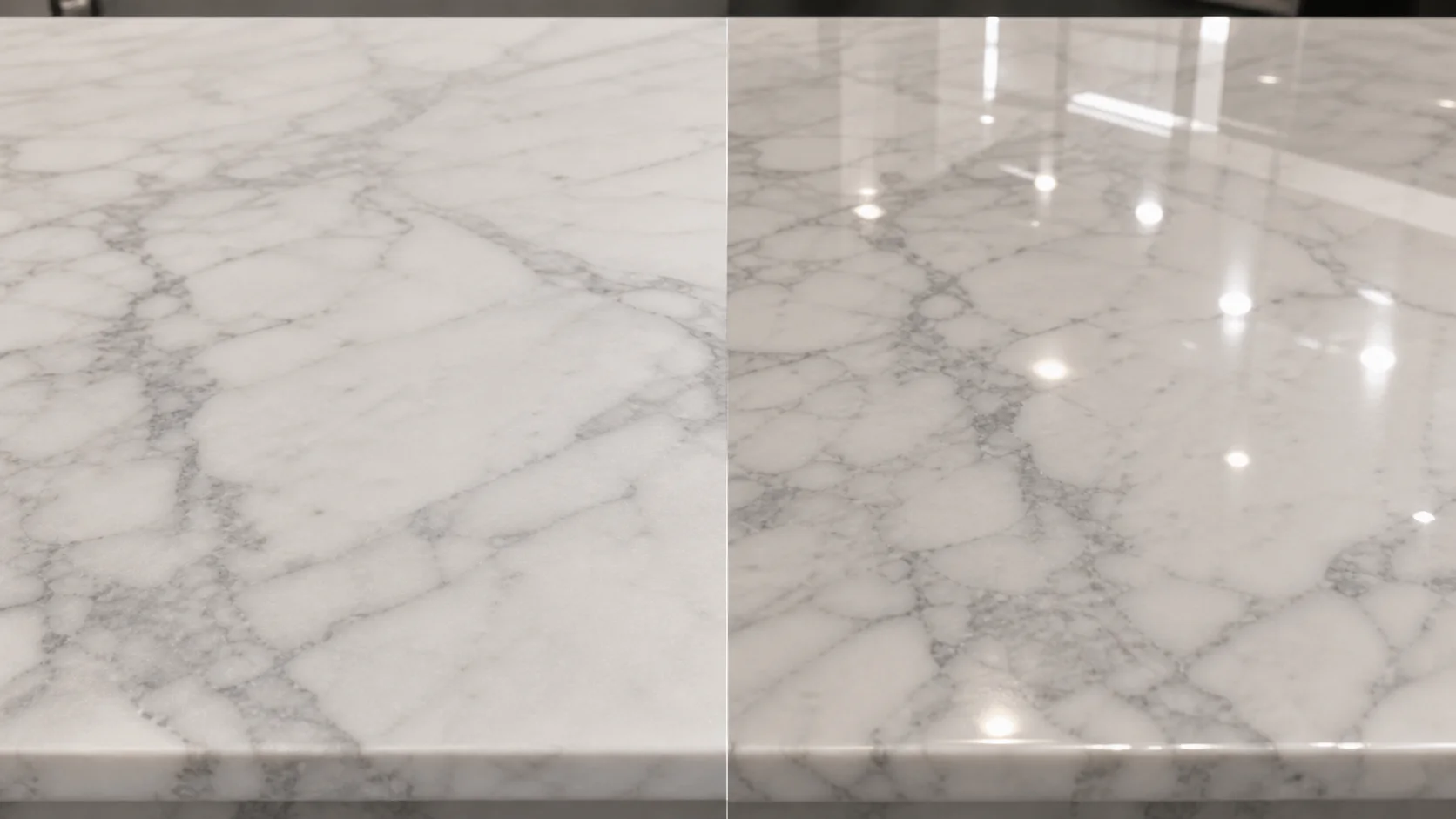
Marble is a calcium-based natural stone that can be finished in different ways. A polished finish is glossy and highly reflective. A honed finish is smooth but matte or low-reflectivity. The finish does not change marble’s underlying sensitivity to acids.
The Natural Stone Institute’s finish guidance describes polished stone as reflective and honed stone as muted or matte. It also notes that a honed finish can conceal some imperfections by reducing light reflection.
Polished marble: high reflection and high visibility
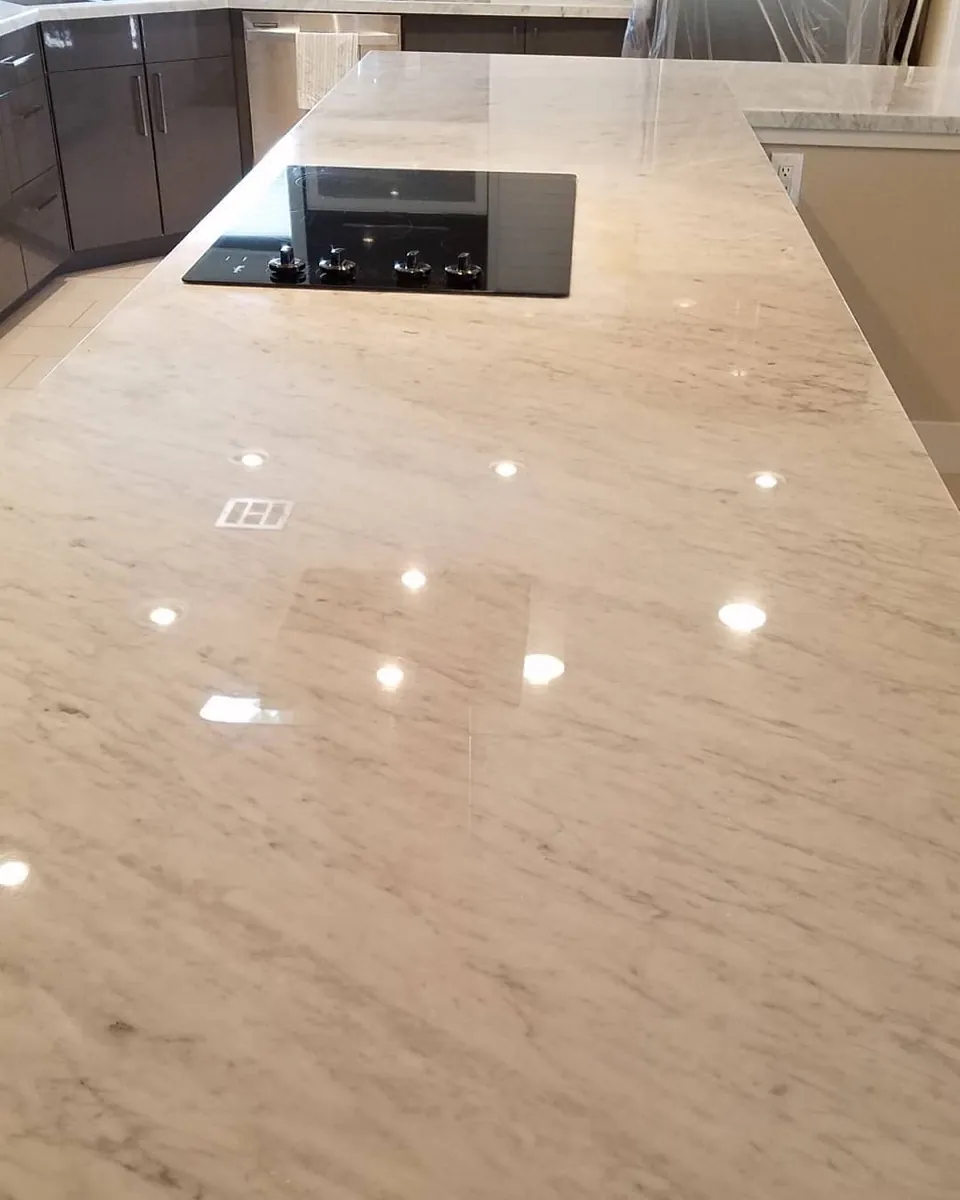
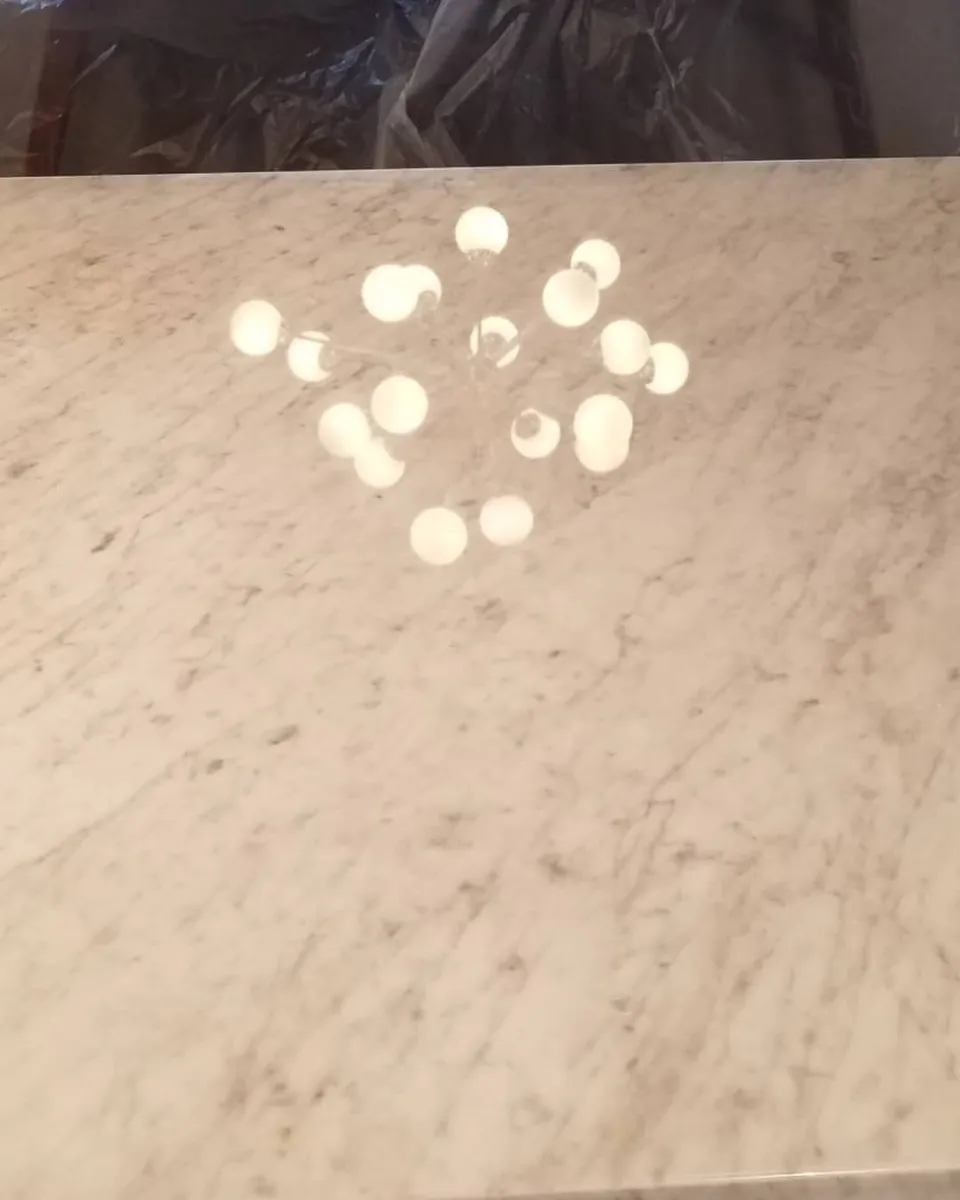
Polished marble brings out color depth, veining, and reflected light. It is common on countertops, vanities, walls, and floors where the homeowner wants a formal, bright finish.
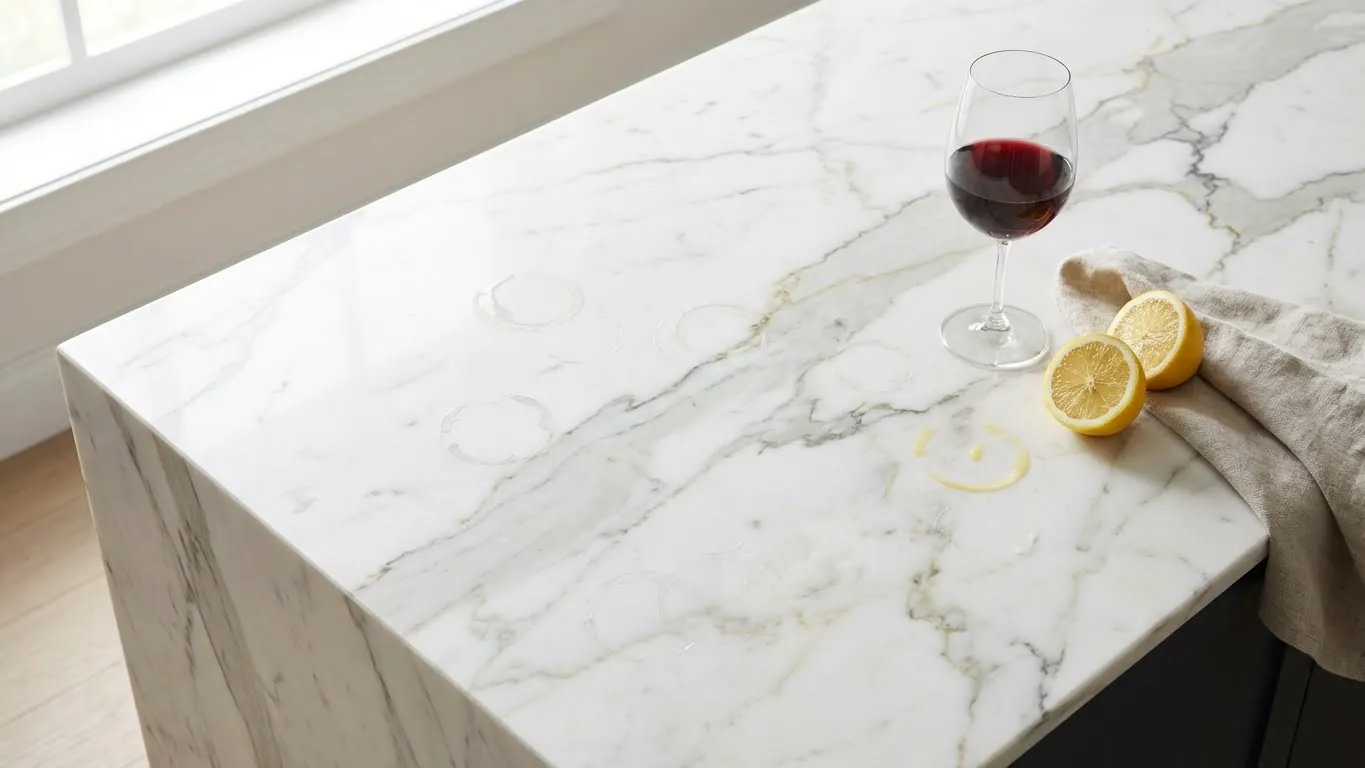
The tradeoff is visual. A lemon ring, vinegar drip, hard-water haze, or fine scratch may be easier to see because the damaged spot interrupts the reflection. Polished marble still needs coasters, prompt spill cleanup, neutral cleaning, and grit control.
Polished marble is not sealed against acids by its shine. If the surface has dull spots after an acidic spill, cleaning may remove residue but will not rebuild the finish. That is an etching or refinishing question.
Honed marble: softer appearance and more forgiving wear
Honed marble has a smooth, satin or matte appearance. Because it reflects less light, small etches and fine wear can blend into the surrounding surface more naturally. That makes honed marble attractive for busy kitchens, floors, and homeowners who prefer a lived-in patina.
Honed does not mean stain-proof, scratch-proof, or acid-proof. The same marble chemistry is still there. Honed surfaces can also show residue, darkening, and uneven sheen if they are over-cleaned, left wet, or treated with an incompatible product.
Honed vs. polished by room
Kitchen countertops
Polished marble makes veins and color pop, but etch marks may stand out under task lighting. Honed marble often hides small changes better, but oil and water absorption still need attention. Use a cutting board, coasters, neutral cleaner, and prompt spill cleanup with either finish.
Marble floors
Honed floors can make traffic wear less visually obvious, while polished floors create a stronger reflective statement. Entry mats matter in either case because sand and grit are abrasive. If a polished floor has dull traffic lanes, it may need marble floor polishing in Las Vegas rather than another cleaning product.
Marble showers
Honed walls and floors can give a shower a quieter look, but water and soap residue still collect in the surface texture. Squeegee after use and avoid acidic descalers. Las Vegas water is listed by SNWA at 280 ppm / 16 grains per gallon, categorized as very hard, so mineral control matters in both finishes. Persistent haze may need marble shower restoration.
Does honed marble etch less?
No. Honed marble can make etching less noticeable because it reflects less light. A polished surface may reveal the same chemical damage more clearly. The Natural Stone Institute explains that sealing does not prevent etching and that a honed finish often makes etch marks less visible than a polished finish.
That distinction is important when setting expectations. Changing a polished counter to honed may change how the patina looks, but it does not make citrus, vinegar, wine, or acidic cleaners safe.
Can polished marble be changed to honed?
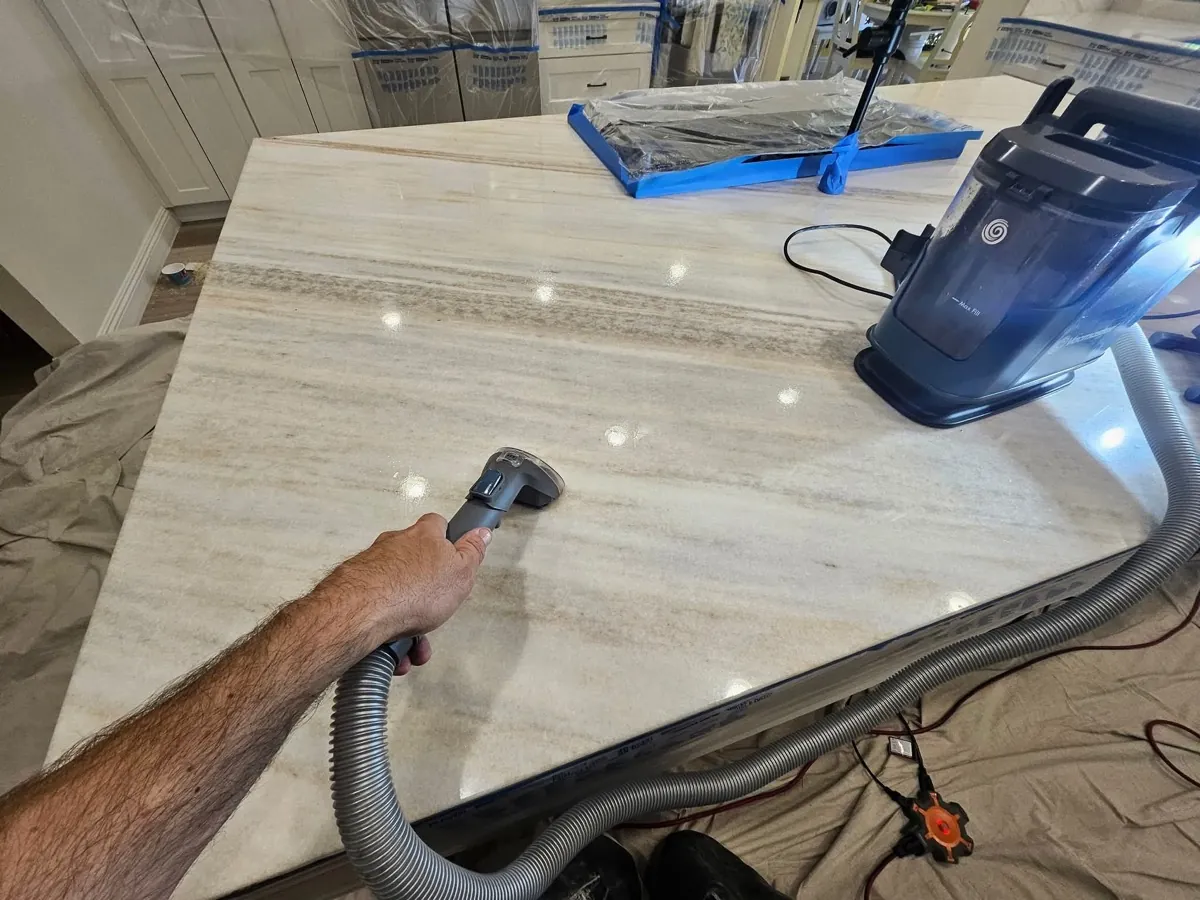
In many cases, an existing finish can be changed through professional refinishing. The surface must be evaluated first for material, thickness, edge details, scratches, repairs, and the surrounding finish. A spot can be misleading; the new sheen needs to blend across the visible area.
The same principle applies when restoring honed marble. The goal may be to re-hone the surface to a consistent matte finish rather than create a mirror polish. Explain the finish you want before work begins and ask for a test area when the appearance is important.
How to care for either finish in Las Vegas
- Use a neutral cleaner or mild soap according to product directions.
- Do not use vinegar, lemon, abrasive powders, or unknown shine products on marble.
- Blot spills and dry the surface rather than letting water or cleaner evaporate in place.
- Use coasters, trivets, cutting boards, entry mats, and shower squeegees.
- Ask whether a sealer is appropriate for the specific stone and follow supplier instructions. Sealing improves stain resistance; it does not prevent etching.
Which finish should you choose?
Choose polished if you want maximum reflection and are comfortable seeing the surface’s changes. Choose honed if you prefer a softer look and want small etches to blend more naturally. For a floor or kitchen used heavily, the better finish is the one whose patina you can accept.
If the question is not design but damage, start with the marble care guide and then compare your symptoms with marble polishing versus restoration. If your finish is already dull, scratched, or uneven, request a Las Vegas marble restoration assessment or review marble countertop sealing in Summerlin after the finish is corrected.
Tags: