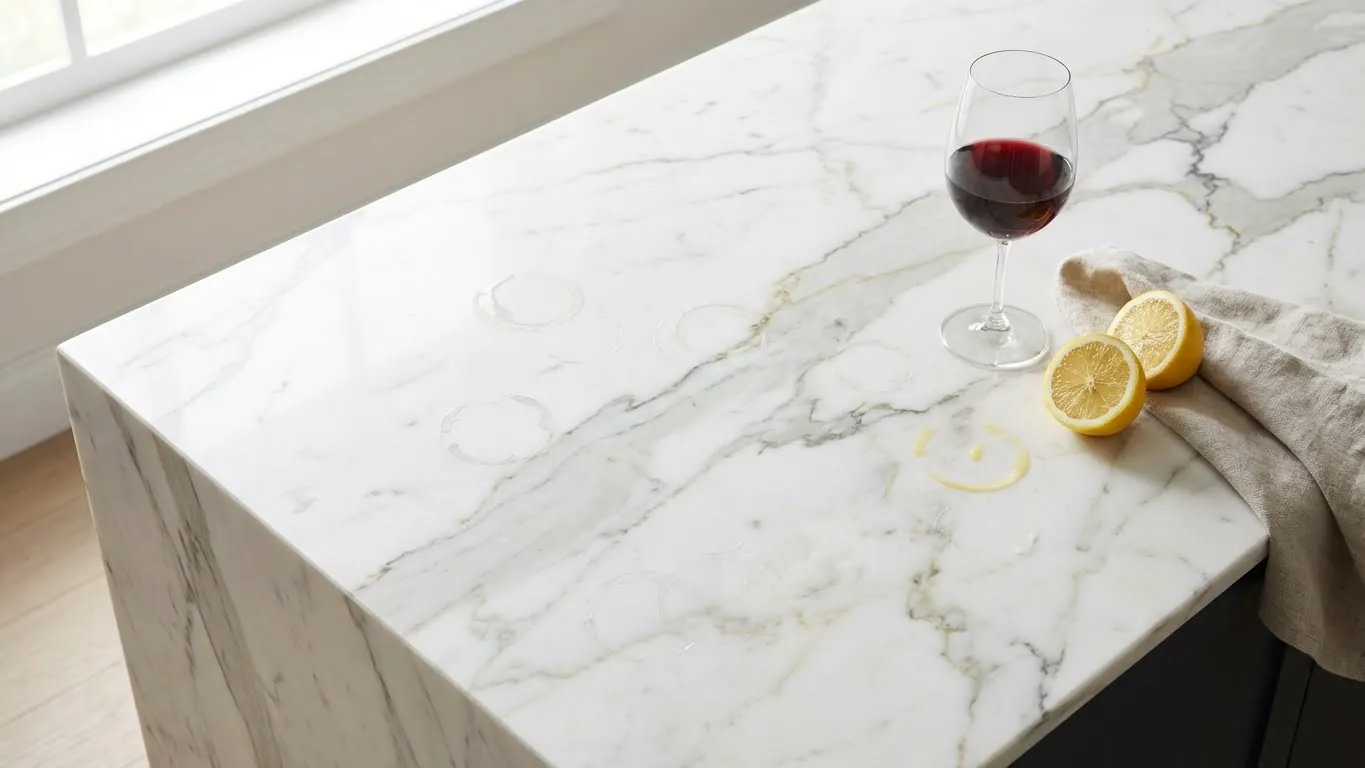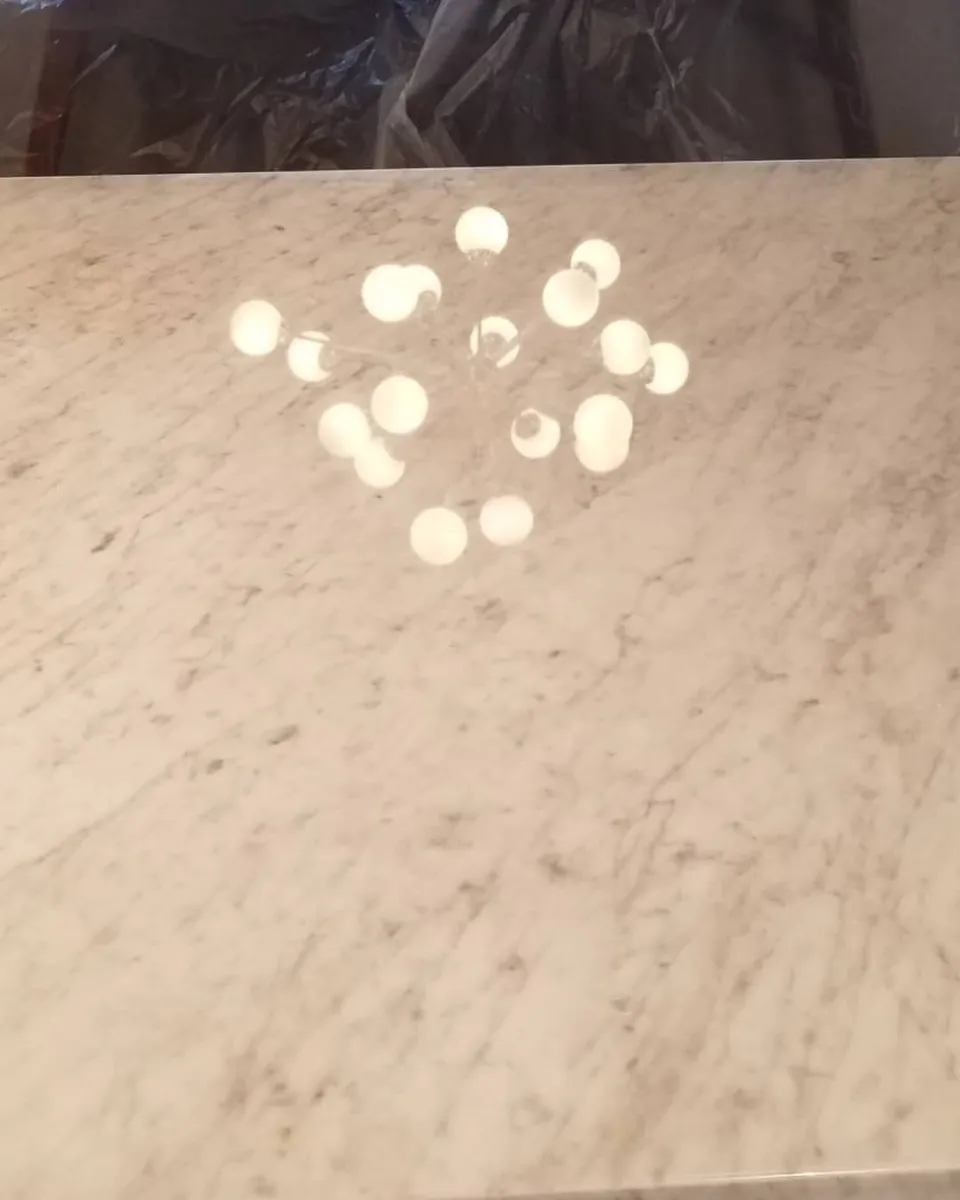
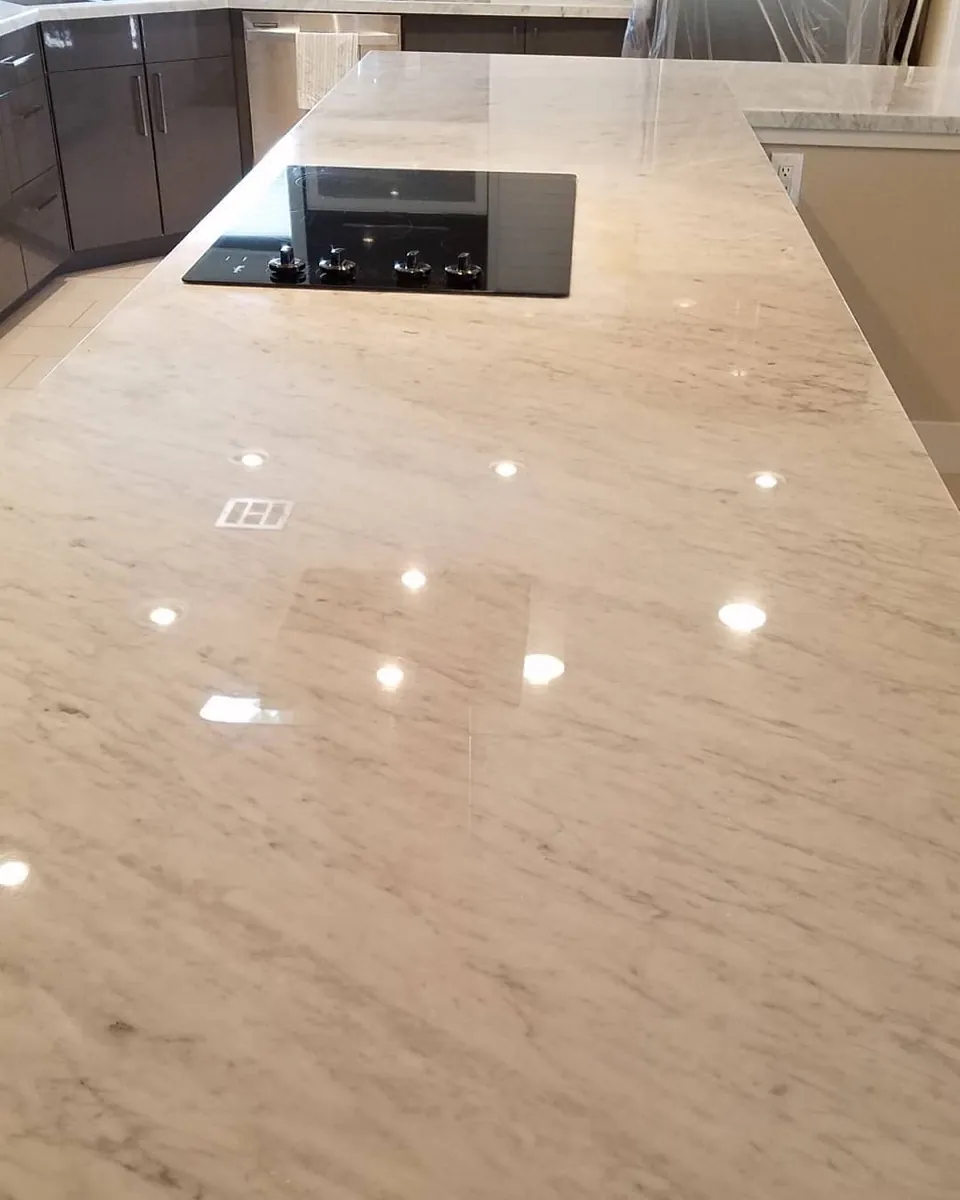
Marble names can sound precise, but they do not always tell you how a surface should be cleaned or restored. Carrara, Calacatta, Statuario, Crema Marfil, Emperador, and Nero Marquina are commercial names used to describe familiar materials and appearances. The actual care decision also depends on mineralogy, porosity, finish, installation, and damage.
That matters in Las Vegas because hard water, shower use, kitchen spills, and tracked-in grit can create different problems on different surfaces. Before applying a cleaner, sealer, poultice, or abrasive product, identify the material and the finish.
What makes a stone marble?
True marble is a metamorphic rock formed from limestone under heat and pressure. It is primarily made of calcite, a calcium carbonate mineral. That makes marble a calcareous stone and explains why acids can etch its surface.
The Natural Stone Institute identifies calcite as the basic building block of true marble and warns that mild acids can attack it. A surface can be hard and durable as a building material while still being vulnerable to an acid-created dull mark.
Commercial marble names you may see
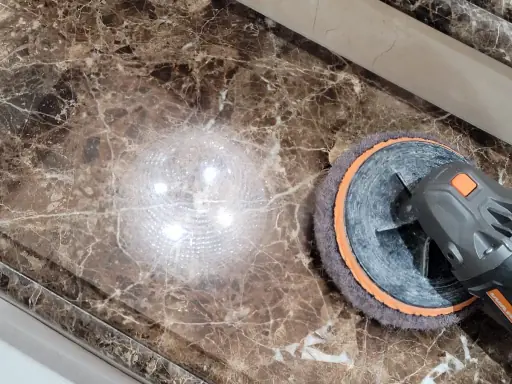
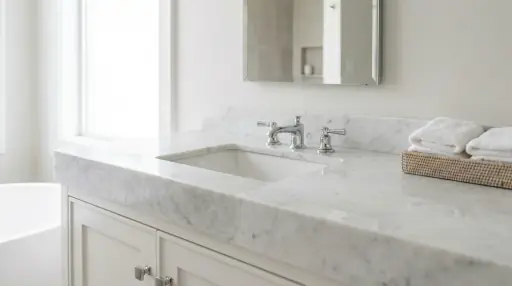
These local project photos help show how marble names and finishes appear in real homes. They are visual references, not proof of mineral composition: a slab can resemble Carrara, Calacatta, or another named stone while being a different natural stone or an engineered product.
Carrara and Bianco Carrara
Carrara is commonly associated with white-to-gray marble and softer gray veining from Italy. The exact slab can vary in movement, crystal structure, and absorption. A Carrara countertop and a Carrara floor should not automatically receive the same maintenance plan.
Calacatta
Calacatta is often used for a lighter background with more dramatic veining. Individual blocks and slabs vary. Some engineered products also borrow similar names, so a sample or appearance is not enough to prove that an installed surface is natural marble.
Statuario
Statuario is another familiar Italian marble name. Its bold appearance can be imitated by engineered quartz and porcelain. Ask for the fabrication or product record when the material is uncertain, especially before using an acidic cleaner or stain treatment.
Crema Marfil
Crema Marfil is a beige commercial name often associated with Spanish stone. It is a useful example of the difference between commercial and scientific labels. The Natural Stone Institute explains that some stones sold in the marble group may be scientifically classified as limestone because they look and perform similarly.
Emperador and other dark marbles
Emperador, Dark Emperador, Nero Marquina, and other dark names can show haze, water spots, and fine scratches clearly when light hits the surface. Dark color does not make the stone acid-proof or scratch-proof. Finish and lighting often determine how visible a mark becomes.
Marble is sometimes confused with other materials
- Limestone: some dense or partially metamorphosed limestones are sold in the marble group because they perform similarly.
- Serpentine: a magnesium-silicate stone that can resemble marble but has different chemistry.
- Onyx: a different rock type known for translucence and also vulnerable to chemical and abrasive attack.
- Quartzite: can resemble white marble but is a silicate-based stone with different behavior.
- Engineered quartz and porcelain: manufactured products can use marble names or patterns without being natural marble.
Because appearance is not proof, do not use a knife, vinegar, or another acid as a casual home identification test. A failed test can scratch or etch the surface. Gather the supplier record, ask the fabricator, or request a professional assessment.
How type and finish change care
“What type of marble is this?” is only half the question. “Is it honed or polished?” is the other half. Polished marble reflects more light, so etches and scratches can stand out. Honed marble reflects less light and can make small etches less visible, but it is not immune to damage.
For any natural marble, use a neutral cleaner, a soft cloth, prompt spill cleanup, and grit control. The Natural Stone Institute recommends neutral cleaning and warns against acids and abrasive powders. In a shower, squeegee after use. On a floor, use clean entry mats and dust-mop grit before it is ground into the finish.
What Las Vegas conditions add to the decision
SNWA lists Southern Nevada water hardness at 280 ppm / 16 grains per gallon, categorized as very hard. Mineral deposits may show around faucets, shower lines, and vanity edges. A raised crust is different from a smooth dull etch, so do not treat both with the same product.
The National Weather Service describes Las Vegas as a desert valley with hot summers, low precipitation, abundant sunshine, and occasional blowing dust and sand. For marble floors, that supports simple grit-control habits. It does not prove that every indoor marble problem is caused by heat or dryness.
How a professional identifies marble before restoration
A useful assessment considers the installed material, surface finish, location, color and pattern, absorption, visible damage, surrounding surfaces, and the desired final appearance. It should also separate dirt, residue, hard-water scale, stain, etching, scratching, and finish mismatch.
That is why a named marble should not automatically be quoted for the same treatment as another named marble. The safest plan is material-specific and finish-specific. If the surface is dull, etched, scratched, or stained, compare the options for marble polishing and restoration in Las Vegas.
Marble care starts with the right identification
Knowing the commercial name helps describe a surface, but it does not replace testing and inspection. Keep the installation record if you have it, photograph the whole area and the damaged spot, and note whether the finish is honed or polished.
For routine maintenance, start with the Las Vegas marble-care guide. If you are choosing a finish, read honed vs. polished marble. If an existing surface has etching, scratches, haze, or water damage, send photos for an assessment rather than guessing from the name alone. Henderson homeowners can see local marble polishing options, and Summerlin homeowners can compare countertop polishing with sealing.
Tags: