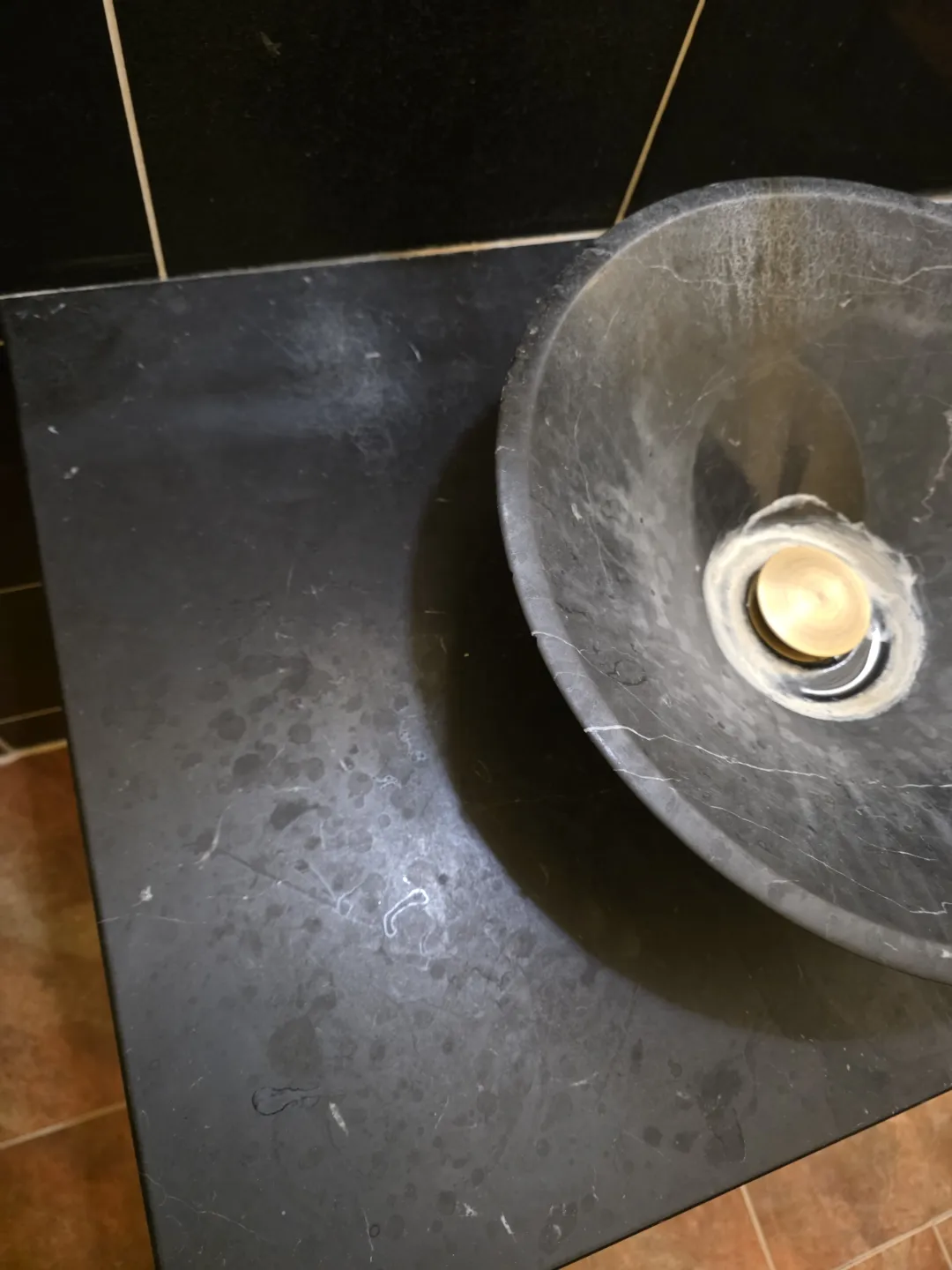
Marble showers need a different care routine than a dry countertop. Water evaporates around faucets, corners, shelves, and shower lines. Soap residue can collect on the surface. In Las Vegas, the Southern Nevada Water Authority lists water hardness at 280 ppm / 16 grains per gallon, categorized as very hard.
That does not mean every cloudy shower mark is hard-water damage. The mark may be mineral scale, soap film, etching, staining, or a combination. The first step is to identify the symptom without applying a stronger chemical blindly.
What makes marble shower care different?
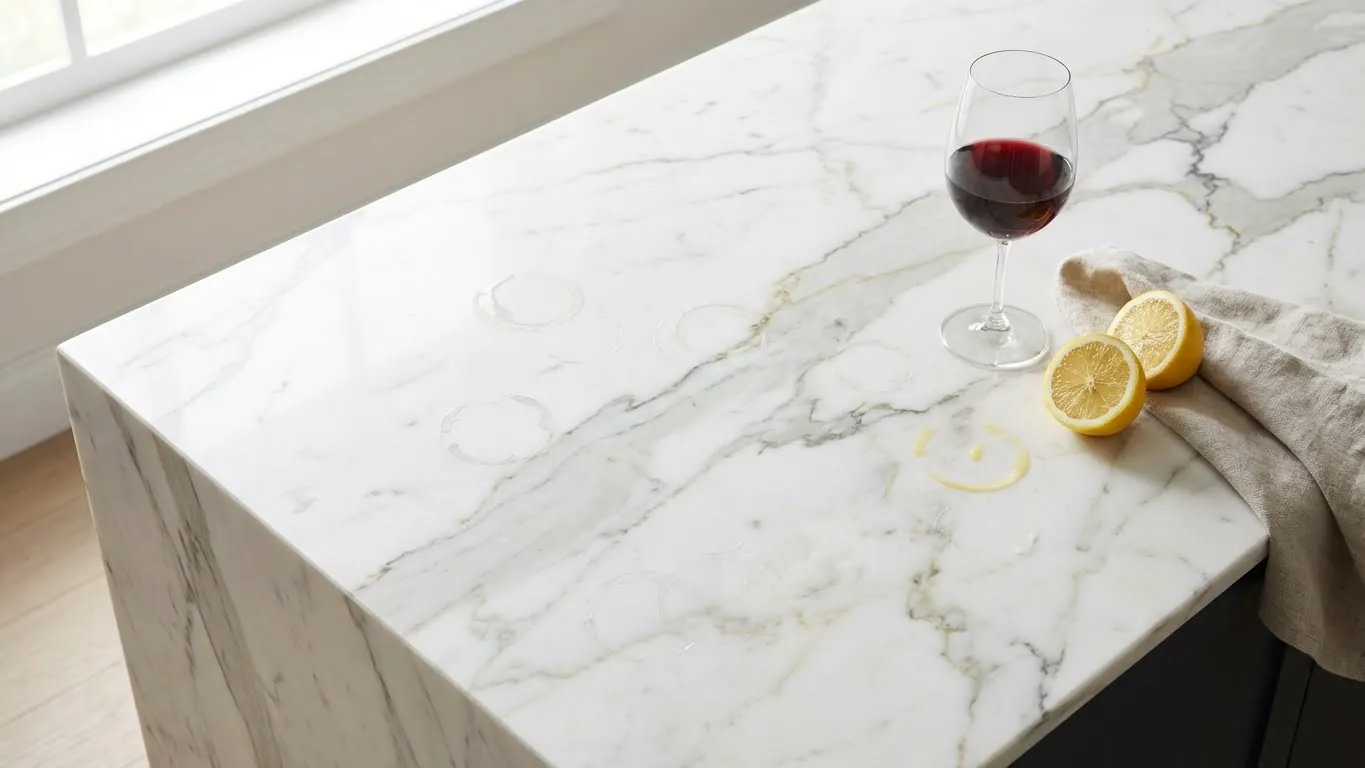
True marble is primarily calcite-based. Calcite is sensitive to acids, including vinegar, lemon, and acidic descaling products. A cleaner that works on glass or ceramic tile can leave a dull spot on marble.
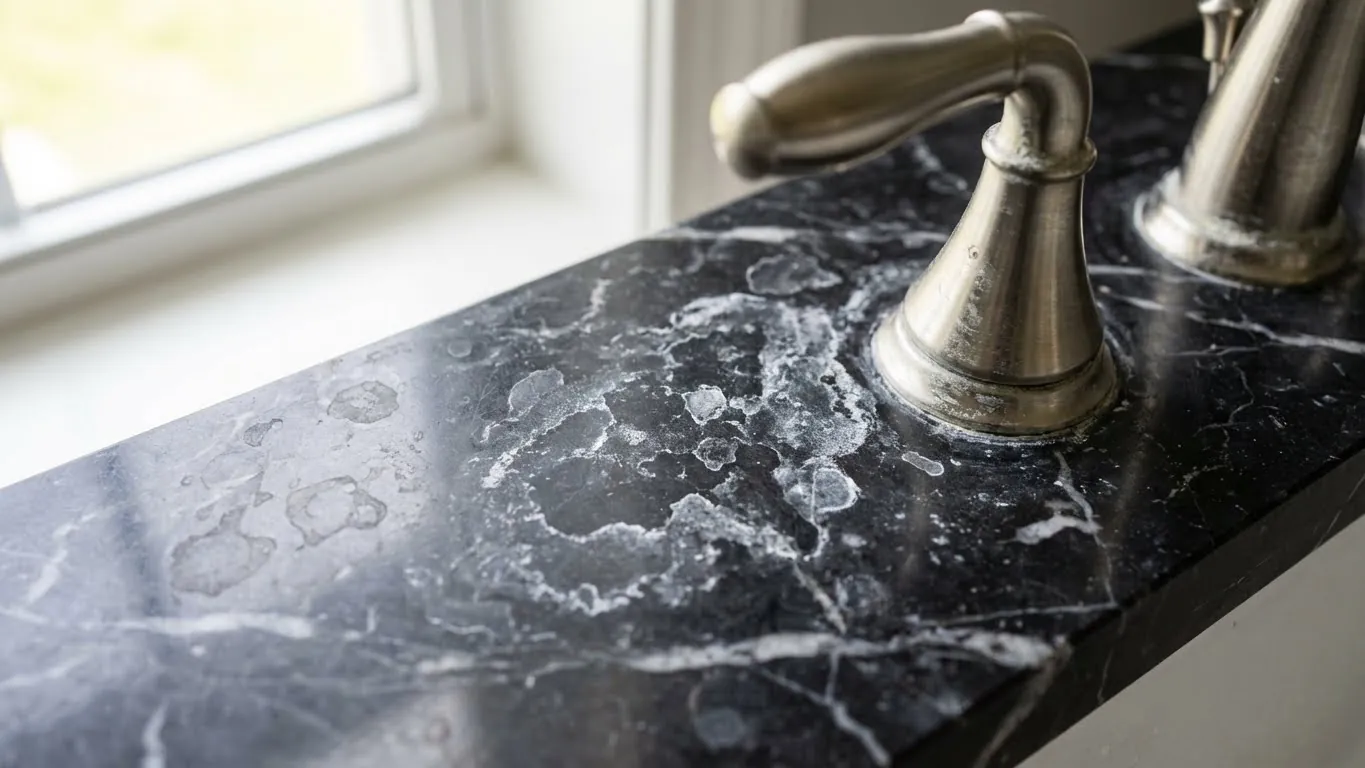
Water exposure also makes residue easier to misread. A raised, rough deposit may be mineral scale. A smooth but dull patch may be etching. Soap film can sit on top of either condition and make the surface look worse.
How to care for a marble shower every day
- Squeegee the walls and glass: remove standing water after use, especially around shelves, benches, and faucet trim.
- Wipe the ledges: dry horizontal surfaces where water sits and evaporates.
- Use a neutral stone cleaner: follow the label and avoid over-concentrating the product.
- Keep a soft cloth available: use it for spot drying rather than an abrasive scrub pad.
- Ventilate the room: reduce lingering moisture without treating the marble with an aggressive chemical.
The Natural Stone Institute recommends neutral cleaning for natural stone, warns that acids may etch calcareous stone, and notes that excess soap can leave a film.
Hard-water scale vs. marble etching
Hard-water scale
Scale is usually a deposit left behind as water evaporates. It may feel raised, rough, or crusty and often collects near faucet bases, corners, seams, and shower lines. It can sometimes be removed with a compatible non-acidic method, but the product still needs to be safe for the specific stone and finish.
Etching
Etching is chemical damage to the surface. It may look like a dull water mark, cloudy patch, or lighter area but feel relatively smooth. More scrubbing will not rebuild the lost reflection. Read the marble etching guide if the mark stays dull after safe cleaning and drying.
Soap or cleaner film
Film can look cloudy or streaked and may improve when the surface is properly rinsed and dried. Excess cleaner is a common cause. Do not keep adding product because the first application did not look clean.
What not to use on marble showers
- Vinegar, lemon juice, or other acidic cleaners.
- Acidic mineral descalers intended for glass, fixtures, or ceramic tile.
- Scouring powders, abrasive creams, steel wool, or rough scrub pads.
- Unknown shine sprays or coatings that can build a film.
- Mixed chemicals. Never combine bleach and ammonia; follow product safety instructions and ventilate the room.
If you are unsure what the marble is, or whether the finish is honed or polished, pause before treating the spot. A wrong product can remove the finish while leaving the underlying deposit or stain unresolved.
Does sealing protect a marble shower?
An impregnating sealer may make the stone more resistant to staining and give you more time to wipe up water or products. It does not make marble stain-proof, and it does not prevent acid etching. A sealer also cannot restore a dull or damaged finish.
Sealing should be considered after the surface is clean and the finish is in the condition you want. Follow the stone supplier’s and sealer manufacturer’s instructions instead of using a universal Las Vegas schedule.
When shower cleaning is no longer enough
Consider an assessment when the haze stays after safe cleaning, when the marble feels smooth but looks dull, when water marks cover a broad area, or when the finish is patchy around faucets and shelves. A professional may need to separate scale removal, honing, polishing, stain treatment, grout or caulk repair, and sealing.
For a full wet-area service, see marble shower restoration in Las Vegas. If the concern extends to floors, counters, or other rooms, start with the broader marble-care guide or marble polishing and restoration service.
A simple Las Vegas shower-care checklist
- Squeegee after use.
- Dry ledges, corners, and faucet areas.
- Use a neutral cleaner and a soft cloth.
- Do not use vinegar or acidic descaler on marble.
- Photograph persistent marks before experimenting.
- Request an assessment when a smooth dull mark does not clean away.
If you see hard-water haze, dull etching, or a finish you cannot identify, send photos for an assessment or call/text (702) 605-6528. For a Henderson shower or floor, see marble polishing in Henderson before trying an acidic descaler.
Tags: