
Yes, quartz countertops can stain. Quartz is crushed stone held together by resin, and the resin is the weak point. Bleach, degreasers, hot pans, and Las Vegas hard water can leave rings, cloudy patches, and yellow or brown spots that do not wipe off. Some marks clean up at home. Others are resin damage that needs a professional repair.

Why we see more quartz stains than ever
Quartz repair is one of our most common calls in Las Vegas, and it keeps growing. Quartz installed 15 to 20 years ago tends to hold up better than many counters installed in recent years. In our experience, the difference is the resin. Lower-cost slabs appear to use binders that react faster to chemicals and heat.
No public study has proven that newer quartz is worse, so treat that as our field observation. The manufacturers do back up the basic point, though. Silestone's care guide warns about prolonged bleach contact, and Caesarstone attributes some hard-water damage to the polymer resin itself. Quartz is stain-resistant, not stain-proof.
Identify your mark first
| What you see | Likely cause | Safe first step |
|---|---|---|
| White crust around the faucet | Hard water scale sitting on top | Descaler your quartz brand approves |
| Brown or tan ring | Coffee, tea, wine, or spice residue | Dish soap, then a non-abrasive quartz cleaner |
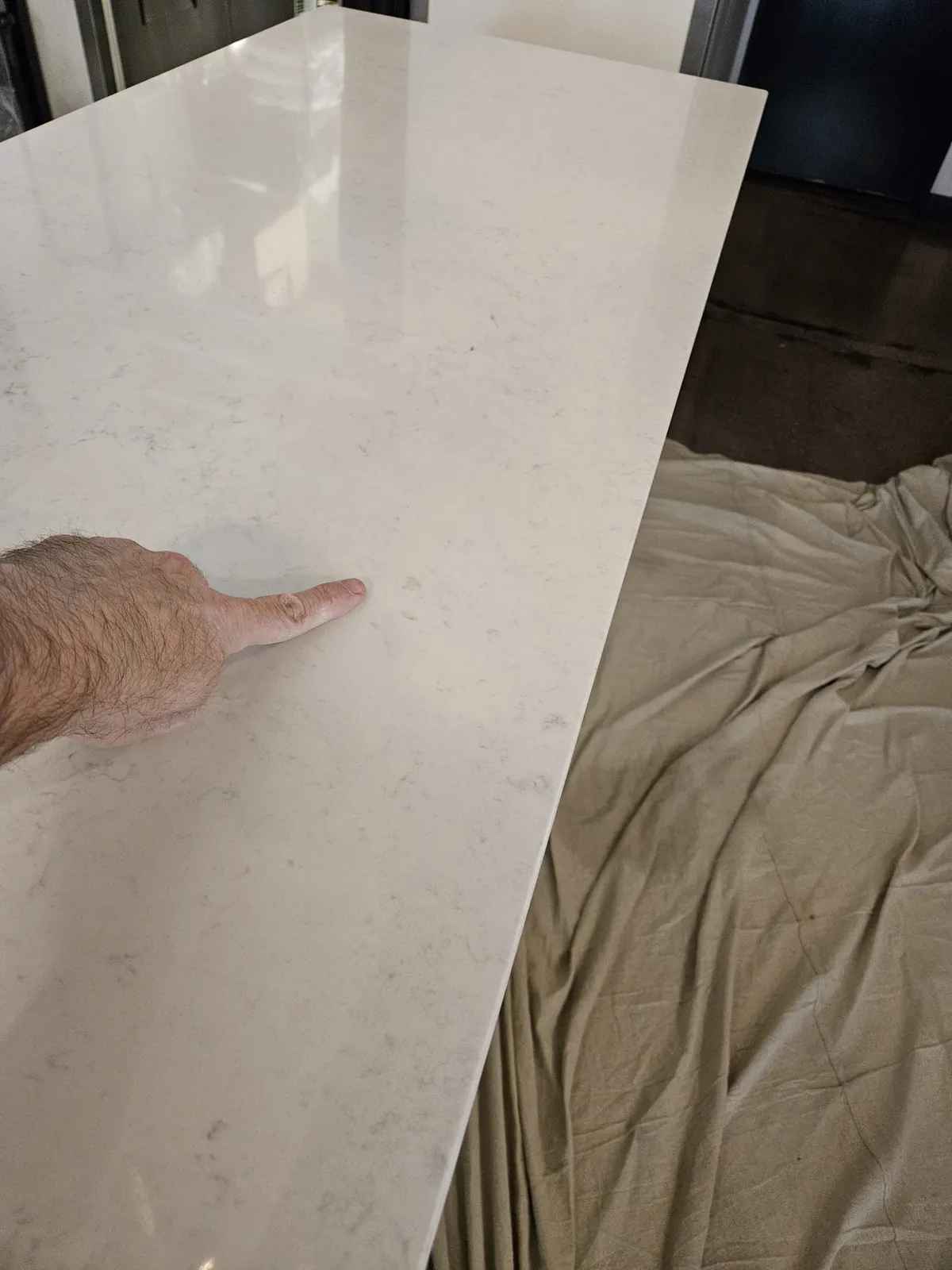
| Cloudy or dull patch that feels smooth | Resin damaged by bleach, degreaser, or oven cleaner | Stop cleaning it. Call for an assessment |
| Yellow or white spot near the stove | Heat scorched the resin | Not removable by cleaning |
| Gray streaks | Metal marks from pots or utensils | Non-abrasive cream cleaner, light pressure |
How to remove stains from quartz safely
- Find your brand. Check the builder packet or invoice. Cambria, Silestone, Caesarstone, and MSI each publish their own cleaning limits.
- Start mild. Warm water, dish soap, and a soft cloth. Let it sit for a minute before wiping.
- Step up one level. Use a non-abrasive cleaner labeled safe for quartz. Keep it moving and rinse well.
- Treat scale separately. Use only a descaler your manufacturer allows, for the shortest dwell time listed.
- Stop if it gets duller. If the spot looks cloudier after cleaning, the resin is damaged. More scrubbing only makes the patch bigger.
What causes permanent quartz damage
- Bleach or bleach wipes left on the surface
- Oven cleaner, degreaser, or paint stripper
- Magic erasers, scouring pads, and powdered cleansers
- Hot pans, crockpots, and air fryers set directly on the counter
- Stone sealer. Quartz cannot absorb it, so it leaves a sticky haze (more on that here)
How we fix stained and dull quartz
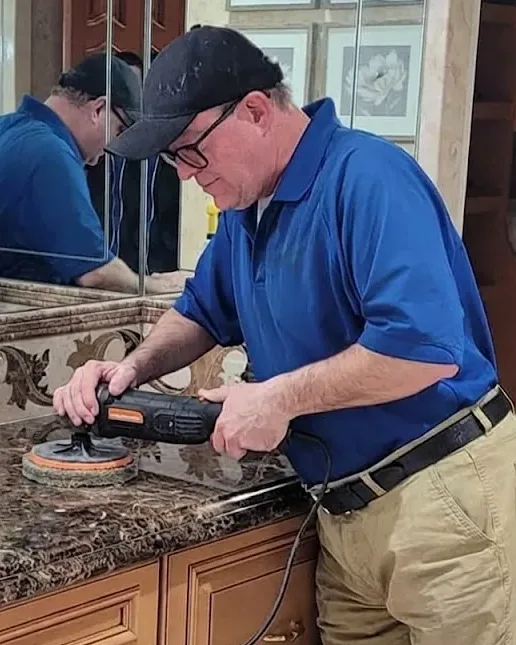
We start with a test spot to see whether the mark sits on the surface or is in the resin. Surface marks lift with quartz-safe cleaning. Resin damage is refinished with fine abrasives and polished back to an even sheen. Burns and chips are filled with color-matched resin. Most counters are done in one visit.

See the full process on our quartz countertop repair page. For mineral rings on any stone, see water stain removal. For oil, rust, and dye marks, see countertop stain removal.
Frequently asked questions
Is quartz stain-proof?
No. It resists most absorbed stains, but the resin can still discolor or dull from chemicals and heat.
Can a quartz stain be permanent?
A stain that changed the resin will not clean out. It usually can be refinished.
Can I use vinegar on quartz?
Only if your manufacturer's care guide allows it. Some brands warn against acids and high-pH cleaners.
Is quartz the same as quartzite?
No. Quartzite is natural stone and cares differently. See quartz vs. quartzite.
Not sure what your mark is? Send us a photo and we will tell you if it cleans out or needs a repair.