
Quartz is a man-made slab of crushed stone and resin. Quartzite and marble are natural stone cut from a quarry. Quartz never needs sealing, but quartzite does. Marble needs sealing too, and it etches from acids. Using the wrong cleaner or sealer for your counter is one of the most common causes of damage we repair in Las Vegas homes.

The differences at a glance
| Quartz | Quartzite | Marble | |
|---|---|---|---|
| Made of | Crushed stone and resin | Natural quartz rock | Natural calcite rock |
| Pattern | Even, often repeating veins | Glassy, crystal-like, varied | Soft, feathery veins |
| Needs sealing | No | Yes | Yes |
| Etches from lemon or vinegar | No | Usually no | Yes |
| Heat | Can scorch | Handles heat well | Handles heat, but can stain |
| Main weak point | Resin: bleach, heat, harsh cleaners | Stains if unsealed | Etching and stains |
How to identify your countertop
- Check the paperwork. Builder packets, fabricator invoices, and slab labels are the most reliable answer. Brands like Cambria, Silestone, and Caesarstone mean quartz.
- Look at the pattern. Quartz veins look printed and uniform, and the same pattern often repeats along the counter. Natural stone never repeats exactly.
- Look closely at the surface. Quartzite has a glassy, sparkly depth. Marble looks softer, with a milky glow.
- Do the water test. Leave a few drops for 10 minutes in a hidden spot. If the stone darkens, it is natural stone that needs sealing. Quartz will not change.
- Do the lemon test on a hidden spot only. A drop of lemon juice for 5 minutes leaves a dull mark on marble. Quartz and true quartzite will not change. Rinse right away.
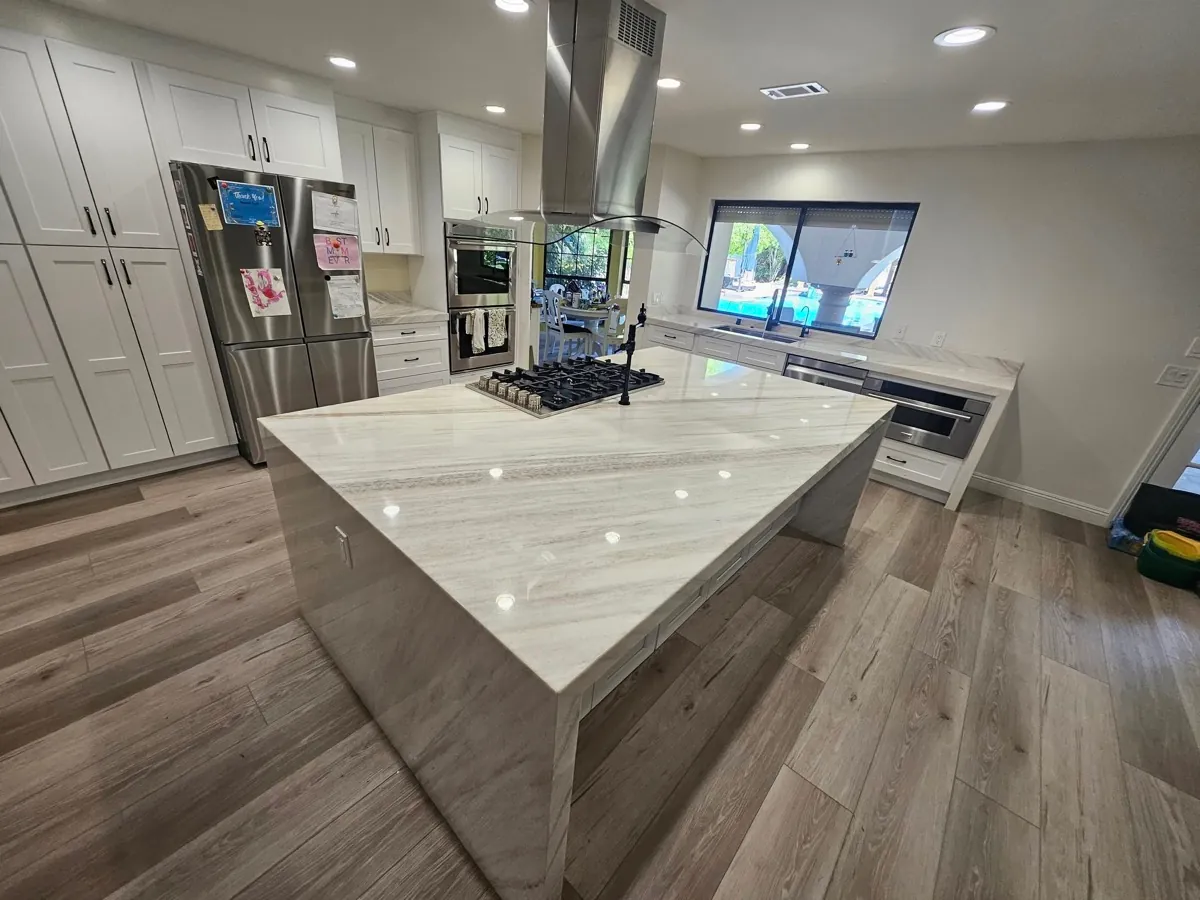
A photo can narrow it down, but it cannot confirm the material. If the tests disagree, have it inspected before you buy a cleaner or sealer.
The "soft quartzite" trap
Some slabs sold as quartzite are actually marble or dolomite. They look like quartzite but etch like marble. If your "quartzite" turned dull from lemon or vinegar, it is probably one of these and needs marble care.
Why this matters in Las Vegas
- New builds use a lot of quartz. Many homes in Summerlin, Henderson, and Skye Canyon came with builder-grade quartz. Sealer and bleach wipes are the most common ways homeowners damage it.
- Local quartzite still absorbs water. A Natural Stone Institute test of Las Vegas Rock quartzite measured 2.36% to 3.63% absorption. That is enough to stain if it is never sealed.
- Hard water affects all three. Mineral rings form on every surface. Removing them safely depends on the material (hard water guide).
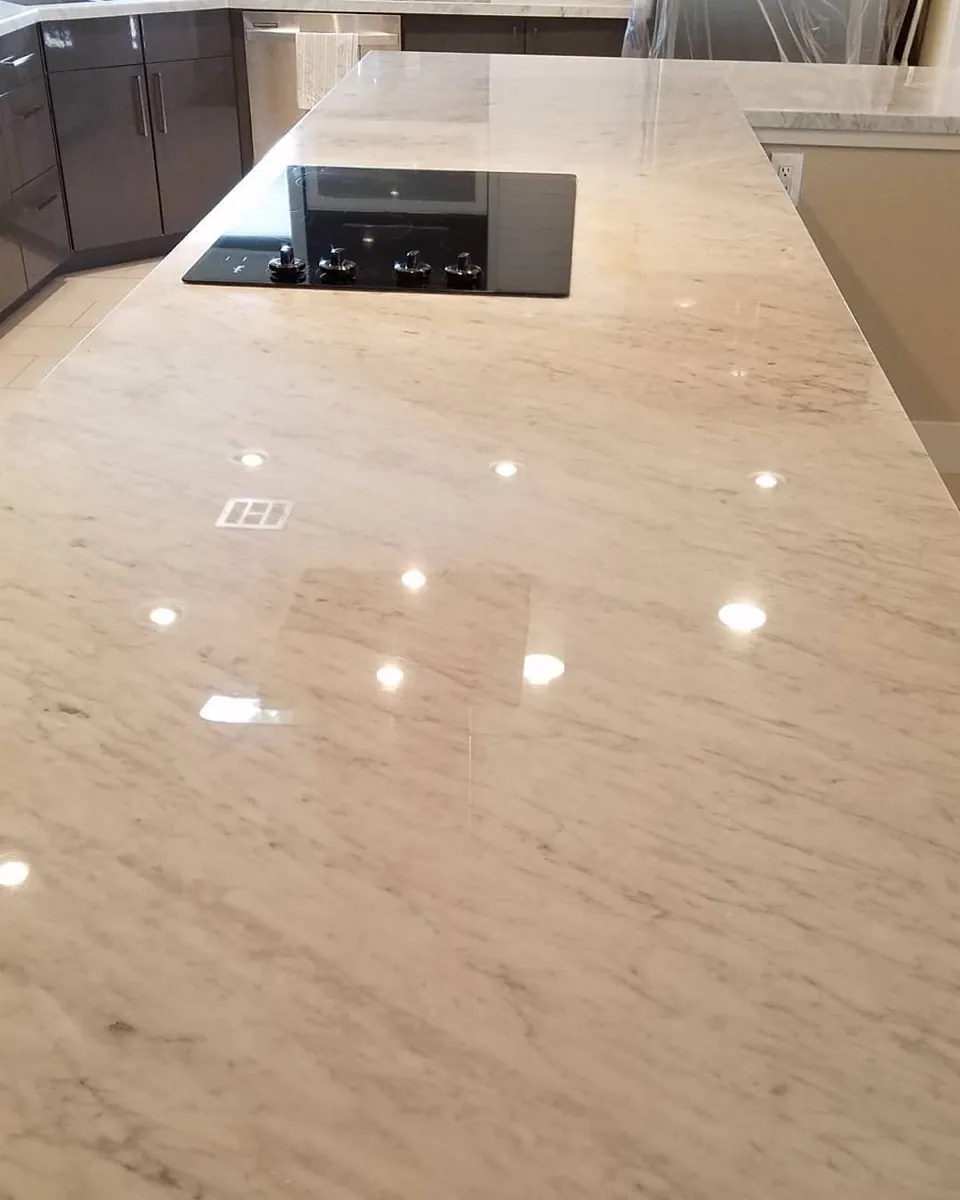
Get the right care for your counter
- Quartz: mild soap, no sealer, no bleach. Damaged? See quartz countertop repair.
- Quartzite: seal with a penetrating sealer. Hazy or stained? See quartzite restoration.
- Marble: pH-neutral cleaner, seal, avoid acids. Etched? See marble countertop restoration.
Frequently asked questions
Which is more durable, quartz or quartzite?
Quartzite handles heat and UV better. Quartz needs less maintenance but is more sensitive to heat and harsh chemicals.
Does quartz need to be sealed?
No. Here is why sealer harms it.
Can quartz stain?
Yes, mostly from resin damage. See does quartz stain.
Still not sure? Send us a photo of the counter and its edge, and we will help you identify it.